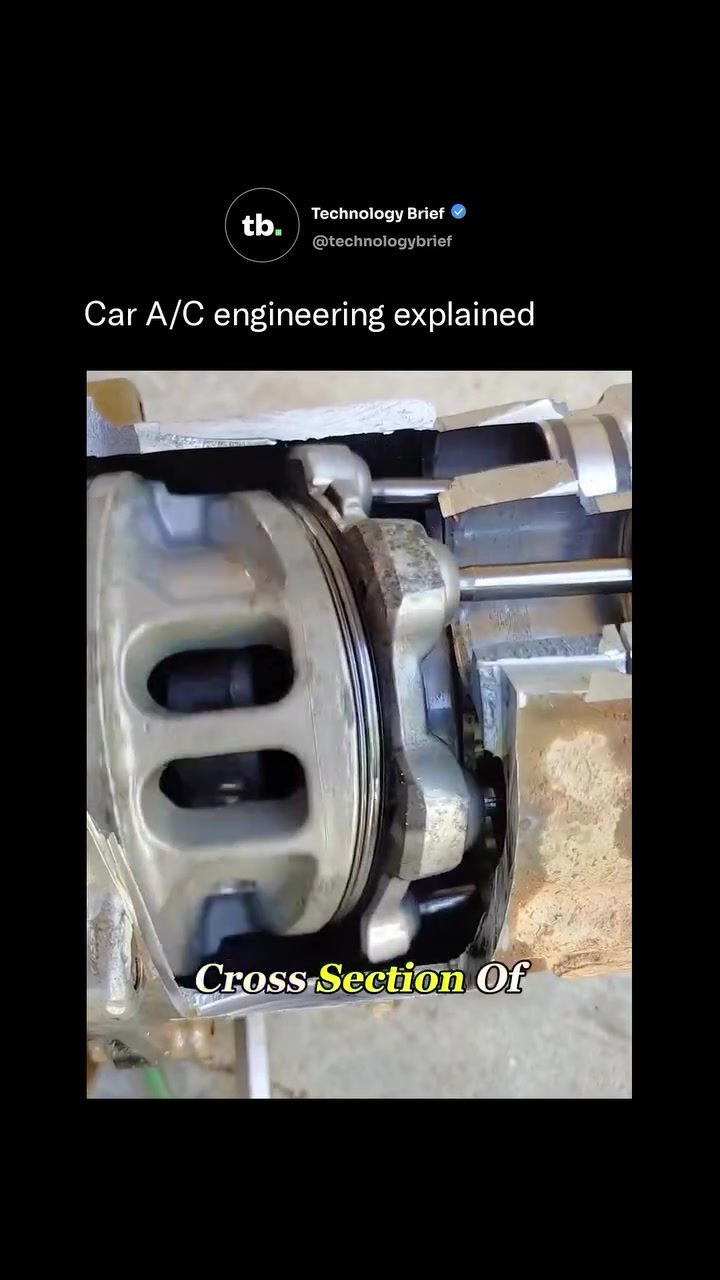
The Swash Plate Compressor: A Key Component in Car A/C Systems
Car air conditioning (A/C) systems are a crucial part of modern vehicles, providing comfort during hot weather. At the heart of these systems lies the compressor, which is responsible for pressurizing the refrigerant. Most car A/C compressors use a design called a swash plate compressor, which might seem unusual at first glance. However, understanding its design and function reveals a clever engineering solution.
Why This Matters
The swash plate compressor is not just a design choice; it is a solution to significant engineering challenges faced by early designers of car A/C systems. By understanding how this compressor works, you can appreciate the intricate engineering that goes into keeping your car cool and comfortable.
The Evolution of Car A/C Compressors
The Straight Shaft Drive System
Early engineers experimented with a straight shaft drive system to power the pistons in the compressor. This system involved a direct conversion of the engine's high-speed rotational motion to the piston's movement. However, this approach led to several problems.
The primary issue was the rough, uneven motion of the pistons. When the rotational motion was converted directly, the piston movement became less smooth. This not only created more vibration but also put excessive stress on certain components, leading to faster wear and lower efficiency.
The Birth of the Swash Plate Compressor
To address these issues, engineers introduced a tilted component called a swash plate. This plate is mounted at an angle on the rotating shaft. As the shaft spins, the angled plate pushes multiple pistons around it, making them move back and forth in sequence. This design converts the smooth rotational motion into the back-and-forth compression needed to pressurize the refrigerant.
The swash plate compressor was originally invented by Anthony Michell in 1917. His design revolutionized the way compressors work, and it remains one of the most common compressor designs in modern vehicles.
How the Swash Plate Compressor Works
The Swash Plate Mechanism
The swash plate is a tilted disc mounted on the rotating shaft. As the shaft spins, the swash plate pushes multiple pistons in a sequence, converting the rotational motion into a smooth reciprocating compression. This mechanism ensures that the compression process is more continuous, reducing impacts and vibration.
Advantages of the Swash Plate Design
Several advantages make the swash plate compressor a preferred choice in modern vehicles:
- Smoother Operation: The sequential movement of the pistons ensures smoother operation, reducing vibration and stress on components.
- Higher Efficiency: The continuous compression process improves the overall efficiency of the A/C system.
- Adjustable Compression: Advanced versions of the swash plate compressor can even adjust the angle of the plate on the fly. This allows the system to change how much refrigerant gets compressed based on the cooling needs of the cabin at any moment.
Practical Tips for Understanding and Maintaining Your Car's A/C System
While the swash plate compressor is a robust and efficient design, it is essential to maintain your car's A/C system to ensure it functions optimally. Here are some practical tips:
Regular Maintenance
Schedule regular maintenance checks for your car's A/C system. This includes checking refrigerant levels, inspecting the compressor, and ensuring all components are in good working order. Regular maintenance can help prevent major issues and extend the lifespan of your A/C system.
Listen for Unusual Noises
Pay attention to any unusual noises coming from your car's A/C system. Excessive vibration or strange sounds can indicate problems with the compressor or other components. Early detection can help prevent more serious issues.
Keep the System Clean
Ensure that the condenser and other components of the A/C system are clean. Dirt and debris can clog the system, reducing its efficiency and causing it to work harder. Regular cleaning can help maintain optimal performance.
Monitor Performance
Pay attention to how well your car's A/C system is performing. If you notice a decrease in cooling efficiency or other issues, it might be time for a professional inspection. Early intervention can often prevent more significant and costly repairs.
Important Takeaways
The swash plate compressor is a key component in modern car A/C systems. Its design addresses significant engineering challenges, providing a smoother, more efficient operation. Understanding how this compressor works and maintaining your car's A/C system can ensure that you stay cool and comfortable on the road.
Conclusion
The swash plate compressor is a testament to the ingenuity of automotive engineering. By addressing the limitations of early designs, engineers have developed a reliable and efficient system that keeps us comfortable in our vehicles. Regular maintenance and attention to performance can help ensure that your car's A/C system continues to function optimally, providing you with a comfortable driving experience.
Watch the Reel
Questions readers ask
What role does the swash plate play in a car's air conditioning compressor?
The swash plate in a car's A/C compressor converts the rotational motion of the engine into the linear motion of the pistons. This conversion is crucial for the efficient compression of the refrigerant, which is essential for the cooling process.
Why is the swash plate design preferred in modern car A/C systems?
The swash plate design is preferred because it provides a smooth and efficient means of converting engine rotation into piston motion. This design helps to minimize vibrations and ensures consistent and reliable performance of the A/C system, making it a popular choice in modern car A/C compressors.
How does the swash plate compressor reduce vibrations in the car A/C system?
The swash plate compressor reduces vibrations by using a rotating plate that engages with multiple pistons at varying angles. This design balances the forces acting on the pistons, resulting in smooth operation and minimal vibration, which enhances the overall comfort and performance of the A/C system.
What is the function of the swash plate compressor shaft?
The swash plate compressor shaft is a critical component that connects the engine to the swash plate. It transfers the rotational energy from the engine to the swash plate, enabling the conversion of this rotational motion into the linear motion required for piston operation, thereby driving the A/C system.
How does the swash plate compressor work in a cross-sectional view?
In a cross-sectional view, the swash plate compressor shows the swash plate angled in relation to the drive shaft. As the shaft rotates, it causes the swash plate to turn, which in turn pushes and pulls the pistons in and out of their cylinders, compressing the refrigerant and facilitating the cooling process.
What are the key A/C compressor components in addition to the swash plate?
In addition to the swash plate, key components of a car A/C compressor include the pistons, cylinders, drive shaft, and valve system. Together, these components work in tandem with the swash plate to compress the refrigerant, which is then circulated through the A/C system to provide cooling.
What are the drive mechanics of a swash plate compressor?
The drive mechanics of a swash plate compressor involve the transfer of rotational energy from the engine to the compressor's drive shaft. This shaft then rotates the swash plate, which in turn drives the pistons through a series of hinges and connecting rods, creating the necessary compression for the refrigerant.
Recent articles
Fresh deep dives from the latest Reels we unpacked.




Comments
Be the first to comment.