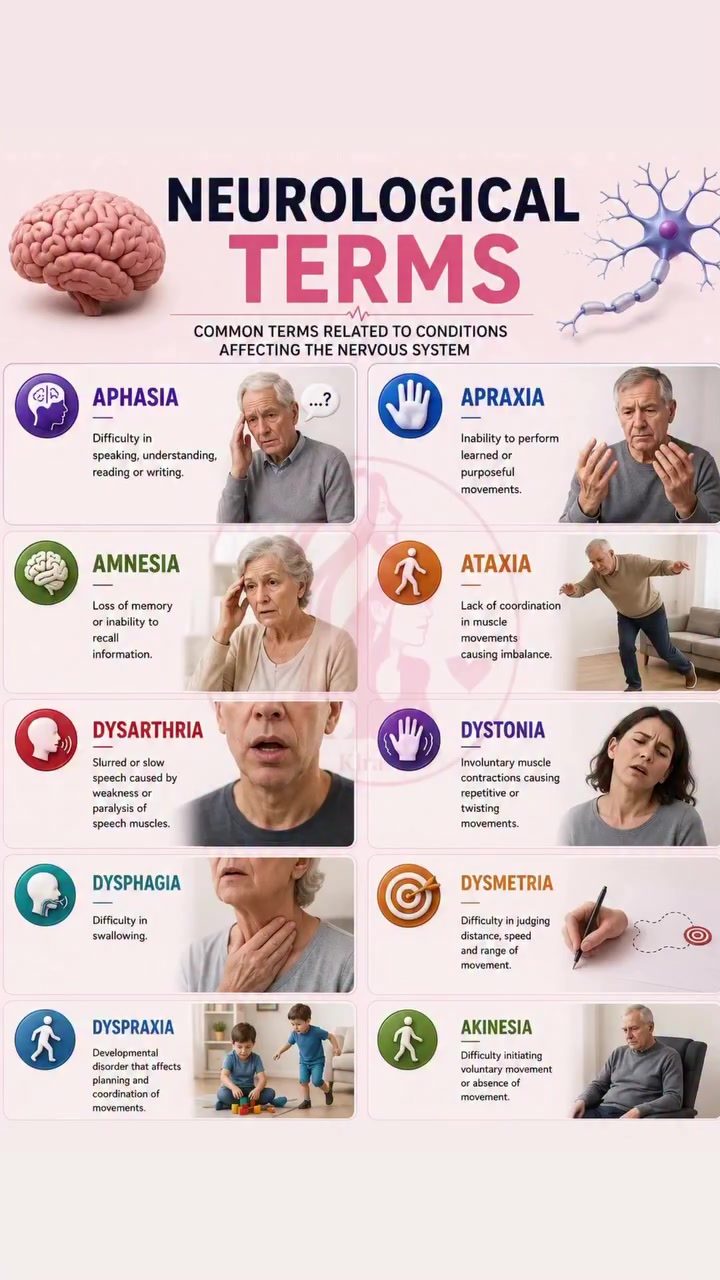
Neurological Terms
Neurological conditions can manifest in various ways, and understanding the terminology can help identify these conditions earlier. This guide explains common neurological terms and their meanings in simple language. This is particularly useful for students, healthcare professionals, and anyone interested in brain health.
Why This Matters
Recognizing the signs of neurological conditions early can be crucial. Early intervention can significantly improve outcomes for conditions like aphasia, ataxia, and dysarthria. This guide aims to demystify neurological terminology, making it accessible for everyone. By understanding these terms, you can better recognize symptoms and know when to seek medical attention.
Main Discussion
Aphasia
Aphasia is a condition characterized by difficulty in speaking, understanding, reading, or writing. It can result from damage to the brain, often due to a stroke or traumatic injury. People with aphasia may struggle to find the right words, understand what others are saying, or read and write coherently. This condition can be particularly challenging as it affects communication, one of the most fundamental aspects of human interaction.
Apraxia
Apraxia refers to the inability to perform learned or purposeful movements. Unlike paralysis, which is a loss of muscle function, apraxia is a loss of the ability to plan and execute movements. For example, a person with apraxia might know what they want to do but be unable to carry out the action. This can affect daily activities, making simple tasks like dressing or eating difficult.
Amnesia
Amnesia involves the loss of memory or the inability to recall information. It can be caused by brain injury, disease, or psychological trauma. There are different types of amnesia, including retrograde amnesia (inability to recall past events) and anterograde amnesia (inability to form new memories). Amnesia can significantly impact a person's quality of life, affecting their ability to function in daily routines and maintain relationships.
Ataxia
Ataxia is characterized by a lack of coordination, causing imbalance and difficulty with movement. It can affect various parts of the body, including the arms, legs, and speech muscles. Ataxia can result from damage to the cerebellum, the part of the brain that coordinates movement. Symptoms can include difficulty walking, unsteadiness, and slurred speech. Early recognition of ataxia can help manage the condition and prevent falls and injuries.
Dysarthria
Dysarthria is a motor speech disorder caused by weakness or paralysis of the speech muscles. It results in slurred or slow speech, making it difficult for others to understand what the person is saying. Dysarthria can be caused by conditions like stroke, Parkinson's disease, or brain injury. Effective communication strategies and speech therapy can help manage dysarthria and improve quality of life.
Dystonia
Dystonia involves involuntary muscle contractions that cause repetitive or twisting movements. It can affect any part of the body, leading to abnormal postures and movements. Dystonia can be painful and disabling, impacting daily activities and quality of life. Treatment options include medication, physical therapy, and sometimes surgical interventions.
Dysphagia
Dysphagia refers to difficulty in swallowing. It can result from conditions like stroke, Parkinson's disease, or neuromuscular disorders. Dysphagia increases the risk of aspiration, where food or liquid enters the lungs, leading to pneumonia. Early recognition and management of dysphagia can prevent complications and improve nutrition and hydration.
Dysmetria
Dysmetria is the difficulty in judging distance, speed, and range of movement. It can affect coordination, making it challenging to perform tasks that require precise movements. Dysmetria is often associated with conditions that affect the cerebellum, such as multiple sclerosis or spinocerebellar ataxia. Physical therapy and rehabilitation can help manage dysmetria and improve motor skills.
Dyspraxia
Dyspraxia is a developmental disorder that affects the planning and coordination of movements. It can impact fine motor skills, gross motor skills, and speech. Dyspraxia often co-occurs with other conditions like ADHD and autism. Early intervention, including occupational therapy and specialized educational programs, can help children with dyspraxia develop essential skills and improve their quality of life.
Akinesia
Akinesia refers to the difficulty initiating voluntary movement or the absence of movement. It is often associated with Parkinson's disease, where the brain's dopamine-producing cells are damaged. Akinesia can significantly impact mobility and daily activities. Medications and physical therapy can help manage akinesia and improve motor function.
Practical Tips
Recognizing the early signs of neurological conditions is crucial. If you or someone you know experiences any of the following symptoms, seek medical attention promptly:
- Sudden speech problems
- Weakness or paralysis
- Loss of coordination
- Difficulty swallowing
- Changes in movement or mobility
It is essential to understand that these symptoms can indicate various conditions, and a proper diagnosis by a healthcare professional is necessary. Early intervention can significantly improve outcomes and quality of life. Additionally, staying informed and sharing reliable information with healthcare professionals and students can contribute to better awareness and management of neurological conditions.
Important Takeaways
Neurological conditions affect millions of people worldwide, and understanding the terminology can help identify these conditions earlier. This guide has covered key terms like aphasia, apraxia, amnesia, ataxia, dysarthria, dystonia, dysphagia, dysmetria, dyspraxia, and akinesia. Recognizing the signs and seeking medical attention promptly can make a significant difference in managing these conditions.
Conclusion
Understanding neurological terms is essential for recognizing and managing neurological conditions. Whether you are a student, healthcare professional, or someone interested in brain health, knowing these terms can help you better understand and support individuals affected by neurological disorders.
Watch the Reel
Questions readers ask
What are some common symptoms of aphasia?
Aphasia symptoms can vary but often include difficulty speaking or understanding speech, difficulty reading or writing, and trouble finding the right words. People with aphasia may also have trouble comprehending what others are saying or following conversations, leading to frustration and communication difficulties.
How does apraxia differ from aphasia?
While both apraxia and aphasia affect communication, they do so in different ways. Apraxia is a motor speech disorder where individuals have difficulty planning and coordinating the movements needed for speech, even though they understand language and want to speak. In contrast, aphasia affects the understanding and production of language itself.
What are the primary causes of amnesia?
Amnesia can be caused by various factors, including brain injuries, strokes, and certain medical conditions like Alzheimer's or other forms of dementia. Emotional trauma, such as a distressing event, can also lead to amnesia. Alcohol and drug use can also impair memory function and cause amnesia.
What is ataxia and how is it related to dysmetria?
Ataxia is a neurological condition that affects coordination, balance, and fine motor movements. Dysmetria is a symptom of ataxia, characterized by the inability to judge distance or scale in movement, leading to overshooting or undershooting targets with hands or limbs.
What are some signs of dysphagia and dyspraxia related to neurological disorders?
Dysphagia is characterized by difficulty swallowing, which can lead to coughing, choking, or feeling like food is stuck in the throat. Dyspraxia, on the other hand, involves difficulty planning and executing movements, which can result in clumsiness, poor hand-eye coordination, and struggles with tasks that require fine motor skills.
What is dystonia and how does it relate to akinesia?
Dystonia is a movement disorder characterized by involuntary muscle contractions that cause repetitive or twisting movements and abnormal postures. Akinesia, which is often seen in conditions like Parkinson's disease, involves a lack of movement or difficulty initiating movement. Both conditions can significantly impact an individual's ability to perform daily activities.
Related deep dives
Similar reads based on topic and creator.




Recent articles
Fresh deep dives from the latest Reels we unpacked.




Comments
Be the first to comment.