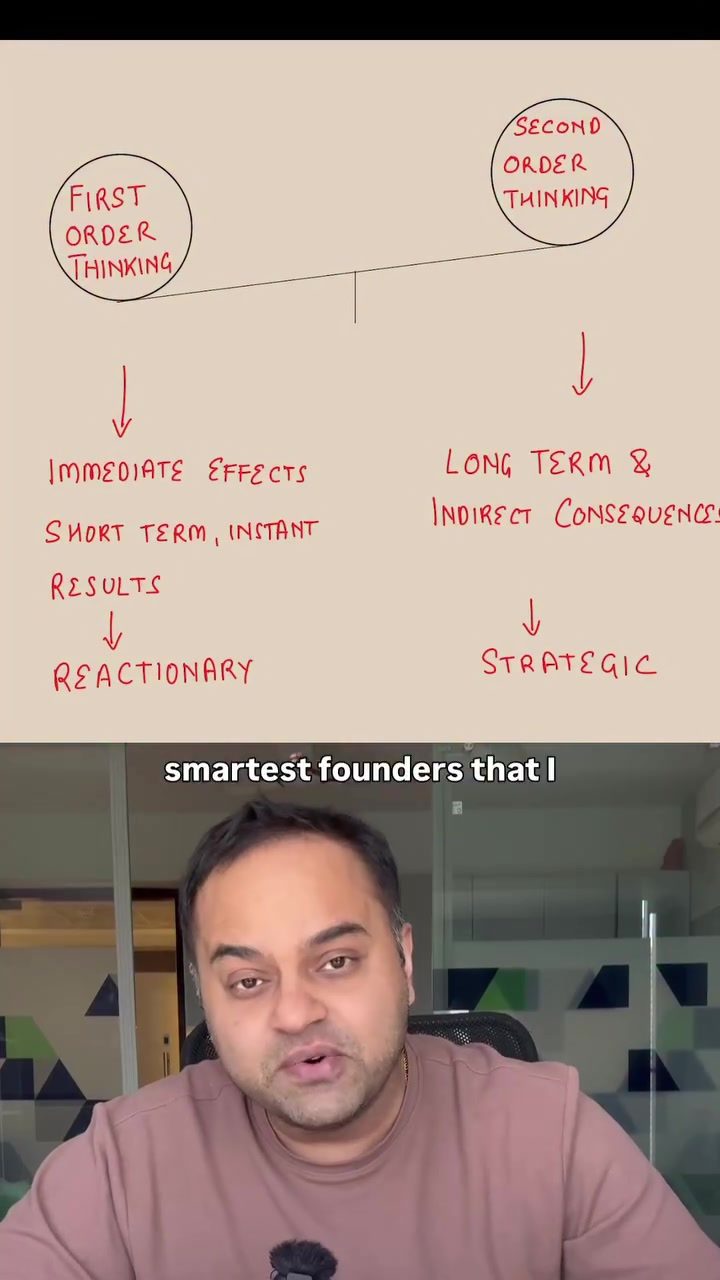
First and Second Order Thinking
First and second order thinking are critical concepts for individuals aiming to make well-rounded decisions. Understanding these concepts can transform how you approach challenges, both in your personal and professional life. While first order thinking is about immediate effects and short-term results, second order thinking requires a more strategic, long-term perspective. It's the ability to see consequences before they arrive, ensuring that your decisions are sustainable and beneficial in the long run.
Why This Matters
Whether you're a budding entrepreneur, a seasoned marketer, or an investor, mastering these types of thinking can elevate your decision-making skills. By learning to balance first and second order thinking, you can make choices that are not only beneficial in the short term but also set you up for long-term success.
Main Discussion
First Order Thinking
First order thinking is reactionary in nature, focusing on immediate effects and short-term impacts. It's the type of thinking that asks, "What happens if I do this?" This approach is crucial for immediate problem-solving and quick decision-making. However, it can sometimes lead to overreacting or making decisions without considering the long-term implications.
Example in Marketing: When considering whether to run a discount, first order thinking would evaluate the immediate impact on sales. But what happens if you discount heavily and train your buyers to wait for offers? This can dilute your brand positioning and attract low-value customers who only buy during promotions.
Second Order Thinking
Second order thinking, on the other hand, is more strategic and long-term. It considers the indirect consequences of your actions. This type of thinking asks, "And then what happens because I did this?" It's about looking at the ripple effects of your decisions and understanding how they will impact the future.
Example in Product Design: When deciding to add more features to your app or website to increase user engagement, second order thinking would consider whether these additional features will confuse users or dilute the core value of the product. By thinking about the long-term effects, you can make decisions that enhance user experience without overwhelming them.
Practical Tips
Develop a Strategic Mindset
One of the best ways to develop second order thinking is to cultivate a strategic mindset. This involves looking beyond the immediate results and considering the long-term implications of your actions. Here are a few practical steps to help you get started:
-
Pause and Reflect: Before making a decision, take a moment to pause and ask yourself, "If this works today, what does it break tomorrow?"
-
Consider Ripple Effects: Think about how your decisions will affect other areas of your business or life. Look at the interactions between different systems and how a small change can ripple through the entire system.
Resources for Learning
There are several resources that can help you develop first and second order thinking skills. Some noteworthy recommendations include:
-
The Great Mental Models by Shane Parrish: This book provides foundational thinking frameworks that can help you better understand the world and make more informed decisions.
-
Thinking, Fast and Slow by Daniel Kahneman: This book delves into cognitive biases that can block second order thinking, helping you become more aware of the mental shortcuts that might be limiting your decision-making abilities.
-
Stratechery by Ben Thompson: This platform offers applied second order reasoning in tech and business, providing real-world examples and insights.
Important Takeaways
-
First Order Thinking: Focuses on immediate effects and short-term results. It's crucial for quick decision-making but can lead to overreacting or ignoring long-term implications.
-
Second Order Thinking: Considers long-term and indirect consequences, making it more strategic. It helps you see the ripple effects of your decisions and make choices that are sustainable and beneficial in the long run.
-
Balancing Both: The smartest founders, marketers, and investors know how to balance both types of thinking. By developing a strategic mindset and considering the long-term implications of your actions, you can make decisions that set you up for success.
Conclusion
Whether you're a young professional just starting out or a seasoned executive looking to climb the corporate ladder, mastering first and second order thinking is essential. These concepts will transform your decision-making abilities, helping you navigate complex challenges with confidence and foresight. By asking the right questions and considering the long-term implications of your actions, you can achieve greater success and build durable, sustainable solutions.
Watch the Reel
Recent articles
Fresh deep dives from the latest Reels we unpacked.




Comments
Be the first to comment.