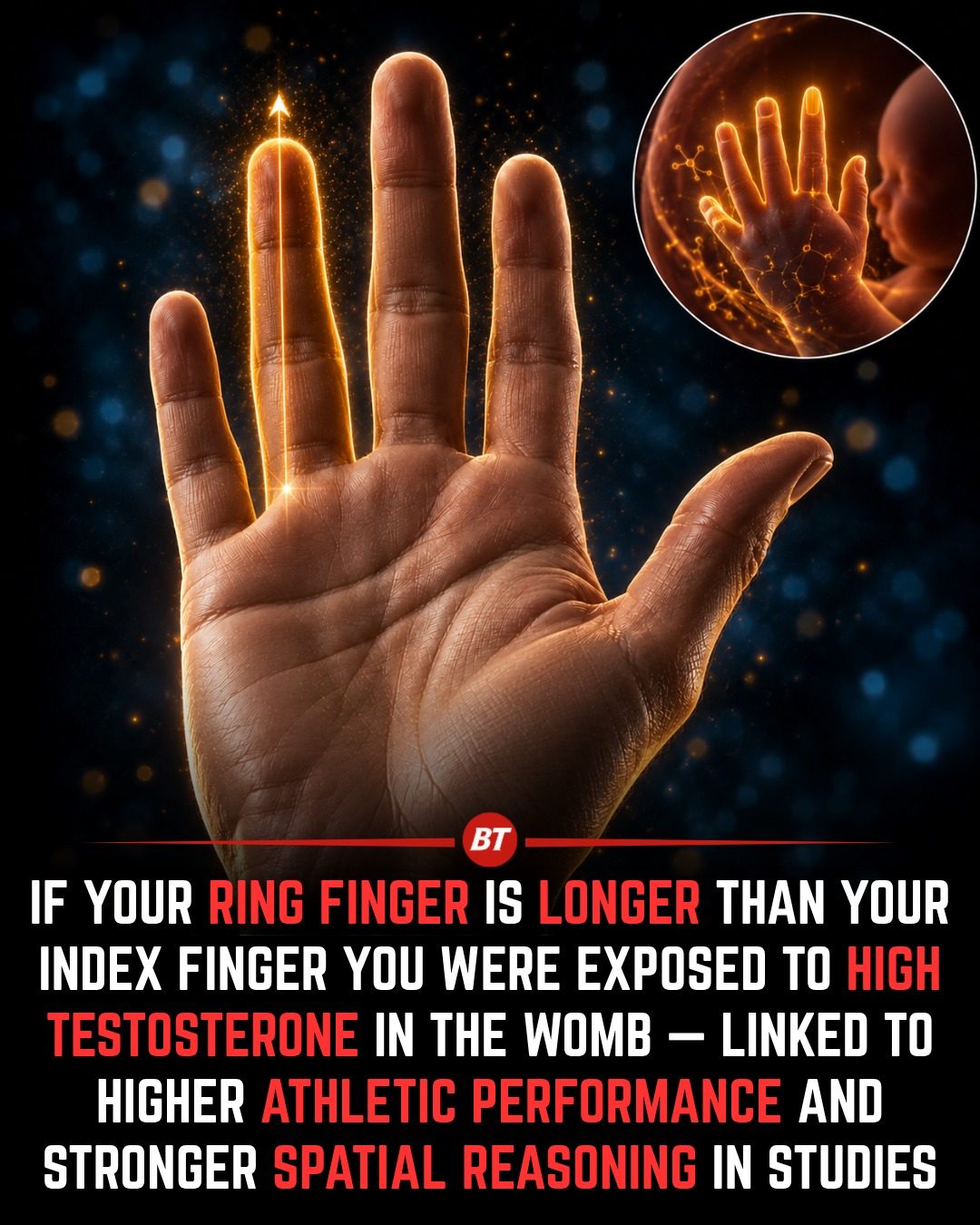
Finger Length and Testosterone
Your finger length can reveal fascinating insights into your early hormone environment. Specifically, the ratio of your index finger to your ring finger, known as the 2D:4D ratio, has been a subject of scientific intrigue for decades. This measurement is believed to reflect the levels of prenatal androgens, including testosterone, you were exposed to in the womb.
Context / Why this matters
Prenatal hormones play a crucial role in shaping various aspects of human development. Testosterone, in particular, influences not only physical traits but also cognitive abilities and certain health conditions. Understanding the correlation between finger length and hormone exposure can provide valuable insights into individual predispositions and potential health implications.
Main discussion
The 2D:4D Ratio
The 2D:4D ratio refers to the length of the index finger (2D) compared to the length of the ring finger (4D). Researchers have found that, on average, people whose ring finger is slightly longer than their index finger may have been exposed to higher levels of prenatal androgens, including testosterone, during early fetal development. This ratio is thought to be a marker of prenatal hormone exposure.
Athletic Performance
One of the most intriguing aspects of the 2D:4D ratio is its potential link to athletic performance. Studies have shown that individuals with a higher 2D:4D ratio, indicating lower prenatal testosterone exposure, may have better fine motor skills but lower grip strength and overall athletic performance. Conversely, those with a lower 2D:4D ratio, indicating higher prenatal testosterone exposure, often exhibit greater strength and faster reaction times.
Spatial Reasoning
Prenatal hormone exposure also influences cognitive abilities, particularly spatial reasoning. Spatial reasoning is the capacity to understand and manipulate two-dimensional and three-dimensional spaces. Research indicates that individuals with a longer ring finger (lower 2D:4D ratio) tend to have stronger spatial reasoning skills. This could be due to the influence of testosterone on brain development, particularly in areas associated with spatial cognition.
Health Implications
The 2D:4D ratio has also been explored in the context of various health conditions. Some studies suggest that a lower 2D:4D ratio, which indicates higher prenatal testosterone exposure, may be associated with an increased risk of certain health issues, such as heart disease and prostate cancer. Conversely, a higher 2D:4D ratio might be linked to a higher risk of autoimmune disorders and certain mental health conditions.
Practical tips
Compare Your Fingers
Take a moment to compare the lengths of your index and ring fingers. If your ring finger is longer, it might indicate higher prenatal testosterone exposure. Keep in mind that this is just one piece of the puzzle and doesn't dictate your future capabilities or health.
Consider Genetics and Lifestyle
While the 2D:4D ratio can offer a glimpse into your prenatal hormone environment, it's essential to recognize that genetics, training, lifestyle, nutrition, and countless other factors have a much greater influence on your performance and health throughout life.
Focus on Holistic Wellness
Your strength, fitness, and cognitive abilities are shaped far more by regular exercise, quality sleep, good nutrition, and lifelong learning than by the proportions of your fingers. Prioritize a balanced lifestyle to achieve optimal well-being.
Important takeaways
- The 2D:4D ratio is a possible clue to the prenatal hormone environment you experienced before birth.
- A lower 2D:4D ratio may be linked to higher athletic performance and stronger spatial reasoning.
- Genetics, training, lifestyle, nutrition, and other factors play a much greater role in shaping your abilities and health.
- Regular exercise, quality sleep, good nutrition, and lifelong learning are key to achieving optimal well-being.
Conclusion
The correlation between finger length and prenatal testosterone exposure offers a fascinating glimpse into the intricate world of human development. While the 2D:4D ratio can provide intriguing insights, it is essential to recognize that it is just one piece of the puzzle. Your strength, fitness, and cognitive abilities are influenced by a multitude of factors, and focusing on a holistic approach to wellness is key to achieving your full potential.
Watch the Reel
Questions readers ask
What is the 2D:4D ratio and why is it important?
The 2D:4D ratio is the measurement of the length of your index finger (2D) compared to your ring finger (4D). It's important because it can provide insights into your prenatal testosterone exposure, which has been linked to various developmental traits and health conditions.
How does prenatal testosterone influence finger length?
During fetal development, testosterone influences the growth of fingers. Higher levels of prenatal testosterone tend to result in a lower 2D:4D ratio, meaning a shorter index finger relative to the ring finger.
Can the 2D:4D ratio predict athletic performance?
Some studies suggest that the 2D:4D ratio may correlate with athletic performance. Generally, a lower ratio (shorter index finger) has been associated with enhanced athletic abilities, though results can vary and more research is needed.
Is the 2D:4D ratio linked to any cognitive abilities?
Yes, research has shown that the 2D:4D ratio may be linked to certain cognitive abilities. For example, a lower ratio is often associated with better spatial reasoning skills, which are crucial for tasks such as navigation and visualizing complex structures.
How can I measure my own 2D:4D ratio?
To measure your 2D:4D ratio, use a ruler or calipers to measure the length of your index finger from the tip to the basal crease at the palm, and do the same for your ring finger. Then, divide the index finger length by the ring finger length to get the ratio.
Are there any health conditions associated with the 2D:4D ratio?
Some studies suggest that the 2D:4D ratio may be associated with certain health conditions. For instance, a lower ratio has been correlated with a higher risk of prostate cancer in men, and a higher ratio has been linked to breast cancer in women.
Does the 2D:4D ratio vary between men and women?
Yes, the 2D:4D ratio typically differs between men and women. On average, men tend to have a lower ratio (shorter index finger) compared to women, reflecting the higher prenatal testosterone exposure in males.
Related deep dives
Similar reads based on topic and creator.




Recent articles
Fresh deep dives from the latest Reels we unpacked.




Comments
Be the first to comment.