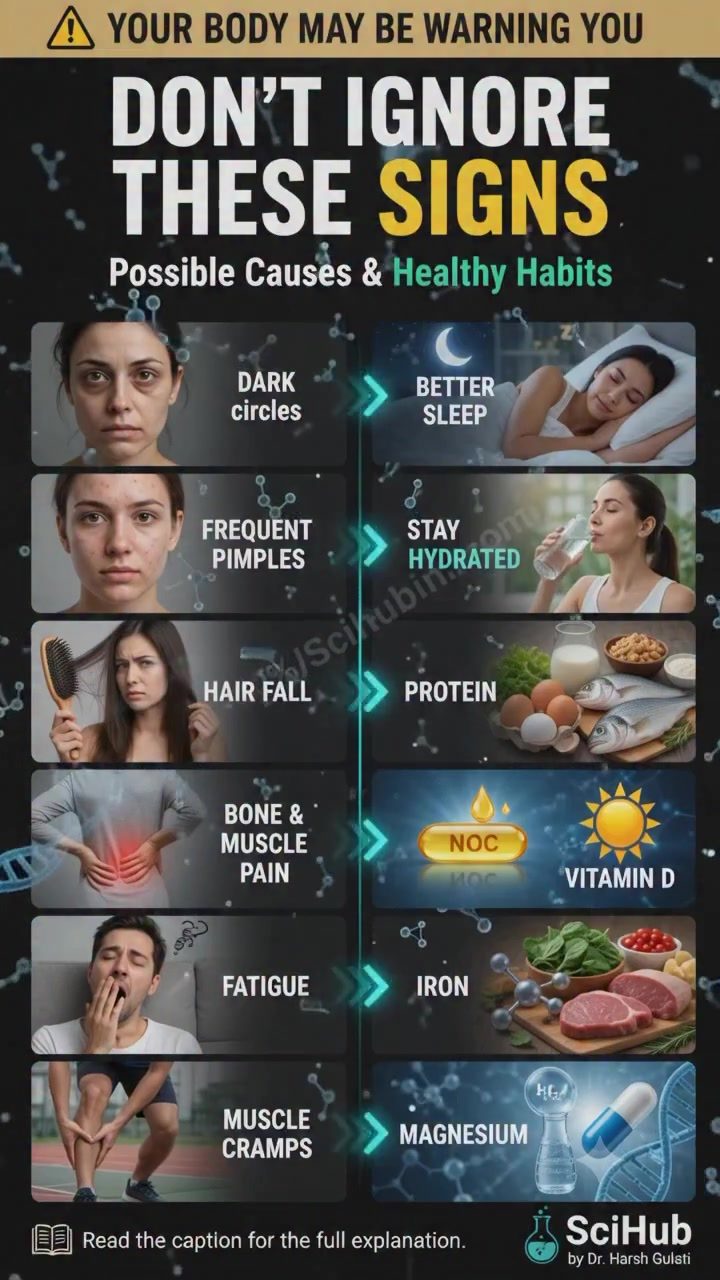
Body Warning Signs and Solutions
Our bodies are remarkable at communicating when something isn't quite right. From dark circles under the eyes to persistent muscle cramps, these signs often serve as early warnings that something may be amiss. Understanding these signals and addressing them with simple lifestyle adjustments can significantly improve overall well-being.
Why This Matters
Recognizing and responding to your body's warning signs can help maintain optimal health and prevent more serious issues from developing. By making small, targeted changes to your daily habits, you can support your body's natural processes and improve your quality of life.
Main Discussion
Dark Circles
Dark circles under the eyes are a common issue that can be influenced by several factors. One of the primary causes is insufficient sleep. Aiming for 7-9 hours of quality sleep per night can help reduce dark circles. Additionally, managing stress levels through practices like meditation or gentle exercise can also make a difference.
Frequent Pimples
Breakouts and frequent pimples can be frustrating, but staying hydrated and maintaining a balanced skincare routine can help. Drinking plenty of water, avoiding excessive sun exposure, and using gentle, non-comedogenic skincare products can all contribute to clearer skin. Eating a healthy diet rich in fruits, vegetables, and lean proteins can also support skin health from the inside out.
Hair Fall
Hair loss can be concerning, but it is often a result of nutritional deficiencies. Ensuring you get adequate protein, iron, zinc, and other essential nutrients can support healthy hair growth. Incorporating a variety of nutrient-rich foods into your diet, such as lean meats, fish, eggs, nuts, and leafy greens, can help meet these nutritional needs. If hair loss persists, it is wise to consult a healthcare professional for a more thorough evaluation.
Bone and Muscle Pain
Bone and muscle pain can stem from various sources, including vitamin deficiencies or sedentary lifestyle. Vitamin D is crucial for bone health, and regular physical activity can help alleviate muscle soreness. Maintaining good posture also plays a role in preventing muscle strain and pain. Engaging in low-impact exercises like walking, swimming, or yoga can help strengthen muscles and improve flexibility.
Fatigue
Persistent fatigue can be a sign of iron deficiency. Eating an iron-rich, balanced diet that includes foods like red meat, poultry, fish, beans, and leafy greens can help boost energy levels. If fatigue persists, it is important to consult a doctor for further evaluation.
Muscle Cramps
Muscle cramps can be alleviated by staying hydrated and including magnesium- and potassium-rich foods in your diet. Foods like bananas, spinach, almonds, and avocados are excellent sources of these essential minerals. Regular stretching and gentle exercise can also help prevent muscle cramps by improving circulation and flexibility.
Practical Tips
-
Prioritize Sleep: Make sleep a non-negotiable part of your routine. Aim for 7-9 hours of quality sleep per night to support overall health and reduce dark circles.
-
Stay Hydrated: Drink plenty of water throughout the day to support skin health, muscle function, and overall well-being.
-
Eat a Balanced Diet: Include a variety of nutrient-rich foods in your diet to ensure you get all the essential vitamins and minerals your body needs.
-
Exercise Regularly: Engage in regular physical activity to support bone and muscle health, improve flexibility, and boost energy levels.
-
Manage Stress: Incorporate stress-reducing practices like meditation, yoga, or deep breathing exercises into your daily routine to support mental and physical health.
-
Consult a Professional: If symptoms persist or worsen, consult a healthcare professional for a thorough evaluation and personalized advice.
Important Takeaways
-
Listen to Your Body: Pay attention to your body's warning signs and respond proactively to address potential issues.
-
Lifestyle Adjustments: Simple lifestyle changes, such as staying hydrated, eating a balanced diet, and getting regular exercise, can significantly impact overall health.
-
Nutritional Support: Ensuring you get all the essential vitamins and minerals through a balanced diet can support various aspects of your health, from skin and hair to bones and muscles.
-
Professional Guidance: Consult a healthcare professional for personalized advice and evaluation if symptoms persist or worsen.
-
Preventive Measures: Incorporate preventive measures like regular exercise, stress management, and good sleep hygiene to support overall well-being and prevent future health issues.
Conclusion
Paying attention to your body's warning signs and making the necessary adjustments to your lifestyle can significantly improve your overall health and well-being. By prioritizing sleep, staying hydrated, eating a balanced diet, and engaging in regular physical activity, you can support your body's natural processes and prevent more serious health issues from developing. If symptoms persist or worsen, always consult a healthcare professional for personalized advice and evaluation.
Watch the Reel
Questions readers ask
What are some common causes of dark circles under the eyes?
Dark circles under the eyes can be caused by various factors, including poor sleep quality, dehydration, allergies, and even hereditary traits. Lifestyle habits such as excessive screen time, late-night hours, and an unhealthy diet also contribute to their appearance; making changes in these areas can help alleviate the issue.
How can I relieve persistent muscle cramps?
Persistent muscle cramps can often be relieved by staying hydrated, ensuring adequate salt and mineral intake, and performing regular stretching exercises. In some cases, muscle cramps may be a sign of magnesium or electrolyte deficiencies, which can be addressed through dietary changes and mineral supplements.
What are some simple changes I can make to improve my sleep habits?
To improve your sleep habits, consider establishing a consistent sleep schedule, creating a relaxing bedtime routine, and optimizing your sleep environment. This includes keeping your bedroom cool, dark, and quiet, and avoiding screens and heavy meals close to bedtime.
How does stress impact my body's warning signs?
Chronic stress can manifest in various physical symptoms, including headaches, digestive issues, and a weakened immune system. Managing stress through techniques such as mindfulness, deep breathing, regular exercise, and adequate rest can help alleviate these symptoms and improve overall well-being.
Why is staying hydrated important for maintaining healthy skin?
Staying hydrated is crucial for maintaining healthy skin as it helps to keep the skin plump and supple. Dehydration can lead to dryness, flakiness, and the appearance of fine lines and wrinkles. Drinking enough water throughout the day, along with consuming hydrating foods like fruits and vegetables, can support skin health and overall bodily functions.
What are the signs of iron deficiency in the body?
Iron deficiency can present with various symptoms, including fatigue, weakness, pale skin, and shortness of breath. Other signs may include brittle nails, hair loss, and a rapid heartbeat. If you suspect an iron deficiency, it's important to consult a healthcare provider for proper diagnosis and treatment, which may include dietary changes or supplements.
How can I maintain a balanced lifestyle to support overall health?
Maintaining a balanced lifestyle involves a combination of healthy eating, regular physical activity, adequate sleep, and stress management. Incorporating a variety of nutrient-rich foods, engaging in exercises you enjoy, and making time for relaxation and self-care can support your body's natural processes and help prevent health issues.
Related deep dives
Similar reads based on topic and creator.




Recent articles
Fresh deep dives from the latest Reels we unpacked.




Comments
Be the first to comment.