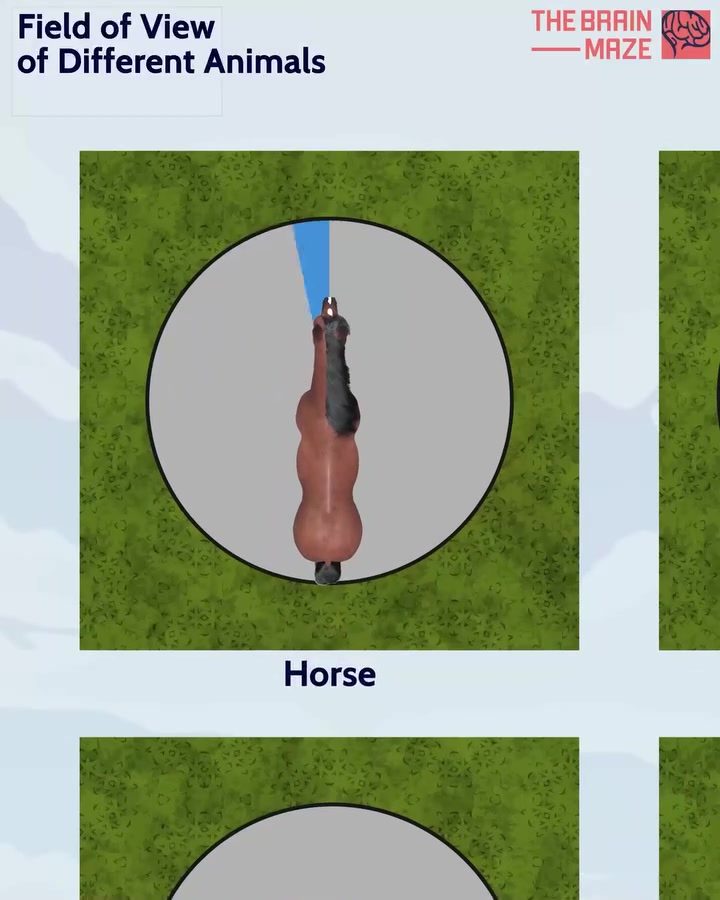
Animal Field of View
The field of view varies widely among different animals, influencing how they perceive and interact with their surroundings. Understanding these differences can provide valuable insights into animal behavior and the unique adaptations that have evolved over time.
Why This Matters
The way animals see the world is a critical aspect of their survival and behavior. For instance, predators often have a wide field of view to spot prey, while prey animals may have enhanced peripheral vision to detect approaching dangers. This understanding can be applied to various fields, from wildlife conservation to animal husbandry and even to the design of animal-friendly environments.
Field of View: A Deeper Dive
Binocular, Monocular, and Blind Spot Vision
A comprehensive understanding of an animal’s field of view involves knowledge of three key areas: binocular, monocular, and blind spot vision.
Binocular Vision
Binocular vision is the area where both eyes overlap, providing depth perception and stereoscopic vision. This is crucial for activities that require precise judgment of distance, such as hunting or navigating complex environments.
Monocular Vision
Monocular vision refers to the areas seen by only one eye. This portion of the field of view is typically used for detecting motion and general awareness of the surroundings. It's less precise than binocular vision but covers a broader area.
Blind Spot
The blind spot is the area where an animal cannot see at all. This is the region where the optic nerve exits the eye, creating a gap in perception. The size and location of the blind spot can vary significantly between species, impacting their behavior and survival strategies.
Field of View in Different Animals
Horses
Horses have a wide field of view, almost 360 degrees, which is divided almost evenly between binocular and monocular vision. However, they have a significant blind spot directly in front of and behind their heads. This is why horses can be sensitive to sudden movements from these directions and why they rely heavily on their sense of hearing to compensate for their limited binocular vision. They are known for their ability to spot predators early and flee quickly.
Dogs
Dogs have a moderately wide field of view, around 240-250 degrees. This is due to the placement of their eyes on the sides of their head, which gives them a good balance between monocular and binocular vision. Their binocular vision is more pronounced than that of horses, making them effective hunters and trackers. However, they also have a blind spot directly in front of and behind their heads.
Rabbits
Rabbits have a field of view that is almost 360 degrees, with a small blind spot in front of their nose. This extensive field of view is crucial for detecting predators from almost any direction. Their large eyes are positioned high on their heads, allowing them to see above their food while grazing and spot approaching threats quickly.
Mice
Mice have a wide field of view, around 360 degrees, with a small blind spot directly behind their head. Their eyes are positioned on the sides of their head, providing excellent peripheral vision. This is essential for detecting predators and navigating in their small, often hidden environments. They also have excellent night vision, which aids in their ability to move around in low light.
Humans
Humans have a relatively narrow field of view, around 180 degrees, with a smaller blind spot. Our eyes are positioned at the front of our heads, providing a highly developed binocular vision. This allows us to perceive depth and judge distances accurately, which is crucial for activities like driving, sports, and complex tasks.
Pigeons
Pigeons have a wide field of view, around 340 degrees, with a small blind spot directly behind their head. Their eyes are positioned on the sides of their head, providing excellent peripheral vision. This is useful for detecting predators and navigating through the air. Pigeons also have a unique ability to see ultraviolet light, which aids in their navigation.
Bees
Bees, like many insects, have a nearly 360-degree field of view. Their compound eyes are capable of detecting ultraviolet light and polarised light, which helps them navigate and find food efficiently. This wide field of view is essential for their role as pollinators, allowing them to spot flowers from a distance and navigate complex habitats.
Cows
Cows have a wide field of view, around 300 degrees, with a significant blind spot directly in front of and behind their heads. This is due to the position of their eyes on the sides of their head. Their wide field of view helps them detect predators and navigate open spaces, while their blind spots make them vulnerable to sudden movements from the front and rear.
Pigs
Pigs have a wide field of view, around 310 degrees, with a moderate blind spot directly behind their head. Their eyes are positioned on the sides of their head, providing good peripheral vision. This helps them detect predators and navigate through their environment. Pigs also have excellent hearing and sense of smell, which aids in their ability to detect threats.
Practical Tips for Understanding Animal Vision
Understanding the field of view of different animals can be beneficial in various ways. For example, wildlife photographers can use this knowledge to position themselves in a way that minimizes stress for the animals and captures the best shots. Farmers can design more animal-friendly environments by considering the blind spots and visual strengths of their livestock.
Important Takeaways
The field of view is a fundamental aspect of animal perception and behavior. Different animals have evolved unique visual adaptations that suit their specific needs and environments. Understanding these differences can provide valuable insights into animal behavior, aid in wildlife conservation, and inform the design of animal-friendly environments.
Conclusion
The differences in the field of view among various animals are fascinating and instructive. By understanding how animals see the world, we can better appreciate their unique adaptations and behaviors. Whether it's the wide field of view of a horse, the keen binocular vision of a dog, or the nearly 360-degree vision of a bee, each animal's visual system is a testament to the wonders of natural selection and evolution.
Watch the Reel
Questions readers ask
How does binocular vision benefit predators?
Binocular vision, which allows for depth perception, is crucial for predators as it enables them to judge distances accurately. This is particularly important for hunting, as it helps predators to pounce or strike at the right moment, increasing their chances of a successful hunt.
Why is peripheral vision important for prey animals?
Prey animals often have a wide field of view and enhanced peripheral vision, allowing them to detect predators from various angles. This adaptation helps them to spot potential threats early, giving them more time to react and evade predators.
What is the difference between binocular and monocular vision in animals?
Binocular vision involves the overlap of the visual fields from each eye, providing depth perception. Monocular vision, on the other hand, occurs when the visual fields do not overlap, resulting in a lack of depth perception. Most animals, however, have a mix of both depending on the position of their eyes.
What is the significance of a blind spot in an animal's vision?
A blind spot in an animal's vision is an area that an animal cannot see, due to the lack of photoreceptors where the optic nerve connects to the retina. Understanding blind spots can help explain why animals may behave in certain ways, such as spinning their head to scan for predators or food.
How do bees see differently from humans?
Bees have compound eyes that provide a mosaic-like image with a wide field of view, but their visual acuity is not as sharp as that of humans. Bees also see in the ultraviolet spectrum, which helps them to navigate and find food, particularly nectar-rich flowers that reflect UV light.
How does the field of view impact animal behavior and survival?
An animal's field of view significantly influences its behavior and survival strategies. For example, predator and prey animals, such as snakes and rabbits, have evolved specific visual capabilities to match their roles in the food chain. Predators generally seek to spot prey from a distance, while prey animals focus on detecting approaching threats from various angles.
Are there animals that lack a field of vision?
There are animals that have limited vision, but it is rare for animals to lack a field of vision entirely. For example, some animals, such as blind cave-dwelling fish, have eyes that are either vestigial or completely non-functional. However, many animals with limited vision have evolved other sensory abilities, such as enhanced hearing or touch, to navigate their environments.
Related deep dives
Similar reads based on topic and creator.

Recent articles
Fresh deep dives from the latest Reels we unpacked.




Comments
Be the first to comment.