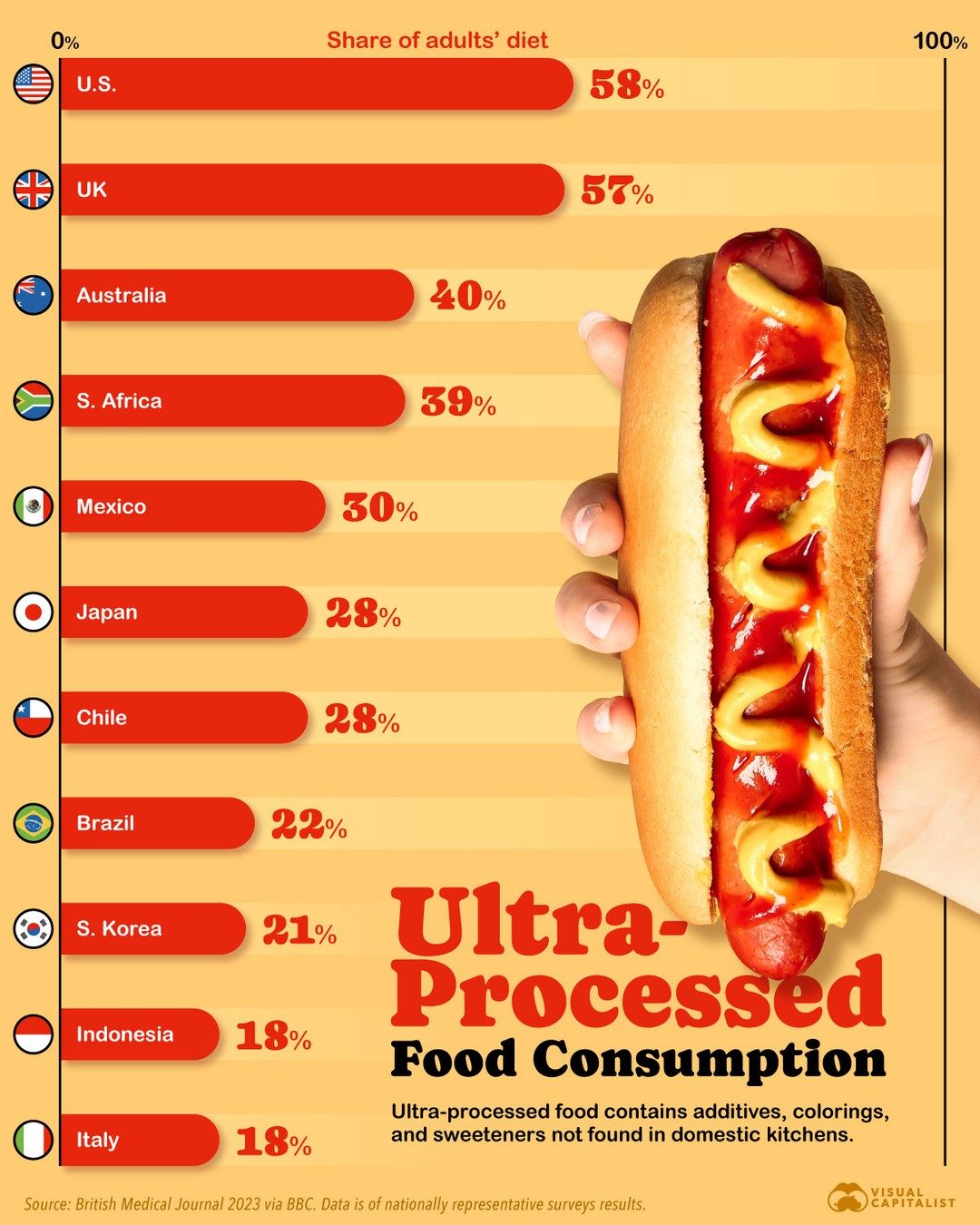
Ultra-Processed Food Consumption
Ultra-processed foods have become a significant part of modern diets. In fact, over half of adults' caloric intake in the U.S. and UK comes from these foods. Ultra-processed foods are often laden with additives, sweeteners, and other chemicals that are not typically found in home-cooked meals.
Context / Why This Matters
Before diving into the specifics, it's important to understand what constitutes ultra-processed food. This category includes foods that have been industrialized, formulated, and manufactured, often with little to no whole food ingredients. These foods are designed to be convenient, palatable, and have a long shelf life. Examples include snacks, sodas, ready-to-eat meals, and many breakfast cereals.
Main Discussion
Global Consumption Patterns
The infographic highlights the share of ultra-processed food in adults' diets across various countries. The U.S. tops the list with 58% of adults' diets consisting of ultra-processed foods, followed closely by the UK at 57%. Australia and South Africa also have high consumption rates, at 40% and 39% respectively. Mexico and Japan both stand at 28%, while Chile, Brazil, and South Korea are around 21-22%. Indonesia and Italy have the lowest percentages, both at 18%.
These numbers underscore a global trend towards increased consumption of ultra-processed foods. The convenience and accessibility of these foods make them an attractive option for many consumers. However, the health implications of such high consumption are a growing concern.
Health Implications
Ultra-processed foods are often high in unhealthy fats, sugars, and salt, and low in essential nutrients like fiber, vitamins, and minerals. The additives, colorings, and sweeteners found in these foods can have various health impacts. For instance, excessive consumption of these foods has been linked to higher risks of obesity, type 2 diabetes, and cardiovascular diseases.
Moreover, the processing methods used in these foods can lead to the formation of harmful compounds. For example, heating foods to high temperatures can produce acrylamide, a substance classified as a potential carcinogen by the World Health Organization.
Factors Driving Consumption
Several factors contribute to the high consumption of ultra-processed foods. One of the primary drivers is convenience. In today's fast-paced world, many people rely on quick, ready-to-eat meals to save time. Additionally, the marketing and availability of these foods play a significant role. Ultra-processed foods are often heavily marketed and are readily available in supermarkets, vending machines, and fast-food outlets.
Another critical factor is cost. Ultra-processed foods are typically cheaper than whole, unprocessed foods. This makes them an appealing option for consumers on a tight budget. The affordability of these foods is a significant factor in their widespread consumption, particularly in lower-income households.
Practical Tips
Reducing the consumption of ultra-processed foods can be challenging, but it is achievable with some practical strategies.
Read Labels
Always check the ingredient list on food packaging. Look for foods with minimal ingredients, preferably ones you recognize as whole foods. Avoid products with long lists of unpronounceable chemicals and additives.
Cook at Home
Preparing meals at home allows you to control the ingredients and cooking methods. This can help reduce the intake of harmful additives and chemicals. Start by incorporating more whole foods into your diet, such as fruits, vegetables, whole grains, and lean proteins.
Plan Ahead
Meal planning and prepping can save time and prevent the reliance on ultra-processed convenience foods. Dedicate a few hours each week to prepare healthy meals and snacks in advance.
Choose Whole Foods
Opt for minimally processed foods whenever possible. Fresh fruits and vegetables, whole grains, legumes, and lean proteins are all excellent choices. These foods are packed with essential nutrients and fiber, which can help improve overall health.
Stay Hydrated
Drinking plenty of water can help reduce cravings for processed snacks and sugary drinks. Aim for at least eight glasses of water per day.
Important Takeaways
Understanding the prevalence and impact of ultra-processed foods in modern diets is crucial. The high consumption rates in many countries highlight the need for increased awareness and action. By making informed choices and opting for whole, unprocessed foods, individuals can take control of their diets and improve their overall health.
Furthermore, addressing the factors driving the consumption of ultra-processed foods is essential. This includes promoting healthier and more affordable food options, as well as encouraging policies that support sustainable and nutritious eating habits.
Conclusion
Ultra-processed foods have become a ubiquitous part of many diets, with significant health implications. By being mindful of the foods we consume and making conscious choices, we can mitigate the risks associated with these foods. Whether it's preparing meals at home, reading labels, or planning ahead, small changes can lead to significant improvements in overall health. Understanding the global trends in ultra-processed food consumption is the first step towards fostering healthier and more balanced diets.
Watch the Reel
Questions readers ask
What are ultra-processed foods and why are they a concern?
Ultra-processed foods are industrialized, formulated products often high in additives and low in nutrients. They are a concern because they make up more than half of the calories consumed by adults in the U.S. and UK, potentially leading to significant health issues due to their nutritional profile.
What are some examples of ultra-processed foods?
Examples include snacks like chips, sodas, ready-to-eat meals, and many breakfast cereals. These foods are designed to be convenient and have a long shelf life, but often lack whole food ingredients.
How does the consumption of ultra-processed foods compare between the U.S. and UK?
The consumption of ultra-processed foods is similarly high in both countries, with over half of adults' caloric intake coming from these foods in both the U.S. and UK. This indicates a shared trend towards convenient, processed food options.
What are some of the additives and chemicals found in ultra-processed foods?
Ultra-processed foods often contain additives, sweeteners, and other chemicals that are not typically found in home-cooked meals. These can include preservatives, artificial flavors, and colors, which may have potential health impacts.
What are the potential health impacts of a diet high in ultra-processed foods?
A diet high in ultra-processed foods can lead to various health concerns, including obesity, heart disease, and diabetes. These foods are often high in calories, unhealthy fats, and added sugars, while being low in essential nutrients.
How can I identify ultra-processed foods on nutrition labels?
Look for long ingredient lists with many items you wouldn't typically find in a home kitchen, such as additives, preservatives, and artificial flavors. Also, check for high amounts of sugars, unhealthy fats, and sodium, as well as low fiber content.
What are some alternatives to ultra-processed foods?
Opt for whole, minimally processed foods like fruits, vegetables, lean proteins, and whole grains. These foods are typically higher in nutrients and lower in additives, making them a healthier choice for your diet.
Recent articles
Fresh deep dives from the latest Reels we unpacked.




Comments
Be the first to comment.