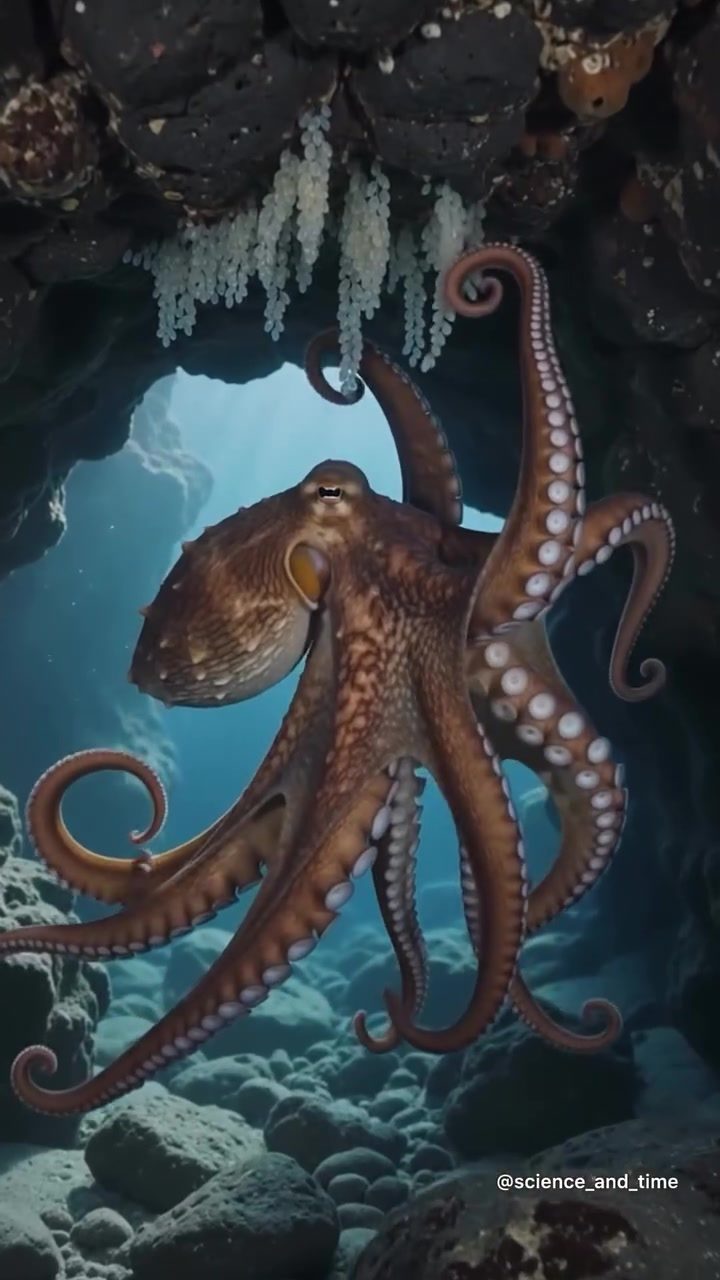
Octopus Reproduction
The life cycle of octopuses is a compelling narrative of dedication and sacrifice, particularly evident in the reproductive process of a mother octopus. This creature's journey is marked by profound changes and ultimate self-sacrifice, a process that begins long before the offspring hatch.
Context / Why this matters
Octopuses are remarkable creatures known for their intelligence and adaptability. Understanding their reproductive strategies provides insight into the intricate web of marine life. For octopuses, reproduction is a one-time event that consumes the parents' lives, making it a subject of both scientific and general curiosity.
The Sacrificial Nature of Octopus Reproduction
A mother octopus’ life takes a dramatic turn when she lays her eggs. This period marks the final chapter of her life, a phase dedicated to nurturing the next generation at the cost of her own survival. The mother ceases all activities, including hunting and eating, and remains with her eggs for months.
The dedication of a mother octopus is not merely about guarding the eggs but also about the profound physiological changes that occur within her body. As the eggs develop, a tiny gland in her body releases powerful hormones that gradually reprogram her entire physiology. This hormonal shift ensures that she focuses solely on the eggs and ultimately leads to her demise.
The father's role in this process is equally crucial, though less visible. Both the male and female octopuses reproduce only once, symbolizing a significant investment in the next generation. The father’s role is pivotal as he ensures the survival of his genes by dying shortly after mating, leaving the mother to fulfill her duty alone.
Hormonal Changes and Physiological Reprogramming
The hormonal changes in a mother octopus are a fascinating aspect of her reproductive cycle. As she lays her eggs, a tiny gland in her body begins to release powerful hormones. These hormones reprogram her system, shifting her focus entirely to the eggs. This process is slow and deliberate, culminating in the mother's eventual death.
The hormonal reprogramming reduces the mother's appetite and eventually stops it, leading to starvation. This process, however, is not limited to nutritional deprivation. The hormonal changes alter her entire physiology, making it impossible for her to survive once the eggs hatch. These hormones ensure that the mother's body is devoted entirely to the well-being of her offspring, even if it means her own demise.
The Final Countdown and the Miracle of Life
The months spent guarding the eggs pass slowly, but the miracle begins when the tiny octopuses hatch one by one. The mother watches silently, knowing her mission is finally complete. The sight of thousands of tiny octopuses emerging from their eggs is a testament to her unwavering dedication and sacrifice. Alone in the vast ocean, these little creatures begin a new life, unaware of the profound sacrifice their mother made for them.
The Role of the Father
While the mother octopus' role in reproduction is well-documented, the father's contribution is equally significant, though less visible. The father octopus dies long before the mother, ensuring the survival of his genes and the continuation of his lineage. This reproductive strategy highlights the critical role both parents play in the survival of the species.
Octopuses are unique in the animal kingdom for their semelparous (single reproductive event) nature. This means they reproduce only once in their lifetime, dedicating their final months or years to the care and protection of their offspring. This single reproductive event ensures that every octopus gives its all to the survival of its offspring, making the reproductive process a profound and significant event in their lives.
Practical Tips for Observing Marine Life
Observing marine life, particularly the reproductive cycle of octopuses, can be a rewarding experience. Here are some tips for those interested in marine biology and ocean life:
- Choose the Right Time: Timing is crucial when observing the reproductive cycle of octopuses. Understanding the breeding seasons and reproductive periods can enhance the experience.
- Respect the Environment: Marine life is delicate, and it's essential to respect the environment. Minimize disturbance and maintain a safe distance to avoid disrupting the natural processes.
- Use the Right Gear: Invest in good-quality underwater cameras and binoculars to capture the moments effectively. High-resolution equipment can help in studying the details of marine life more closely.
- Stay Safe: Always prioritize safety when venturing into the ocean. Be aware of local regulations and weather conditions to ensure a safe and enjoyable experience.
Survival of the New Generation
The survival of the newly hatched octopuses is a testament to their mother's sacrifice. Alone in the vast ocean, these tiny creatures must navigate a world full of predators and challenges. Their mother’s protective instincts and dedicated care give them a fighting chance in the vast and unpredictable marine environment.
The survival rate of these tiny octopuses varies, but their resilience and adaptability are remarkable. They inherit the intelligence and camouflage abilities of their parents, skills that are crucial for their survival in the ocean.
Important Takeaways
The life cycle of a mother octopus highlights several key points:
- Dedication and Sacrifice: The mother octopus dedicates her entire life to protecting her eggs, a journey that ends in her demise.
- Hormonal Reprogramming: The release of powerful hormones reprograms the mother's physiology, ensuring her sole focus is on the eggs.
- Role of the Father: The father's contribution, though less visible, is equally significant in ensuring the survival of the species.
- New Life: The hatching of the eggs marks the beginning of a new life for the tiny octopuses, who must face the challenges of the ocean alone.
Conclusion
The journey of a mother octopus from egg-laying to the eventual hatching of her offspring is a profound narrative of dedication, sacrifice, and the circle of life. This process offers a glimpse into the complex and fascinating world of marine life, highlighting the extraordinary lengths that some animals go through to ensure the survival of their species. Whether you’re a marine biologist or a casual observer, the reproductive cycle of octopuses is a subject that continues to captivate and inspire.
Watch the Reel
Questions readers ask
Why do mother octopuses die after laying their eggs?
Mother octopuses undergo significant hormonal changes after laying their eggs, which trigger a series of physiological processes that ultimately lead to their death. This sacrifice ensures that the mother's resources are fully dedicated to protecting and nurturing her offspring until they hatch.
How long do mother octopuses care for their eggs?
The duration can vary by species, but mother octopuses typically guard their eggs for several months. During this time, they do not feed, and their sole focus is on protecting and aerating the eggs to ensure the survival of their young.
Do all octopus species exhibit this sacrificial behavior?
Yes, this behavior is observed across many octopus species. It is a fundamental aspect of their reproductive strategy, where the mother's life is dedicated to ensuring the next generation's survival, even at the cost of her own well-being.
What happens to a mother octopus after she lays her eggs?
After laying her eggs, a mother octopus enters a state of maternal care where she stops eating. She becomes fully committed to guarding her eggs and ensuring their survival. This period of intense dedication ultimately leads to her death, often due to starvation and physical depletion.
How does the mother octopus protect her eggs?
Mother octopuses protect their eggs by continuously guarding them and aerating them to maintain optimal conditions for development. They also defend the eggs against predators, using their camouflage and defensive tactics to keep potential threats at bay during this critical period.
Why is the octopus life span reduced after the eggs are laid?
The mother octopus's life span is significantly reduced after laying her eggs because she stops eating and dedicates all her energy to caring for her offspring. The physiological and hormonal changes that occur during this time lead to a rapid decline in her health, ultimately resulting in death.
What is the significance of the mother octopus' maternal care?
The mother octopus's maternal care is crucial for the survival of her offspring. By guarding and nurturing her eggs, she increases the likelihood that her young will hatch and develop into healthy individuals. This self-sacrifice ensures the continuation of the species, even at the cost of her own life.
Recent articles
Fresh deep dives from the latest Reels we unpacked.




Comments
Be the first to comment.