U.S. City Populations
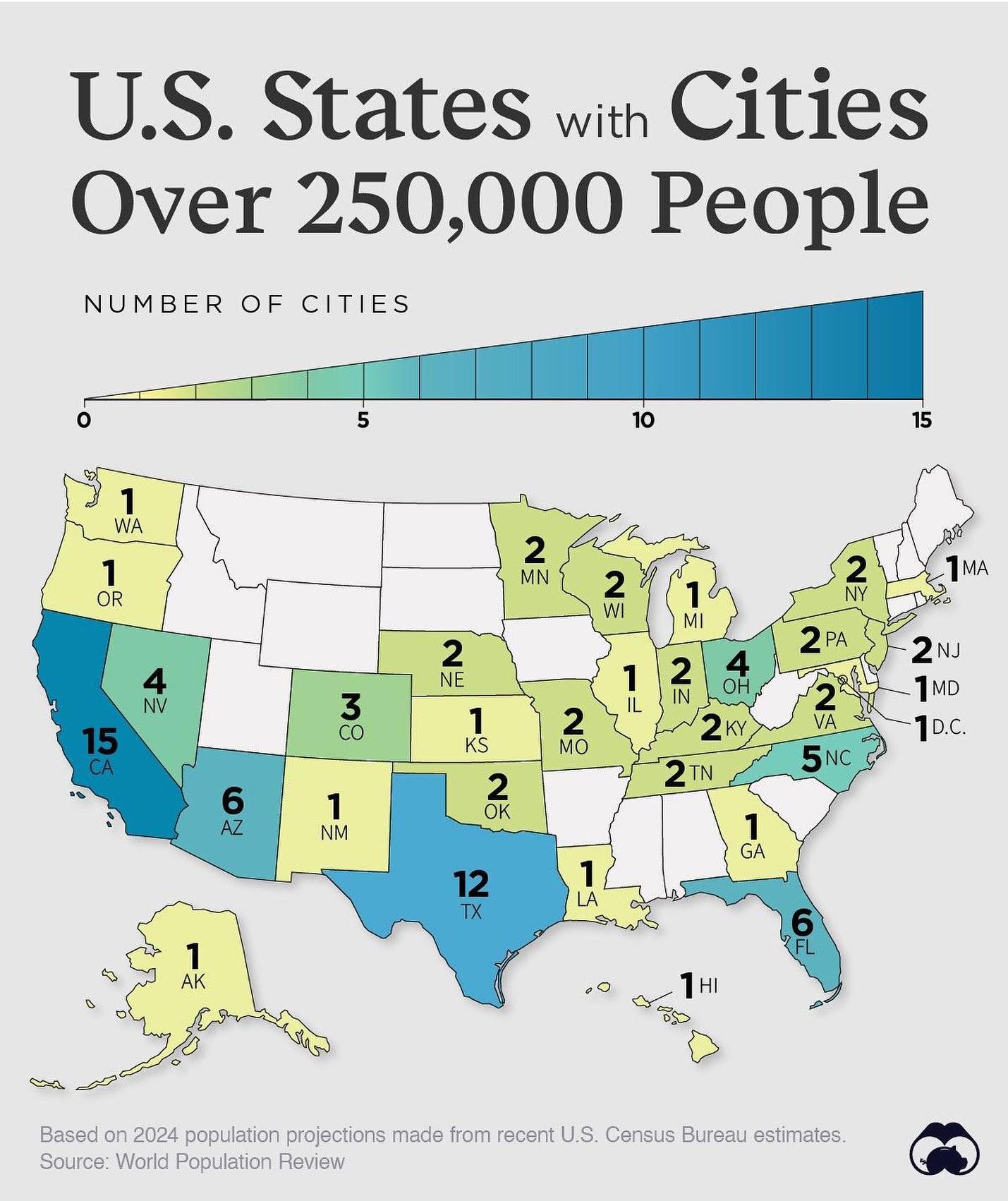
Understanding the population distribution in the United States, particularly the number of cities with over 250,000 residents, provides valuable insights into urbanization trends and regional demographics. According to 2024 estimates from World Population Review, derived from the latest U.S. Census Bureau figures, these estimates are as follows.
Context / Why This Matters
The distribution of cities with large populations reveals much about the economic, social, and political dynamics of each state. States with multiple large cities often have more diverse economies and infrastructure, while those with fewer large cities may rely more heavily on a single urban center. This population data can guide policymakers, urban planners, and businesses in making informed decisions about resource allocation, infrastructure development, and market strategies.
Main Discussion
States with Multiple Large Cities
Several states stand out for having a significant number of cities with over 250,000 residents. California leads the nation with 15 such cities, reflecting its dense population and extensive urban development. Texas follows closely with 12 cities, highlighting its rapid growth and urbanization. Other states with a notable number of large cities include:
- Florida (6)
- Arizona (6)
- Georgia (5)
- Illinois (2)
- Indiana (4)
- Maryland (1)
Each of these states has unique characteristics that contribute to their urban landscape. For example, Florida's coastal cities like Miami and Tampa attract large populations due to their tourism and economic opportunities. Similarly, Arizona's cities, such as Phoenix and Tucson, benefit from a growing economy and mild climate.
States with Fewer Large Cities
On the other end of the spectrum, several states have only one city with a population exceeding 250,000. These states, including South Carolina, Alabama, and Utah, have different urbanization patterns. In many cases, a single large city serves as the primary economic and cultural hub for the state. For example, in Utah, Salt Lake City dominates as the state's largest metropolitan area, while in South Carolina, Charleston and Columbia share similar roles.
Single-city states include:
- Washington 1
- Oregon 1
- Wisconsin 2
- Minnesota 2
- Michigan 2
- Kansas 2
- Colorado 1
- Oklahoma 2
- Louisiana 1
- New Mexico 1
- Nevada 4
- Kentucky 2
- Tennessee 2
- North Carolina 2
- Virginia 2
- New Jersey 2
- Alaska 1
- Hawaii 1
These states often have more centralized urban development, with the larger city serving as a hub for economic activity, healthcare, and education. This structure can have both benefits and challenges, as it concentrates resources but may also lead to regional disparities.
Practical Tips
For those interested in understanding the urban landscape of the United States, here are some practical tips and considerations:
Researching Urbanization Trends
- Census Data: Use the U.S. Census Bureau's data to stay updated on population trends and projections. This data is invaluable for anyone studying urbanization.
- Regional Reports: Look for regional reports and studies that provide deeper insights into specific states or cities. These can offer more detailed information on local trends and issues.
Planning and Development
- Infrastructure Planning: For urban planners and policymakers, understanding population concentrations helps in planning infrastructure projects, such as transportation networks and public utilities, to meet the needs of growing cities.
- Economic Development: Businesses can use this data to identify potential markets and expansion opportunities in areas with significant urban growth.
Exploring State-Specific Data
When diving into the specifics of each state, consider the following:
- California: Pay close attention to the urban-rural divide and the challenges of managing a highly urbanized state.
- Texas: Focus on the rapid growth and the state's efforts to manage urban sprawl and infrastructure development.
- Florida: Examine the impact of tourism on urban development and the state's unique coastal urbanization patterns.
Visualizing the Data
Visual tools such as bar charts and maps, like the one depicted, can help in understanding the distribution of large cities across the United States. These visualizations make it easier to compare states and identify patterns, such as the concentration of large cities in certain regions or the dominance of a single large city in others.
Important Takeaways
- Population Distribution: The number of cities with over 250,000 residents varies significantly by state, reflecting different urbanization patterns and economic landscapes.
- Economic and Social Impact: States with multiple large cities often have more diverse economies and infrastructure, while those with fewer large cities may rely more heavily on a single urban center.
- Data Sources: Utilize the U.S. Census Bureau and World Population Review for the most accurate and up-to-date population data.
Conclusion
Understanding the distribution of cities with over 250,000 residents in the United States provides valuable insights into urbanization trends, economic development, and regional demographics. Whether you are an urban planner, a business strategist, or simply curious about population dynamics, this data offers a comprehensive view of the nation's urban landscape, aiding in informed decision-making and strategic planning.
Watch the Reel
Related deep dives
Similar reads based on topic and creator.

Recent articles
Fresh deep dives from the latest Reels we unpacked.




Comments
Be the first to comment.