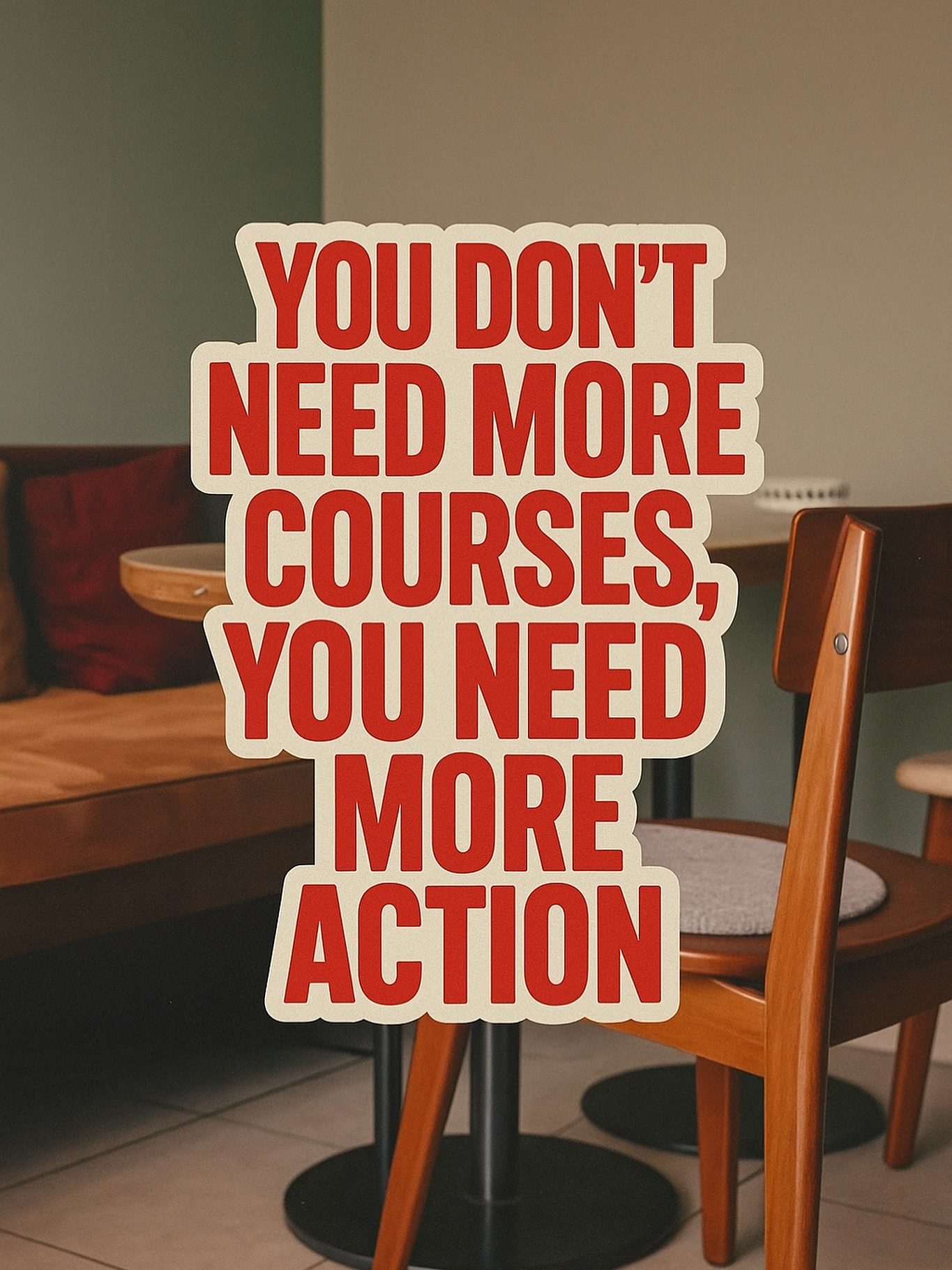
Taking Action: The Key to Turning Knowledge into Results
Most of us are overwhelmed by the amount of information at our fingertips. From blogs to YouTube videos to online courses, there's no shortage of content designed to teach us new skills and impart wisdom. But here's the harsh truth: having all that knowledge doesn't necessarily translate into action. In fact, it's often the lack of action that holds us back from achieving our goals.
Why This Matters
The real challenge today isn't a lack of information; it's a lack of initiative. You might have read countless articles, watched hours of tutorials, and even completed several courses, but if you're not putting that knowledge into practice, it's all for naught. Knowledge without action is like a car without fuel—it might look impressive, but it won't get you anywhere.
The Problem with Information Overload
The Paradox of Learning
In today's digital age, learning has become more accessible than ever. With just a few clicks, you can find courses, videos, and articles on almost any topic imaginable. While this abundance of resources is undeniably beneficial, it also poses a significant challenge. The sheer volume of information can be overwhelming, leading many to fall into a trap of perpetual learning.
The Danger of Inaction
The danger of this never-ending cycle of learning is that it often leads to inaction. We become so focused on acquiring more knowledge that we forget to take the necessary steps to apply what we've already learned. This is where the real problem lies. Knowledge, no matter how comprehensive, is useless unless it's put into action.
The Power of Action
From Knowledge to Results
Taking action is the critical step that bridges the gap between knowledge and results. It's not about how much you know, but what you do with that knowledge. Action transforms information into tangible outcomes. Whether it's starting a new project, launching a business, or simply making a change in your personal life, action is the driving force behind success.
Breaking the Cycle
To break the cycle of endless learning, it's essential to shift your focus from acquiring more knowledge to taking concrete steps towards your goals. This means setting specific, achievable actions and committing to them. Instead of constantly looking for the next course or tutorial, dedicate time to applying what you already know.
Practical Tips for Turning Knowledge into Action
Set Clear Goals
One of the first steps in turning knowledge into action is setting clear, specific goals. These goals should be SMART (Specific, Measurable, Achievable, Relevant, and Time-bound). By having a clear vision of what you want to achieve, you can better map out the actions needed to get there.
Create an Action Plan
Once you have your goals in place, create an action plan. Break down your goals into smaller, actionable steps. This plan should outline what you need to do, when you need to do it, and how you will measure your progress. Having a structured plan makes it easier to stay on track and avoid getting sidetracked by new learning opportunities.
Take Small Steps
Taking action doesn't mean you have to do everything at once. In fact, small, incremental steps often lead to better results. Start with one action and build from there. Celebrate each small victory as it brings you closer to your ultimate goal.
Stay Accountable
Accountability is crucial for turning knowledge into action. Find ways to hold yourself accountable, whether it's through self-imposed deadlines, progress tracking, or even sharing your goals with others. Knowing that you have to report on your progress can be a powerful motivator.
Important Takeaways
Focus on Doing, Not Just Knowing
The key to success is not just acquiring knowledge, but putting it into practice. Shift your focus from learning to doing, and you’ll see a significant change in your results.
Action Leads to Results
Action is the bridge that connects knowledge to results. Without action, all the knowledge in the world is just potential energy waiting to be harnessed.
Start Small, Build Big
You don’t need to take giant leaps to achieve your goals. Small, consistent actions can lead to substantial progress over time.
Conclusion
It’s clear that the real challenge we face today is not a knowledge problem, but an action problem. We have access to more information than ever before, but unless we act on it, it remains just that—information. The next time you feel the urge to sign up for another course or read another blog, pause and ask yourself: "What can I do with the knowledge I already have?" Take that first step, and watch as your knowledge transforms into tangible results.
Watch the Reel
Questions readers ask
How can I start turning knowledge into action?
Begin by setting clear, specific goals based on what you've learned. Break down these goals into smaller, manageable tasks and create a timeline for completion. Start with the first task and focus on completing it before moving on to the next.
What should I do if I feel overwhelmed by the amount of information I have?
Prioritize the information that is most relevant to your goals and focus on applying that first. Remember, it's better to master a few key pieces of knowledge and put them into action than to be overwhelmed by trying to consume everything at once.
How can I bridge the gap between knowledge and results?
To bridge this gap, commit to taking consistent action. Create a habit of applying what you've learned, no matter how small. Track your progress and celebrate small victories to stay motivated. Over time, these actions will add up to significant results.
What are some tips for becoming more action-oriented?
Start by setting deadlines for when you will complete tasks related to your goals. Hold yourself accountable by sharing your plans with others. Additionally, focus on progress over perfection—take action even if it's not perfect, and learn from the process.
Why is it important to stop learning and start doing?
Constant learning without action can lead to analysis paralysis. To see real progress, you must apply what you've learned. Focus on implementing one or two key pieces of knowledge at a time, and reserve some time for action in your daily routine.
How can I make my knowledge more actionable?
To make your knowledge more actionable, identify specific, practical steps you can take based on what you've learned. Create a plan with clear actions and deadlines. Regularly review and update your plan to ensure you're staying on track and making progress toward your goals.
What if I'm struggling to maintain momentum in applying my knowledge?
If you're struggling to maintain momentum, try breaking down your goals into even smaller, more specific tasks. Celebrate each small victory and reward yourself for completing tasks. Consider finding an accountability partner or joining a group focused on similar goals to stay motivated and on track.
Recent articles
Fresh deep dives from the latest Reels we unpacked.




Comments
Be the first to comment.