Vertical Axis Wind Turbines
Vertical axis wind turbines (VAWTs) are an innovative solution in the renewable energy sector, offering unique advantages over traditional horizontal axis wind turbines (HAWTs). These turbines are designed to rotate around a vertical axis, which allows them to capture wind energy from any horizontal direction without the need to turn the turbine to face the wind. This feature makes them particularly effective in urban environments and areas with variable wind conditions.
Context / Why This Matters
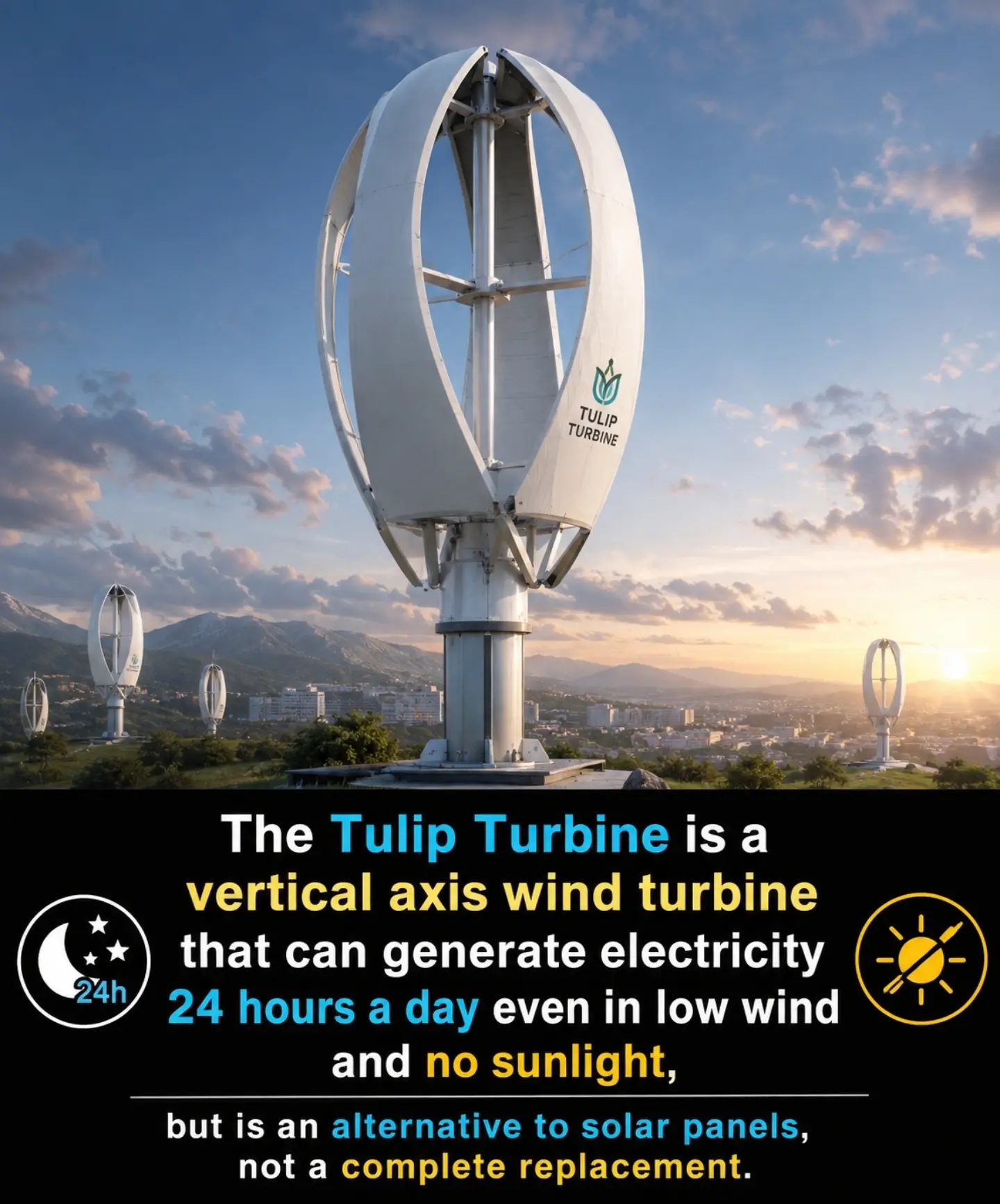
The Tulip Turbine, a prominent example of a VAWT, showcases the potential of this technology. Unlike solar panels, which rely on sunlight and are less effective at night or in overcast conditions, wind turbines like the Tulip Turbine can generate electricity 24 hours a day, making them a reliable source of renewable energy. This continuous power generation capability is especially valuable in areas where wind conditions are favorable and constant.
Main Discussion
How Vertical Axis Wind Turbines Work
Vertical axis wind turbines operate based on the principle of converting the kinetic energy of the wind into mechanical energy, and subsequently into electrical energy. The primary components of a VAWT include the vertical shaft, the blades, and the generator. Wind blows against the blades, causing them to rotate around the vertical shaft. The rotational motion is then converted into electrical energy by the generator.
Advantages of Vertical Axis Wind Turbines
VAWTs offer several advantages over their horizontal counterparts:
- Omnidirectional Wind Capture: VAWTs can capture wind from any horizontal direction, making them ideal for urban and suburban environments where wind direction can be variable.
- Low Wind Speed Operation: VAWTs can generate electricity even in low wind conditions, which is a significant advantage in areas with inconsistent wind speeds.
- Compact Design: The vertical design of VAWTs makes them more compact and easier to install in urban settings, where space is often a constraint.
- Noise Reduction: VAWTs generally produce less noise than HAWTs, making them more suitable for residential areas.
Vertical Axis Wind Turbines Versus Solar Panels
While solar panels are a popular choice for renewable energy, they have limitations. Solar panels rely on sunlight, which means they are less effective at night or in overcast conditions. In contrast, wind turbines like the Tulip Turbine can generate electricity 24 hours a day, making them a more reliable source of renewable energy in areas with consistent wind.
The Tulip Turbine
The Tulip Turbine stands out as a cutting-edge VAWT. This turbine is designed to generate electricity continuously, even in low wind conditions. Its unique design allows it to capture wind from any horizontal direction, making it an ideal solution for urban and suburban environments. The Tulip Turbine is not only an alternative to solar panels but also a reliable source of renewable energy that can operate 24 hours a day.
Practical Tips
Choosing the Right Location
When considering the installation of a vertical axis wind turbine, choosing the right location is crucial. Look for areas with consistent wind speeds and minimal obstacles that could interrupt the wind flow. Urban rooftops, open fields, and coastal areas are often ideal locations for VAWTs.
Maintenance and Upkeep
Regular maintenance is essential to ensure the longevity and efficiency of your wind turbine. This includes inspecting the blades, shaft, and generator for wear and tear, as well as cleaning any debris that could affect performance. Always follow the manufacturer's guidelines for maintenance to keep your turbine running smoothly.
Installation Tips
Ensure that the turbine is installed at the correct height to maximize wind capture. In urban areas, this often means installing the turbine on a rooftop or a tall pole. Additionally, make sure the foundation is secure and can support the weight of the turbine.
Important Takeaways
- Reliability: Vertical axis wind turbines, such as the Tulip Turbine, offer a reliable source of renewable energy that can generate electricity 24 hours a day, even in low wind conditions.
- Versatility: VAWTs can capture wind from any horizontal direction, making them ideal for urban and suburban environments.
- Efficiency: VAWTs can generate electricity even in low wind conditions, making them more efficient in areas with variable wind speeds.
Conclusion
Vertical axis wind turbines represent a significant advancement in the renewable energy sector, offering a reliable and efficient way to harness wind power. The Tulip Turbine, with its ability to generate electricity 24 hours a day and operate in low wind conditions, is a testament to the potential of this technology. By understanding the benefits, installation tips, and maintenance requirements of VAWTs, you can make an informed decision about incorporating this innovative solution into your renewable energy strategy.
Watch the Reel
Questions readers ask
How does a vertical axis wind turbine, like the Tulip Turbine, differ from traditional horizontal axis wind turbines?
Vertical axis wind turbines (VAWTs) rotate around a vertical axis, allowing them to capture wind energy from any horizontal direction. This is unlike traditional horizontal axis wind turbines (HAWTs) that need to turn to face the wind, making VAWTs more effective in urban settings and areas with variable wind conditions.
Why are vertical wind turbines suitable for urban environments?
Vertical wind turbines, such as the Tulip Turbine, are suitable for urban environments because they can generate power from winds coming from any horizontal direction. This makes them ideal for cities where wind directions can be unpredictable and buildings can create turbulent wind patterns.
Can the Tulip Turbine generate power 24/7?
The Tulip Turbine, like other vertical axis wind turbines, can generate power around the clock. Unlike solar panels, which rely on sunlight, wind turbines can produce energy as long as there is wind. Even in low wind speeds, the Tulip Turbine can harness enough energy to produce electricity.
What advantages does the Tulip Turbine offer in variable wind conditions?
The Tulip Turbine's vertical axis design allows it to capture wind energy from any horizontal direction, making it highly effective in areas with variable wind conditions. This ensures a consistent power output, even when wind directions change frequently.
How does the Tulip Turbine compare to solar panels in terms of power generation?
The Tulip Turbine and solar panels serve as complementary power sources, not direct replacements. While solar panels are dependent on sunlight, the Tulip Turbine can generate power continuously, day and night, making it a reliable component of a renewable energy system.
Is the Tulip Turbine a viable solution for low wind speed areas?
Yes, the Tulip Turbine is designed to operate efficiently even in low wind speeds, making it a viable solution for areas with less consistent wind. The vertical design allows it to harness energy from any horizontal direction, maximizing its efficiency in a variety of conditions.
What makes the Tulip Turbine a good choice for urban wind power?
The Tulip Turbine's ability to generate power from winds coming from any horizontal direction makes it an excellent choice for urban wind power. Its compact size and vertical orientation also make it suitable for installation in urban areas, where space can be limited.
Related deep dives
Similar reads based on topic and creator.




Recent articles
Fresh deep dives from the latest Reels we unpacked.




Comments
Be the first to comment.