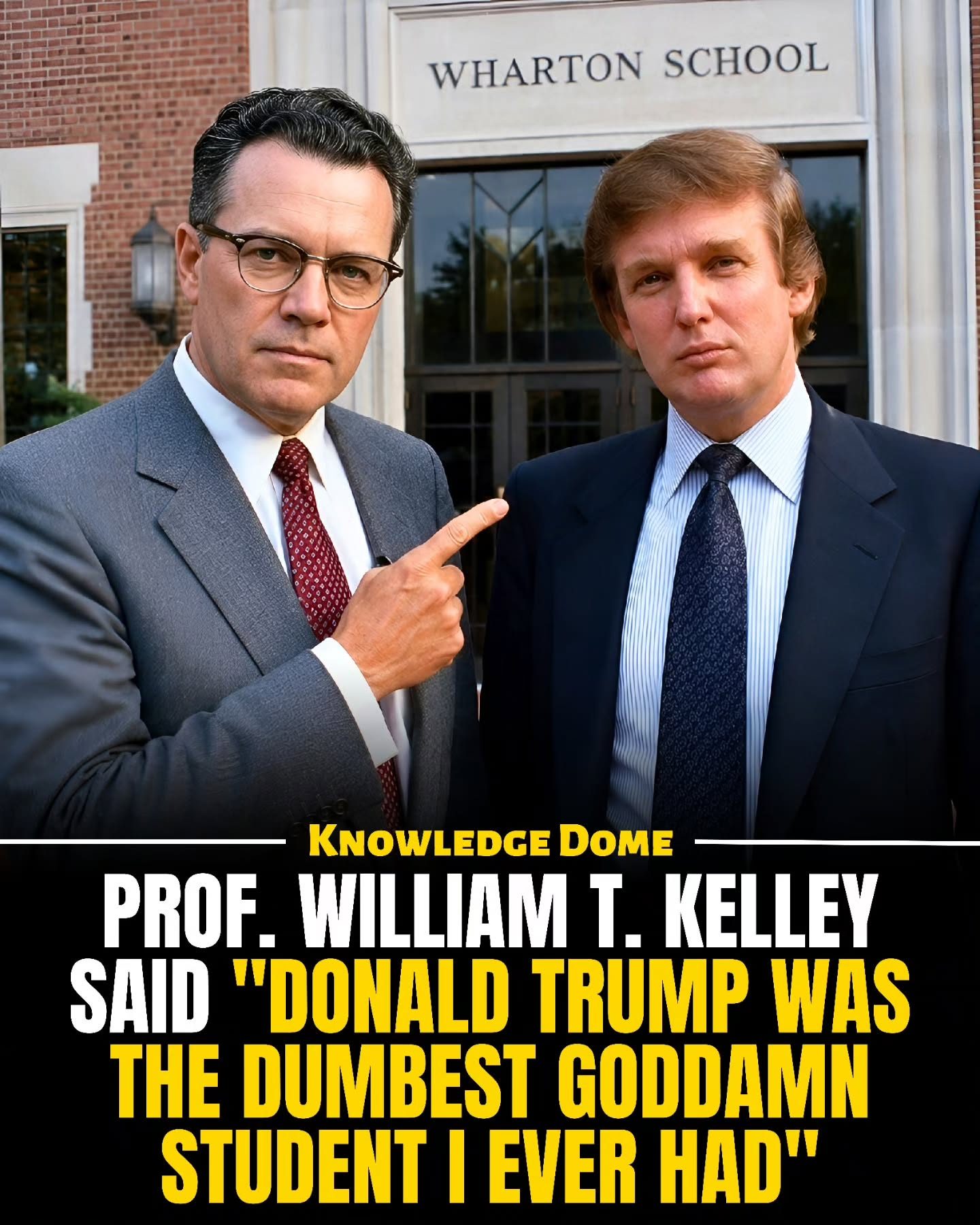
Donald Trump and the Controversial Kelley Quotes
The legacy of Donald Trump's time at Wharton School continues to spark debate, largely due to a quote attributed to Professor William T. Kelley. Kelley, a respected figure who taught at the Wharton School at the University of Pennsylvania for 31 years, is often remembered for his harsh assessment of Trump, who was a student there in the late 1960s. This quote has been widely circulated and has become a notable part of Trump's public image.
Why This Matters
The quote, attributed to Professor Kelley, has been the subject of significant attention. It has influenced perceptions of Trump's academic abilities and has been used to challenge the image that Trump has cultivated of himself as a highly successful and intelligent businessman. The claim that Kelley described Trump as “the dumbest goddamn student I ever had” has spread widely, becoming a recurring topic in political discourse. This controversy highlights the intersection of personal narratives, academic performance, and public perception in the context of one of America's most prominent political figures.
The Kelley Quote
Origins and Spread
The quote, "Donald Trump was the dumbest goddamn student I ever had," was first reported by Frank DiPrima, who was close to Professor Kelley. According to DiPrima, Kelley expressed strong disdain for Trump's academic performance and attitude. The professor reportedly found Trump arrogant and lacking genuine interest in learning. It is notable that this quote has not been directly attributed to Kelley through public recordings or written statements. Instead, it comes from secondhand accounts, which have circulated over the years.
Academic Performance Debate
Trump has often highlighted his academic achievements, claiming to have graduated at the top of his Wharton class. However, this claim has been met with skepticism. Critics have pointed to reports suggesting that Trump's actual rank was much lower. The fact that official class rankings were never publicly released has left this matter unresolved, with no concrete evidence to back either side. Trump himself has acknowledged in his book, The Art of the Deal, that the degree itself is not a definitive proof of intelligence, though many in the business world still regard it as a significant accomplishment.
Public Image and Self-Presentation
Donald Trump has frequently used his Wharton affiliation as part of his public image, presenting himself as a smart and successful individual. This narrative adds a layer of complexity to the Kelley quote. The intersection of Trump's public persona and the quote attributed to Kelley raises questions about the reliability of secondhand accounts in shaping public perception. It also underscores the importance of verifying sources and the potential impact of unverified information on public discourse.
Practical Tips for Understanding Political Narratives
Understanding political narratives, especially those involving controversial figures, requires a critical approach. Here are some practical tips for navigating such controversies:
Verify Sources
When dealing with controversial claims, it is essential to verify the sources. Look for primary sources such as direct quotes, public recordings, or written statements. Secondhand accounts can be unreliable and may not provide an accurate portrayal of events.
Consider Context
Context is crucial in understanding political narratives. Consider the historical, social, and political context in which the claims originate. This can provide valuable insights into the motivations behind the statements and the potential biases involved.
Evaluate Motivations
Understanding the motivations of those involved in the controversy can provide clarity. For example, why did Frank DiPrima share the quote attributed to Kelley? What was the intent behind sharing this information, and how has it been used in public discourse?
Important Takeaways
Several key takeaways emerge from this debate:
The Power of Secondhand Accounts
Secondhand accounts can have a significant impact on public perception, even when they lack concrete evidence. The Kelley quote, while widely circulated, has not been directly attributed to Professor Kelley through primary sources. This highlights the power of unverified information in shaping public narratives.
Public Image and Self-Presentation
The way public figures present themselves can influence how their academic and professional achievements are perceived. Trump's use of his Wharton affiliation as part of his public image adds complexity to the debate surrounding his academic performance. It underscores the importance of authenticity and transparency in public discourse.
Importance of Verification
Verifying sources and evaluating the context and motivations behind controversial claims is essential. This approach helps in forming a more accurate understanding of the events and the individuals involved. It also highlights the potential risks of reliance on unverified information in shaping public perceptions.
Conclusion
The controversy surrounding the Kelley quote attributed to Professor William T. Kelley offers valuable insights into the complexities of political narratives. It underscores the importance of verifying sources, considering context, and evaluating motivations in understanding public discourse. Whether the quote is accurate or not, it has become a notable part of the narrative surrounding Donald Trump's academic and public life. This debate serves as a reminder of the power of unverified information and the need for critical evaluation in shaping public perceptions.
Watch the Reel
Questions readers ask
What is the origin of the controversial quote about Donald Trump by Professor William T. Kelley?
The controversial quote about Donald Trump, attributed to Professor William T. Kelley, originates from secondhand accounts. Kelley, who taught at the Wharton School, reportedly described Trump as “the dumbest goddamn student I ever had,” although this quote is not directly documented in any official records. It has since circulated widely, sparking debates about Trump's academic abilities and public image.
Why has the Kelley quote become a subject of significant attention?
The Kelley quote has gained significant attention because it challenges the image of Donald Trump as a highly successful and intelligent businessman. Additionally, it has become a focal point in discussions about Trump’s academic abilities and the validity of his business acumen, making it a subject of ongoing debate and scrutiny.
Is there any official documentation of Kelley's quote about Trump?
There is no official documentation of Professor William T. Kelley's quote about Donald Trump. The quote has only surfaced through secondhand accounts, which has led to speculation and debate. Without direct evidence, it remains a matter of hearsay, fueling the controversy surrounding Trump's academic performance.
How has the Kelley quote influenced public perceptions of Trump?
The Kelley quote has significantly influenced public perceptions of Donald Trump by casting doubt on his academic abilities. It has been used to challenge the narrative that Trump has cultivated of himself as a highly successful and intelligent businessman, and it has become a notable part of his public image.
What is the context of Trump's time at the Wharton School?
Donald Trump attended the Wharton School at the University of Pennsylvania in the late 1960s. His time there has been a subject of interest and debate, largely due to the controversial quote by Professor William T. Kelley. Trump's academic performance during his Wharton years has been scrutinized, with the Kelley quote playing a central role in these discussions.
What is the significance of the Kelley quote in the context of Trump's public image?
The Kelley quote is significant because it directly challenges the image of Donald Trump as a highly intelligent and successful businessman. It has been used as evidence to question Trump's academic abilities, contributing to ongoing debates about his competence and credibility in both academic and business settings. The quote has become a recurring point of discussion in media and public discourse.
What is the background of Professor William T. Kelley, who made the controversial quote about Trump?
Professor William T. Kelley was a respected figure who taught at the Wharton School at the University of Pennsylvania for 31 years. He is known for his strong opinions and direct assessments of his students. Kelley's alleged quote about Donald Trump is a notable part of his legacy, largely because it has sparked enduring debate about Trump's academic abilities and public image.
Related deep dives
Similar reads based on topic and creator.

Recent articles
Fresh deep dives from the latest Reels we unpacked.




Comments
Be the first to comment.