Tariff Rates
Tariff rates are a critical component of international trade, influencing the flow of goods and the economic relations between nations. Recent announcements have highlighted significant changes in tariff rates, particularly those imposed by the United States. Understanding these changes is essential for businesses and consumers alike, as they can have far-reaching impacts on the global economy.
Why This Matters
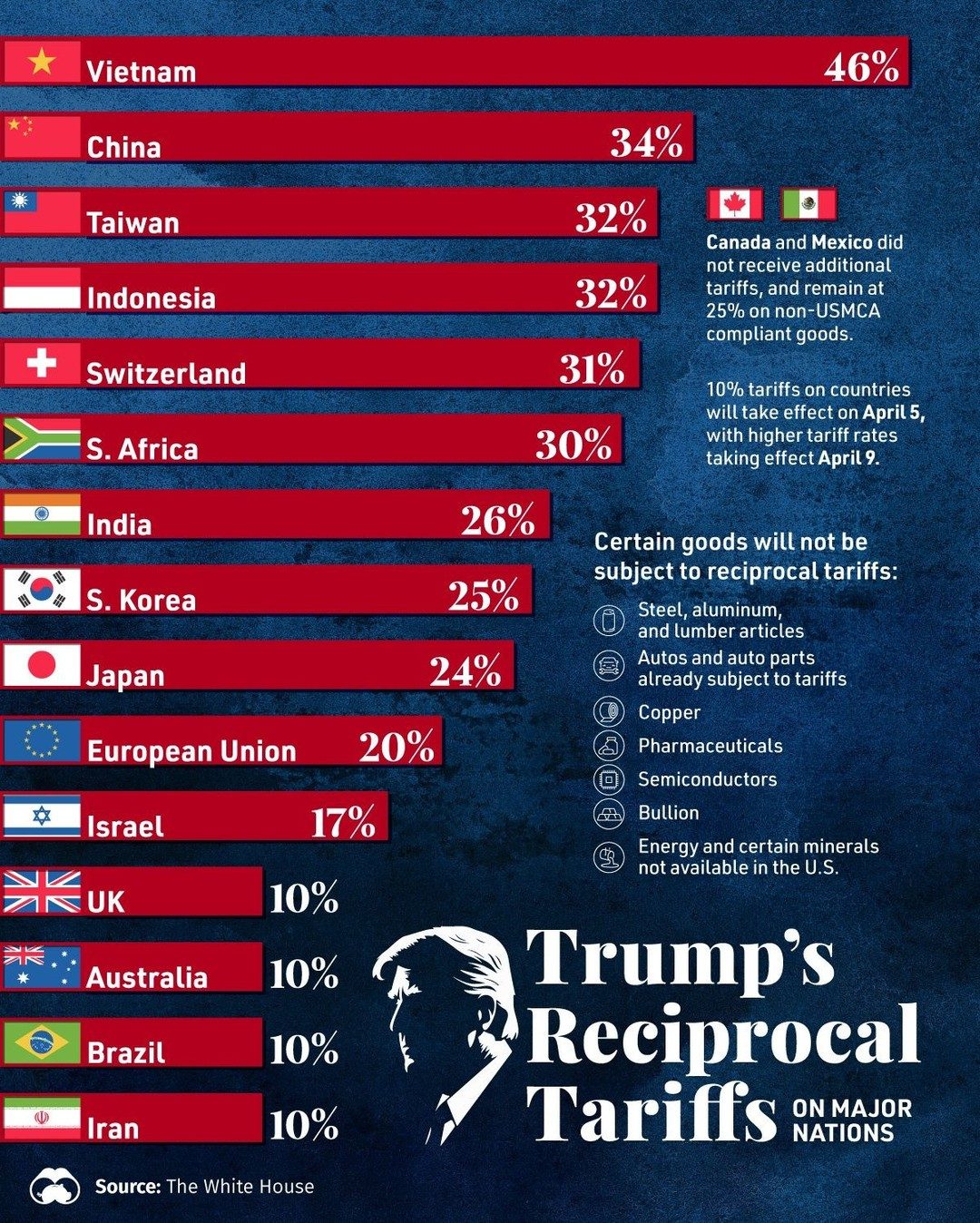
Tariffs are essentially taxes on imported goods, designed to protect domestic industries and generate revenue. When the United States announces new tariff rates, it affects a wide range of countries and products. For instance, the tariffs of 10% that came into effect on April 5, 2020, were part of a broader strategy aimed at addressing trade imbalances and protecting American industries. Countries facing higher rates, such as Vietnam, China, and Taiwan, saw these tariffs imposed on April 9. These changes reflect a significant shift in trade policy and have implications for global supply chains, consumer prices, and economic stability.
Main Discussion
Countries Impacted
Vietnam, China, and Taiwan faced the highest reciprocal tariffs, with rates of 46%, 34%, and 32%, respectively. These high tariffs are aimed at addressing specific trade issues and protecting certain industries within the United States. Other countries, such as Switzerland, South Africa, India, South Korea, and Japan, also saw significant increases in tariff rates, ranging from 20% to 32%. The European Union, Israel, the UK, Australia, Brazil, and Iran were subject to tariffs of 20% or less.
Exemptions and Special Considerations
Not all countries were subjected to these new tariffs. Notably, Canada and Mexico did not receive additional tariffs and remained at 25% on non-USMCA compliant goods. This exemption highlights the strategic importance of these countries in the context of the United States-Mexico-Canada Agreement (USMCA). Further, certain goods were excluded from the additional tariffs, including steel, aluminum, lumber, autos and auto parts, copper, pharmaceuticals, semiconductors, bullion, energy, and certain minerals. This list underscores the selective nature of the tariffs, aiming to protect critical industries while minimizing broader economic disruptions.
Goods Excluded
The list of goods excluded from the additional tariffs includes a range of essential items. Steel, aluminum, and lumber articles are crucial for manufacturing and construction, while autos and auto parts are vital for the automotive industry. Copper, pharmaceuticals, and semiconductors are key components in technology and healthcare, while bullion, energy, and certain minerals are essential for various industries.
Implications for Trade
The imposition of these tariffs is part of a broader trade strategy aimed at rebalancing trade relations. For countries facing higher tariffs, the impact can be significant, potentially leading to increased costs for businesses and consumers. Conversely, industries within the United States that benefit from these tariffs may see increased demand and stability.
Practical Tips
For businesses operating in affected countries, it is crucial to stay informed about these changes and adapt accordingly. This may involve re-evaluating supply chains, exploring alternative sourcing options, or adjusting pricing strategies. For consumers, understanding which goods are subject to tariffs can help in making more informed purchasing decisions. For instance, if a product is subject to higher tariffs, it may be more expensive, and consumers might consider looking for alternatives.
Important Takeaways
These tariffs reflect a strategic shift in U.S. trade policy, with a focus on protecting domestic industries and addressing trade imbalances. High-tariff countries need to assess their trade relations with the United States and consider potential adjustments to their export strategies. Exemptions for certain goods and countries highlight the nuanced approach to these tariffs, aimed at minimizing broader economic disruptions.
Conclusion
Tariffs are a complex and evolving aspect of international trade, and recent changes in U.S. tariff rates have significant implications for global trade. Understanding these changes is crucial for businesses, consumers, and policymakers alike. By staying informed and adapting to these shifts, stakeholders can navigate the changing landscape of international trade more effectively.
Watch the Reel
Questions readers ask
Which countries have been most affected by Trump's reciprocal tariffs?
The most significantly affected countries have been China and Vietnam, with tariffs as high as 46%. Other major nations like Canada and Mexico have also faced notable tariffs, influencing their trade dynamics with the U.S.
How do tariffs impact supply chains?
Tariffs can disrupt supply chains by increasing the cost of imported goods, leading to potential shortages. This can also cause companies to seek alternative suppliers, which may alter the flow of goods and production processes.
What is the significance of the April 2024 tariff announcements?
The April 2024 announcements related to tariffs are part of a larger strategy aimed at addressing trade imbalances. Specifically, the 10% tariffs implemented on certain goods underscore the U.S. administration's efforts to adjust trade policy and impact the global trade landscape.
Which goods are most affected by the additional US tariffs on imports?
The additional tariffs on imports have affected a wide range of products, including raw materials, electronics, and consumer goods. These tariffs can lead to increased prices for these items in the U.S. market, impacting both businesses and consumers.
How have US tariffs on China and Vietnam influenced global trade?
The high tariffs on China and Vietnam have led to shifts in global trade patterns. These tariffs have prompted some companies to relocate their manufacturing operations to other countries, altering the global supply chain and trade dynamics. Additionally, these tariffs can lead to retaliatory measures from affected nations, further complicating global trade relations.
What are the implications of US tariffs on Canada and Mexico?
The U.S. tariffs on Canada and Mexico have significant implications for trade within North America. These tariffs can disrupt the flow of goods across borders, increase costs for both consumers and businesses, and potentially lead to retaliatory measures from these countries, further impacting trade stability in the region.
Related deep dives
Similar reads based on topic and creator.

Recent articles
Fresh deep dives from the latest Reels we unpacked.




Comments
Be the first to comment.