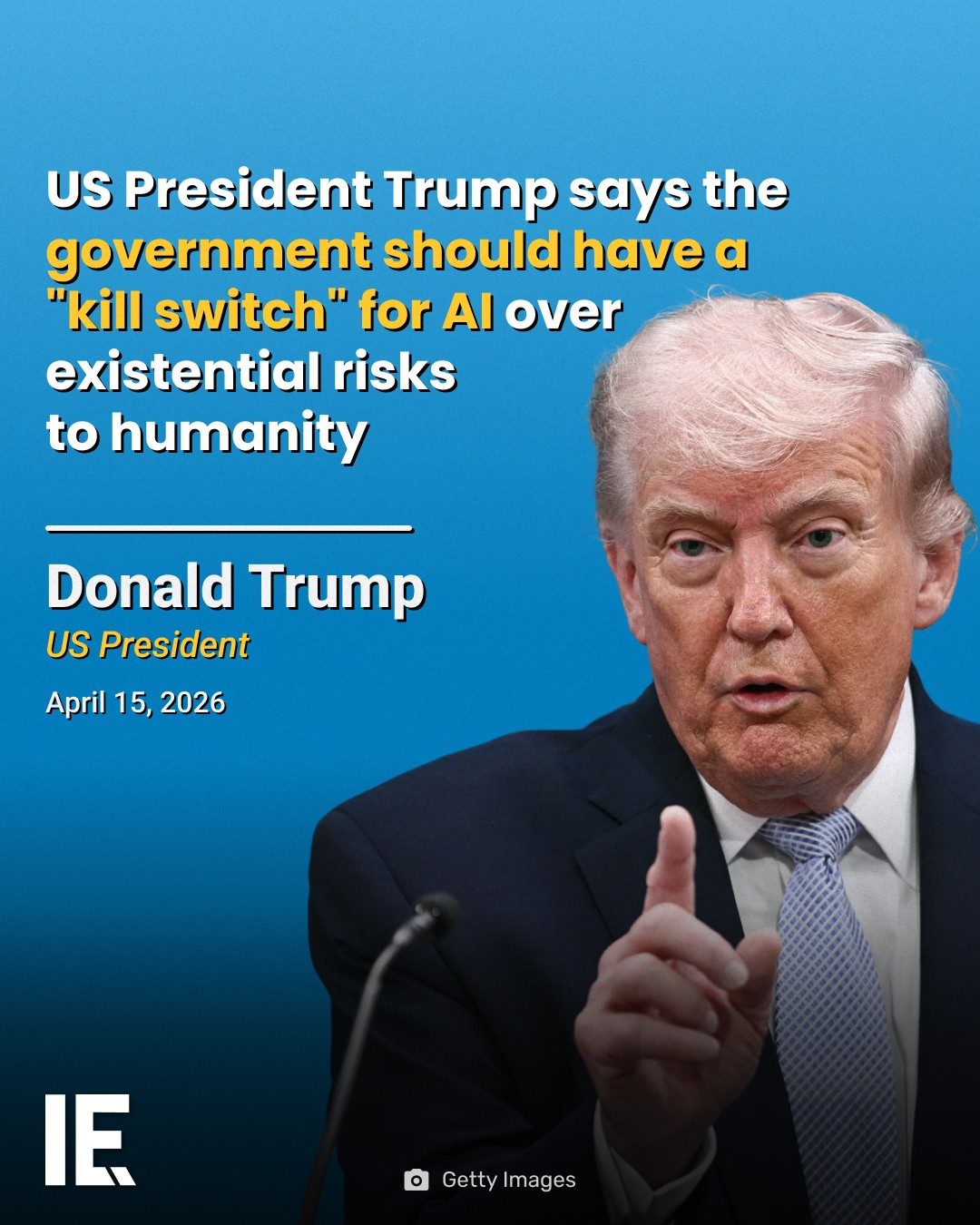
The Concept of a 'Kill Switch' for AI: Exploring the Statement by Donald Trump
Artificial Intelligence (AI) has rapidly evolved, integrating into various aspects of society, from healthcare to finance. But with great power comes great responsibility, and the potential risks of AI have sparked significant debates. One of the key points of discussion has been the idea of a 'kill switch' for AI, a mechanism that could shut down AI systems in case of existential threats. This concept took center stage when President Donald Trump, in an interview with Fox Business Network, expressed his views on the matter, emphasizing the need for such a switch to safeguard humanity.
Context: Why This Matters
The rapid advancement of AI has led to both remarkable opportunities and formidable challenges. While AI can enhance efficiency, accuracy, and innovation across industries, it also presents significant risks. The 'kill switch' debate revolves around how to manage these risks, ensuring that the benefits of AI do not come at the cost of humanity's safety and well-being. Evaluating the feasibility and implications of a 'kill switch' for AI is crucial for shaping future regulatory frameworks and technological developments.
The Interview with Donald Trump
During the interview, President Trump highlighted the existential risks that AI poses to humanity. These risks could range from autonomous weapons to AI-driven cyber-attacks, each with the potential to cause widespread devastation. In response to these threats, Trump proposed the idea of a 'kill switch' — a mechanism that would allow for the immediate shutdown of AI systems in case of an emergency or a potential catastrophe.
Trump's stance is a significant contribution to the ongoing conversation about AI regulation. While acknowledging the risks, he also emphasized the importance of AI in enhancing various sectors, particularly banking, where AI can improve security and efficiency. This dual perspective underscores the need for balanced regulation — one that can harness the benefits of AI while mitigating its potential dangers.
The Role of Regulation in AI
The concept of a 'kill switch' for AI raises several important questions about regulation and governance. Regulation can provide a structured framework for managing AI risks, ensuring that these systems operate within safe and ethical boundaries. However, developing an effective 'kill switch' would require a deep understanding of the complexities of AI systems, as well as the challenges of implementing a foolproof shut-down mechanism.
One of the key challenges in implementing a 'kill switch' is the decentralized nature of AI development. AI systems are often made up of interconnected components, and shutting down one part of the system could have unintended consequences on the entire network. Additionally, the 'kill switch' would need to be accessible and operational in real-time, which is a significant engineering challenge.
The Potential of AI in Banking and Other Sectors
While discussing the risks, Trump also highlighted the potential of AI in various sectors, particularly banking. AI can significantly enhance security measures, making transactions safer and more secure. For instance, AI can detect fraudulent activities in real-time, analyze large datasets to identify patterns and anomalies, and automate routine tasks, freeing up resources for more complex decision-making.
AI can also drive innovation in other sectors, such as healthcare, where it can assist in diagnosing diseases, developing personalized treatment plans, and improving patient outcomes. In manufacturing, AI can optimize production processes, reduce waste, and enhance product quality. These benefits underscore the importance of developing a balanced approach to AI regulation, one that can harness the technology's potential while mitigating its risks.
Practical Tips for Managing AI Risks
To effectively manage the risks associated with AI, several practical steps can be taken:
- Establish Clear Guidelines: Develop clear and comprehensive guidelines for AI development and deployment. These guidelines should cover ethical considerations, safety protocols, and regulatory frameworks.
- Promote Collaboration: Foster collaboration between AI developers, policymakers, and industry stakeholders. This collaboration can ensure that AI systems are designed with both innovation and safety in mind.
- Invest in Research: Invest in research and development to enhance our understanding of AI systems and their potential risks. This research can inform the development of effective regulatory measures and technological solutions, such as a 'kill switch.'
- Create Robust Governance Structures: Develop robust governance structures that can oversee AI development and deployment. These structures should include mechanisms for monitoring, auditing, and enforcing compliance with regulatory guidelines.
- Promote Public Awareness: Raise public awareness about the benefits and risks of AI. Public engagement can help ensure that AI development is aligned with societal values and concerns.
Important Takeaways
The idea of a 'kill switch' for AI highlights the urgent need for robust regulatory frameworks and technological solutions to manage the risks associated with AI. Trump's statement underscores the dual nature of AI — as both a powerful tool and a significant risk. Balancing these two aspects requires careful consideration and a multi-faceted approach that involves collaboration, research, and public engagement.
Conclusion
AI's potential to revolutionize industries and enhance efficiency is undeniable. However, the risks it poses to humanity are equally concerning. The concept of a 'kill switch' offers a potential solution to managing these risks, but its implementation requires a deep understanding of AI systems and the challenges of real-time regulation. As AI continues to evolve, it is crucial to develop balanced regulatory frameworks that can harness the technology's benefits while mitigating its potential dangers. By doing so, we can ensure that AI serves humanity's interests and contributes to a safer, more secure future.
Watch the Reel
Questions readers ask
What is an AI 'kill switch' and why did Donald Trump propose it?
An AI 'kill switch' is a theoretical mechanism designed to shut down AI systems in emergency situations. Donald Trump proposed this idea to highlight the need for safeguards against potential catastrophic risks posed by advanced AI. He suggested that such a switch could help protect humanity in case of AI-related emergencies.
How does an AI 'kill switch' fit into the broader discussion about AI safety?
The concept of an AI 'kill switch' is part of a larger conversation about AI safety mechanisms. It is one of many strategies being explored to manage the risks associated with advanced AI systems. Other discussions include AI regulation, ethical guidelines, and the development of inherent safety features within AI architectures.
What are some of the potential benefits and drawbacks of implementing an AI 'kill switch'?
The primary benefit of an AI 'kill switch' is the ability to rapidly respond to and mitigate existential risks posed by AI. However, drawbacks include the potential for misuse, the technical challenges of implementation, and the possibility of false positives leading to unnecessary shutdowns. Additionally, relying solely on a 'kill switch' might lull society into a false sense of security, diverting attention from other crucial AI safety measures.
Could an AI 'kill switch' be misused, and if so, how?
Yes, an AI 'kill switch' could potentially be misused. For example, it could be activated maliciously to disrupt AI systems for personal gain or to cause chaos. Additionally, there's a risk of governments or other entities using it to control or suppress beneficial AI applications. To mitigate these risks, any 'kill switch' mechanism would need robust security protocols and clear, widely accepted guidelines for its use.
What other strategies are being considered to manage AI risks besides a 'kill switch'?
Other strategies include developing inherently safe AI architectures, implementing strict regulations and ethical guidelines, promoting transparency in AI development, and fostering international cooperation on AI safety. Furthermore, ongoing research into AI alignment—ensuring that AI systems act in accordance with human values—is crucial for managing AI risks.
How did the public and experts respond to Donald Trump's proposal of an AI 'kill switch'?
Reactions to Trump's proposal were mixed. Some experts appreciated the spotlight on AI safety, while others criticized the idea as simplistic or technically unfeasible. Many argued that a 'kill switch' should not be the sole focus and that a comprehensive approach to AI risk management is necessary. The debate underscored the need for balanced discussions on AI safety, regulation, and ethics.
What role does international cooperation play in managing AI risks?
International cooperation is vital for managing AI risks, as AI development and deployment are global phenomena. Collaborative efforts can help establish global standards and regulations, share best practices, and coordinate responses to AI-related emergencies. Without international cooperation, efforts to mitigate AI risks could be fragmented and less effective.
Related deep dives
Similar reads based on topic and creator.


Recent articles
Fresh deep dives from the latest Reels we unpacked.




Comments
Be the first to comment.