Book Digitization: The Role of Robotic Scanners in Preserving Cultural Heritage
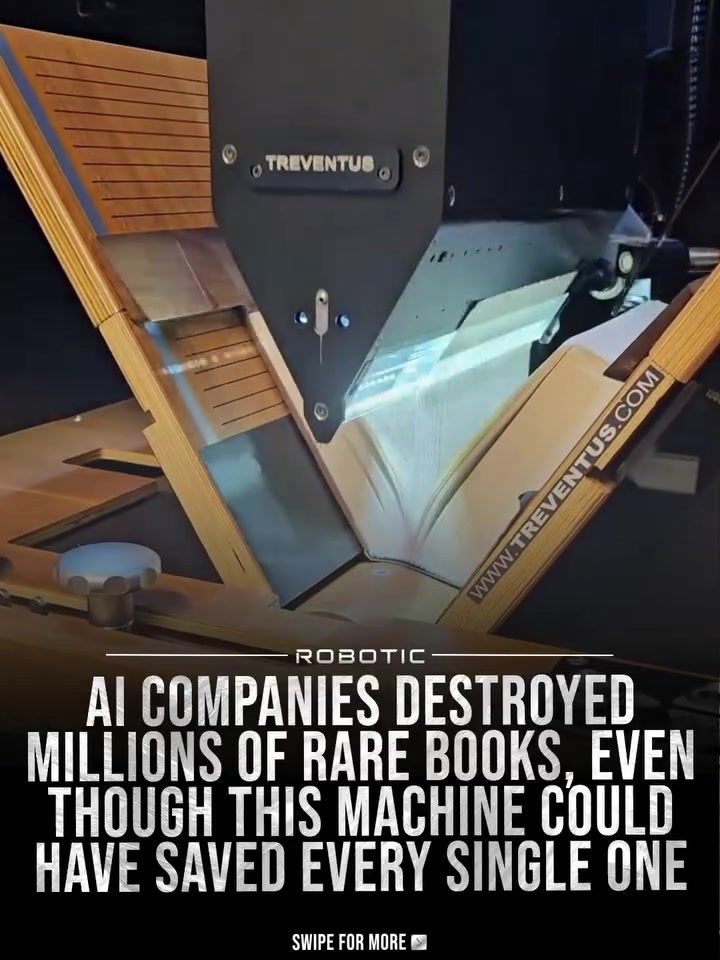
AI companies are racing to digitize millions of books to train their models, often using destructive scanning methods. This process involves purchasing books, removing their bindings, scanning every page, and then discarding the originals. One such company, Anthropic, has purchased millions of printed books for this purpose. While this method is faster and cheaper, it raises significant concerns about the preservation of rare and out-of-print works. Fortunately, non-destructive book scanning systems like the Treventus robotic book scanner offer a solution that can digitize books without damaging them.
Why This Matters
The digitization of books is crucial for advancing AI technologies, but it comes with a significant cultural cost. Destructive scanning, while efficient, leads to the permanent loss of physical books—many of which are rare and irreplaceable. This practice highlights the growing challenge of balancing the rapid development of AI with the preservation of cultural heritage. The destruction of millions of books by AI companies, which could have been preserved, underscores the need for more responsible digitization methods.
The Role of Robotic Book Scanners
Non-destructive book scanning systems, such as the Treventus robotic book scanner, are designed to digitize books without causing any damage to the physical copies. Here's how these machines work and why they are essential for preserving cultural heritage.
How Robotic Book Scanners Work
Robotic book scanners use advanced algorithms and mechanical components to carefully handle and digitize books. The machine can open the book to the desired page, scan it at high resolution, and then close the book gently, ensuring that no damage is done to the binding or the pages. This process is slower than destructive scanning, but the preservation of the original book makes it a worthwhile investment for organizations concerned with cultural heritage.
Key Features of the Treventus Robotic Book Scanner
The Treventus robotic book scanner stands out for several reasons:
- Precision Handling: The machine is equipped with robotic arms that can delicately handle books of various sizes and conditions. This precision ensures that the books remain intact throughout the scanning process.
- High-Resolution Scanning: The scanner captures high-resolution images of each page, preserving the details and quality of the original text and images. This is essential for maintaining the integrity of historical documents and rare books.
- Grid Display: The machine's screen displays a grid of scanned pages, allowing users to review the digitized content quickly. This feature ensures that every page is correctly scanned and provides a clear overview of the entire book's contents.
The Importance of Non-Destructive Scanning
Non-destructive scanning is not just about preserving books; it's about preserving cultural heritage. Books are more than just collections of words; they are historical artifacts that carry stories, knowledge, and cultural significance. By digitizing books without destroying them, we can ensure that future generations have access to these invaluable resources, both in digital form and as physical artifacts.
Practical Tips for Digitizing Books
If you're considering digitizing books, whether for personal use or for a larger project, here are some practical tips to ensure the process is efficient and respectful of the original materials.
Choose the Right Equipment
Investing in a non-destructive book scanner, like the Treventus model, is a wise decision. These machines are designed to handle books carefully, ensuring that no damage is done during the scanning process. If you're working on a smaller scale, consider using a hand-held scanner or a flatbed scanner with book cradles to support the pages.
Prep the Books
Before scanning, make sure the books are in good condition. Clean the pages gently to remove any dust or debris. If the book is fragile, consider consulting a professional conservator for guidance on how to handle it safely.
Organize Your Workflow
Plan your scanning workflow to ensure consistency and efficiency. This includes deciding on the resolution, file format, and naming conventions for your scanned files. Organizing your workflow helps to streamline the process and makes it easier to locate specific pages or sections later.
Backup Your Files
Digitizing books creates a wealth of digital data. Ensure that you have a reliable backup system in place to protect your scanned files. This could include external hard drives, cloud storage, or a combination of both. Regular backups safeguard your work against data loss.
Collaborate with Librarians and Archivists
If you're working on a large-scale digitization project, collaborating with librarians and archivists can provide valuable expertise and resources. They can offer insights into best practices for handling and preserving books, as well as help with cataloging and organizing the digitized content.
Important Takeaways
- Non-destructive book scanning systems, like the Treventus robotic book scanner, are essential for preserving rare and out-of-print books.
- Destructive scanning methods, while faster and cheaper, lead to the permanent loss of physical books, which are cultural artifacts.
- Investing in non-destructive scanning technology ensures that future generations can access both digital and physical copies of valuable books.
- Proper preparation, organization, and collaboration are key to successful book digitization.
Conclusion
The challenge of balancing rapid AI development with the preservation of cultural heritage is a complex one. Robotic book scanners offer a solution that respects the value of physical books while also advancing technological progress. By adopting non-destructive scanning methods, we can ensure that the knowledge and cultural significance contained within books are preserved for future generations. The Treventus robotic book scanner is a prime example of how technology can be used to protect and preserve our cultural heritage.
Watch the Reel
Questions readers ask
What makes the Treventus book scanner an appealing choice for book preservation?
The Treventus book scanner is appealing because it digitizes books without causing any damage. This non-destructive process ensures that the original books remain intact, allowing them to be preserved for future generations and researchers.
How does the Treventus scanning process differ from destructive digitization methods?
Unlike destructive methods that involve removing bindings and discarding originals, the Treventus scanner digitizes books page by page while keeping the book intact. This ensures that the physical book is preserved even after digitization.
Why is non-destructive book scanning important for cultural heritage preservation?
Non-destructive book scanning is vital for preserving cultural heritage because it ensures that rare and out-of-print books remain accessible in their original form. This method allows future generations to access both the digital and physical copies, maintaining the integrity of cultural artifacts.
What are the benefits of using a robotic book scanner for digitizing collections?
Robotic book scanners like Treventus offer several benefits, including speed, precision, and the ability to handle books of various sizes and conditions. They minimize human error and ensure consistent quality in the digitization process.
How does the Treventus book scanner contribute to the advancement of AI while preserving books?
The Treventus scanner allows AI companies to digitize large volumes of books without compromising the original copies. The digitized content can be used to train AI models, advancing AI technologies while ensuring that the cultural heritage represented by the books is preserved.
Related deep dives
Similar reads based on topic and creator.



Recent articles
Fresh deep dives from the latest Reels we unpacked.




Comments
Be the first to comment.