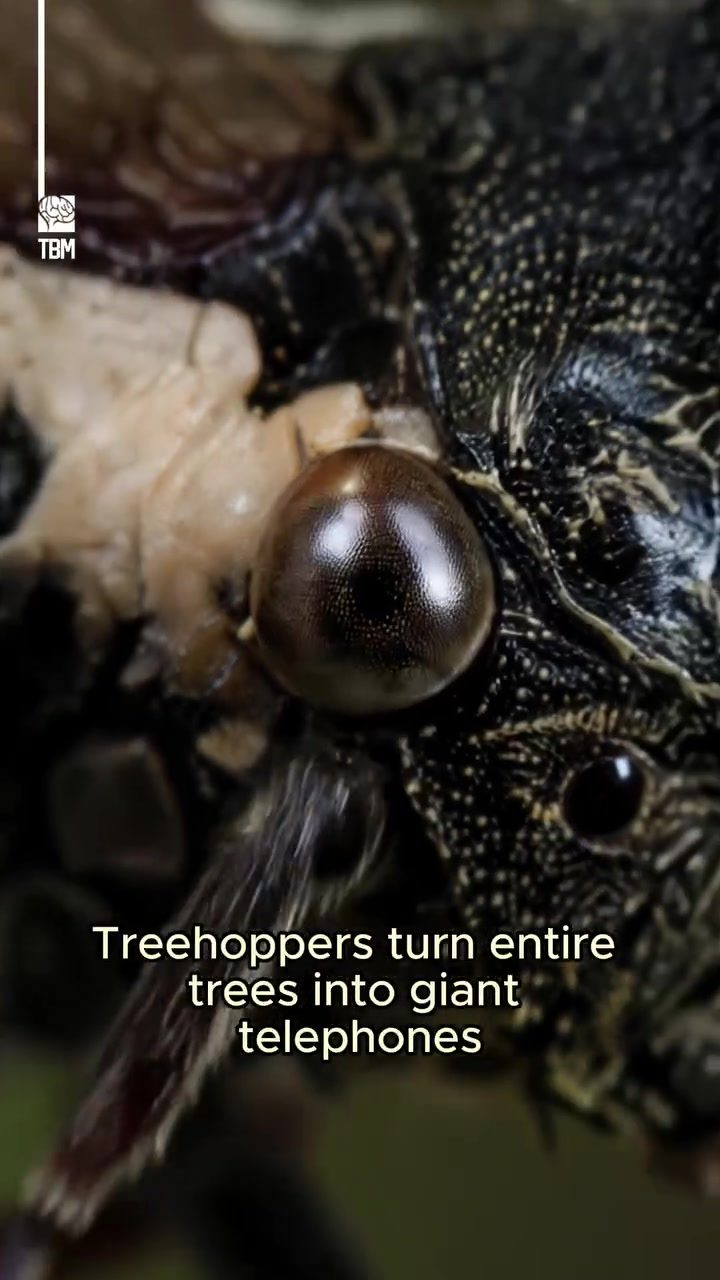
Treehoppers are small, fascinating insects that have evolved a unique way of communicating through vibrations that travel across the plants they inhabit. These insects turn entire trees into complex communication networks, sending and receiving hidden messages that help them navigate their lives, find mates, and stay connected with their young.
Why This Matters
Understanding how treehoppers communicate through plants provides valuable insights into the intricate ways insects interact with their environment. This form of communication is not only remarkable but also crucial for the survival and reproduction of these insects. By using vibrations instead of audible sounds, treehoppers can send precise messages that remain undetected by many predators, giving them a significant advantage in their ecosystem.
The Science of Treehopper Communication
Creating Vibrations
Treehoppers communicate by generating vibrations through specialized muscles. These vibrations are sent through the stem and branches of the plant they are standing on, making the plant itself a medium for their communication. This method of communication is highly effective because it allows messages to travel rapidly and accurately across the plant, reaching other insects even at a considerable distance.
Detecting Vibrations
To detect these vibrations, treehoppers have sensitive organs in their legs, which act as tiny sensors. These organs allow them to pick up the intricate patterns of vibrations, deciphering the messages sent by other treehoppers. The ability to sense these patterns is essential for various aspects of their lives, including mating, avoiding predators, and maintaining family bonds.
The Advantages of Plant-Based Communication
By communicating through the plant rather than through the air, treehoppers gain several advantages. Firstly, their messages remain hidden from many predators, which cannot detect the vibrations in the same way treehoppers do. Secondly, this method of communication ensures that the messages are precise and direct, reducing the risk of misinterpretation. Overall, this unique communication system allows treehoppers to thrive in their environment with remarkable efficiency.
Practical Tips for Observing Treehoppers
If you are interested in observing treehoppers and their unique communication methods, here are a few tips to help you get started:
Locate a Suitable Habitat
Treehoppers are commonly found on various plants, particularly trees and shrubs. Look for areas with dense vegetation and a variety of plant species, as these environments are more likely to support a thriving treehopper population.
Use Magnifying Tools
Treehoppers are small, and their vibrations can be difficult to detect with the naked eye. Use a magnifying glass or a small microscope to get a closer look at these insects and their interactions with the plants.
Be Patient and Quiet
Treehoppers are sensitive to disturbances, and their communication patterns can be easily disrupted. Approach them quietly and be patient, allowing them to go about their activities naturally.
Listen for Vibrations
While you may not be able to hear the vibrations directly, you can sometimes feel them by placing your hand gently on the plant. Pay attention to the subtle movements and vibrations that indicate treehopper communication.
Important Takeaways
Treehoppers are a fascinating example of how insects have adapted to their environment through unique communication methods. By using vibrations to communicate through plants, these insects can send precise messages that remain hidden from many predators. This adaptation helps them survive and thrive in their ecosystem, making them an important part of the natural world.
Conclusion
Treehoppers' ability to turn entire trees into communication networks is a testament to the incredible adaptations found in the natural world. By understanding how these insects communicate through vibrations, we gain a deeper appreciation for the complexity and diversity of insect behavior. Whether you're a nature enthusiast or simply curious about the world around you, observing treehoppers and their unique communication methods can be a rewarding experience.
Watch the Reel
Questions readers ask
How do treehoppers use vibrations for communication?
Treehoppers generate vibrations by moving their bodies and legs against the plant's surface, creating a unique method of communication. These vibrations are transmitted through the plant's tissues, allowing treehoppers to send and receive messages across significant distances. This method is particularly effective for transmitting complex information, such as warnings about predators or signals to attract mates.
What are the advantages of treehoppers using plant-based networks for communication?
Treehoppers' use of plant-based networks for communication offers several advantages. Primarily, it helps them avoid predators by keeping their messages hidden from other animals that rely on audible sounds. Additionally, this method allows treehoppers to stay connected with their young and other members of their colony, enhancing their overall survival and reproductive success. This discreet form of communication is crucial for their survival in diverse ecosystems.
Can treehoppers communicate with other insects through plant vibrations?
While treehoppers primarily use vibrations for communication within their own species, there is evidence that some other insect species can also detect and interpret these vibrations. However, the specific meaning and context of these messages are generally understood only by treehoppers, making their communication system relatively exclusive to their species.
How do treehoppers find mates using their unique communication method?
Treehoppers use specific vibration patterns to signal potential mates. These patterns, which can be detected by other treehoppers through the plant's structure, allow them to locate each other even when they are not in visual range. This method is particularly effective in dense foliage where visual cues might be obscured, ensuring that mates can find each other efficiently.
What role does plant structure play in treehopper communication?
The structure of the plant is crucial for treehopper communication. Different plant species have varying abilities to transmit vibrations, which can affect the range and clarity of the messages. Treehoppers have adapted to choose plants that best facilitate their communication needs, often preferring those with robust and continuous structural elements that support effective vibration transmission.
How do treehoppers use vibrations to avoid predators?
Treehoppers use specific vibration patterns to warn each other about the presence of predators. These warning signals can travel through the plant's structure, alerting other treehoppers to potential danger even if the predator is not visible. This early warning system allows treehoppers to take evasive action, such as moving to a safer part of the plant or adopting a defensive posture, thereby increasing their chances of survival.
Related deep dives
Similar reads based on topic and creator.




Recent articles
Fresh deep dives from the latest Reels we unpacked.




Comments
Be the first to comment.