Transformer Neural Networks: Understanding the Backbone of Modern AI
Transformer neural networks are a cornerstone of modern AI systems, enabling powerful natural language processing (NLP) and generative AI capabilities. These systems, like ChatGPT, Gemini, and Claude, rely on a series of interconnected processes to understand and generate human-like text. Let's dive into the key components: tokenization, transformers, and self-attention mechanisms.
Why This Matters
Understanding how transformer neural networks function is crucial for anyone interested in NLP and generative AI. These technologies are at the heart of chatbots, virtual assistants, and even creative writing tools. By grasping the basics of tokenization and self-attention, you can better appreciate how AI systems interpret and produce text, paving the way for more advanced applications in data science and machine learning.
Tokenization: The Starting Point
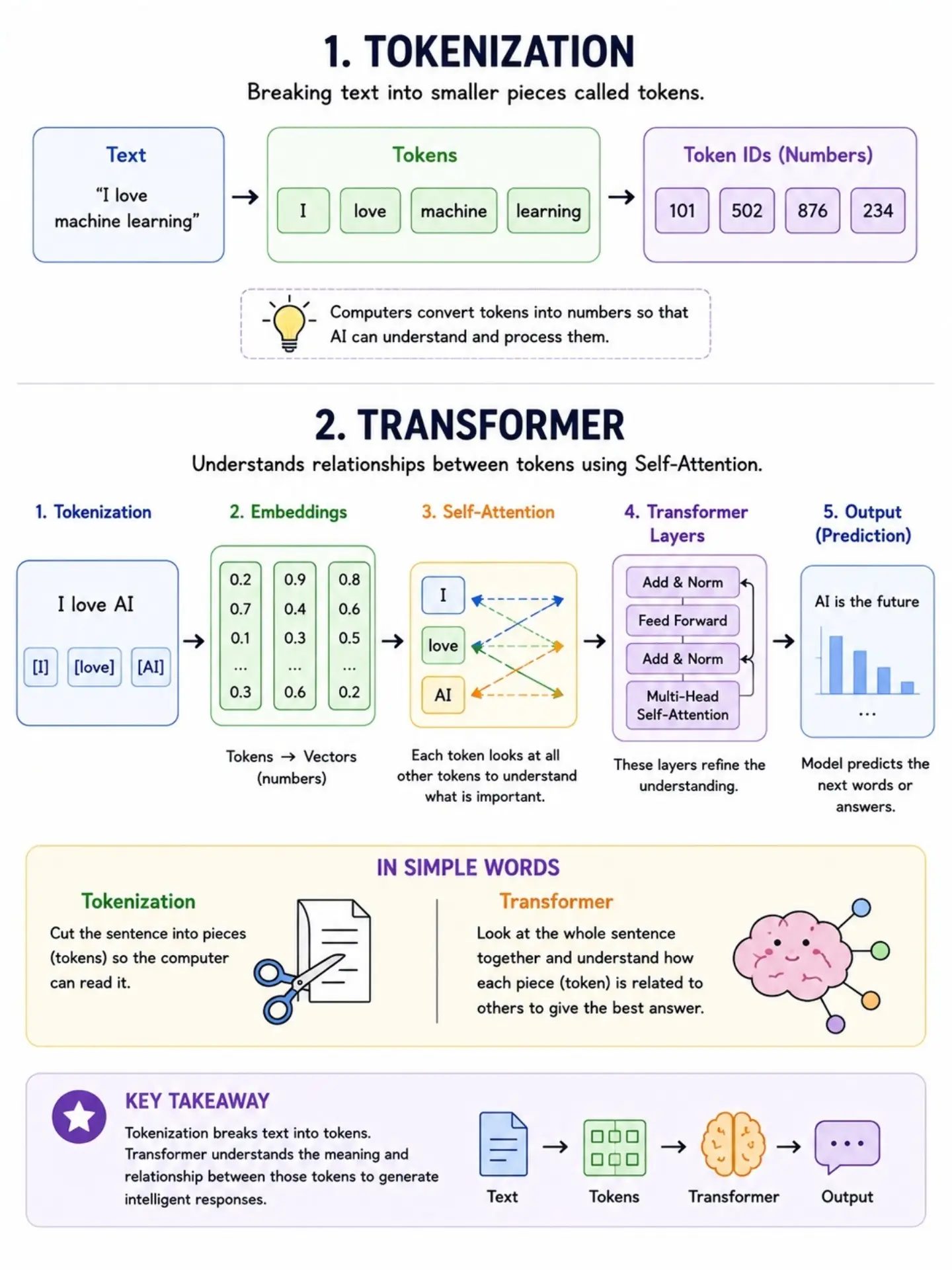
Tokenization is the process where text is broken down into smaller, manageable pieces called tokens. These tokens can be words, subwords, or even characters, depending on the specific algorithm used.
How Tokenization Works
When text is inputted into an AI system, it first undergoes tokenization. For example, the sentence "I love machine learning" might be tokenized into ["I", "love", "machine", "learning"]. Each token is then converted into a numerical representation that the AI can process. This conversion is essential because computers operate on numbers, not raw text.
Importance of Tokenization
Tokenization is the foundation upon which transformer neural networks operate. By breaking down text into tokens, the system can more efficiently process and understand the input. This step is crucial for maintaining context and relationships between words, which is vital for generating coherent and contextually relevant responses.
Transformers: The Powerhouse of AI
Transformers are a type of deep learning architecture that revolutionized NLP. They use a mechanism called self-attention to understand the context and relationships between tokens.
Self-Attention Mechanism
Self-attention allows each token to consider all other tokens in the sequence. This means that the model can understand the importance of each word relative to others, enabling it to grasp the nuances of language.
Multi-Head Self-Attention
Multi-Head Self-Attention is an advanced form of self-attention that processes information through multiple "heads," each focusing on different aspects of the data. This parallel processing enhances the model's ability to capture complex relationships and dependencies within the text.
Add & Norm and Feed Forward
After the self-attention layers, the data passes through Add & Norm (Addition and Normalization) and Feed Forward layers. These steps help refine the understanding by normalizing the data and applying additional transformations to improve accuracy and efficiency.
Output
The final output is a prediction of the next word or sequence, based on the input and the transformations applied by the transformer layers. This is how AI systems generate human-like text, predicting the next word in a sentence or the next sentence in a conversation.
Practical Tips for Understanding Transformers
To better understand and work with transformer neural networks, consider the following tips:
Learn the Basics of Tokenization
Start by understanding how tokenization works. Familiarize yourself with different tokenization techniques and how they impact the input data. This will give you a solid foundation for working with transformers.
Explore Self-Attention
Dive into the concept of self-attention and how it helps the model understand context. Experiment with different types of self-attention, such as Multi-Head Self-Attention, to see how they enhance the model's performance.
Study Real-World Applications
Look at real-world applications of transformers in NLP and generative AI. Analyze how these systems are used in chatbots, virtual assistants, and other AI-driven applications. This will give you practical insights into how transformers are implemented and optimized.
Experiment with Code
Get hands-on experience by implementing transformer models from scratch. Start with simple examples and gradually move to more complex projects. This will deepen your understanding and help you identify best practices.
Important Takeaways
-
Tokenization is the first step in processing text for AI systems. It breaks down text into manageable tokens that can be processed by the model.
-
Transformers use self-attention mechanisms to understand the context and relationships between tokens, enabling them to generate coherent and contextually relevant responses.
-
Self-Attention allows each token to consider all other tokens, capturing the nuances of language.
-
Multi-Head Self-Attention enhances the model's ability to capture complex relationships and dependencies within the text.
-
Add & Norm and Feed Forward layers refine the understanding by normalizing the data and applying additional transformations.
-
Output is a prediction of the next word or sequence, based on the input and the transformations applied by the transformer layers.
Conclusion
Transformer neural networks are at the forefront of modern AI, enabling powerful NLP and generative AI capabilities. By understanding tokenization, self-attention, and the various layers of a transformer, you can gain a deeper appreciation for how these systems function. Whether you're a data scientist, a machine learning enthusiast, or someone curious about AI, grasping these concepts will open up new possibilities and applications. Dive in and explore the fascinating world of transformers to see where it takes you.
Watch the Reel
Questions readers ask
What are transformer neural networks and why are they important in AI?
Transformer neural networks are a type of model used in AI to process and generate human-like text. They are important because they enable advanced natural language processing and generative AI, powering tools like ChatGPT and virtual assistants. By understanding how they work, you can gain insights into the core functionality of modern AI systems.
How does tokenization work in the context of transformer models?
Tokenization is the process of breaking down text into smaller, manageable pieces called tokens. In transformer models, these tokens can be words or even parts of words. Tokenization is a crucial first step in text processing, as it allows the model to understand and interpret the input text more effectively.
What is the self-attention mechanism in transformer neural networks?
The self-attention mechanism is a key component of transformer models that allows them to weigh the importance of different words in a sentence relative to each other. This mechanism enables the model to focus on relevant parts of the text, improving its ability to understand context and generate coherent responses in tools like AI chatbots and creative writing aids.
How do transformer neural networks generate human-like text?
Transformer neural networks generate human-like text by leveraging their understanding of language structure and context through the self-attention mechanism. They use this understanding to predict the next word in a sequence, effectively creating coherent and contextually appropriate sentences. This process is fundamental to AI systems like ChatGPT.
What role do transformer models play in AI chatbots and virtual assistants?
Transformer models are essential for AI chatbots and virtual assistants as they enable these tools to understand and respond to human language effectively. By processing and generating text based on user inputs, transformer models allow chatbots and virtual assistants to engage in meaningful conversations and assist users more naturally.
Can transformer neural networks be used for creative writing?
Yes, transformer neural networks can be used for creative writing. Their ability to understand and generate text based on context makes them well-suited for tools that assist in creative writing. They can help generate ideas, complete sentences, and even write entire passages, making them a valuable resource for writers.
What are some popular tools and systems that use transformer neural networks?
Some popular tools and systems that utilize transformer neural networks include ChatGPT, Gemini, and Claude. These tools leverage the power of transformer models to offer advanced natural language processing and generative capabilities, enabling them to understand and generate human-like text in various applications, from chatbots to virtual assistants and creative writing aids.
Related deep dives
Similar reads based on topic and creator.


Recent articles
Fresh deep dives from the latest Reels we unpacked.




Comments
Be the first to comment.