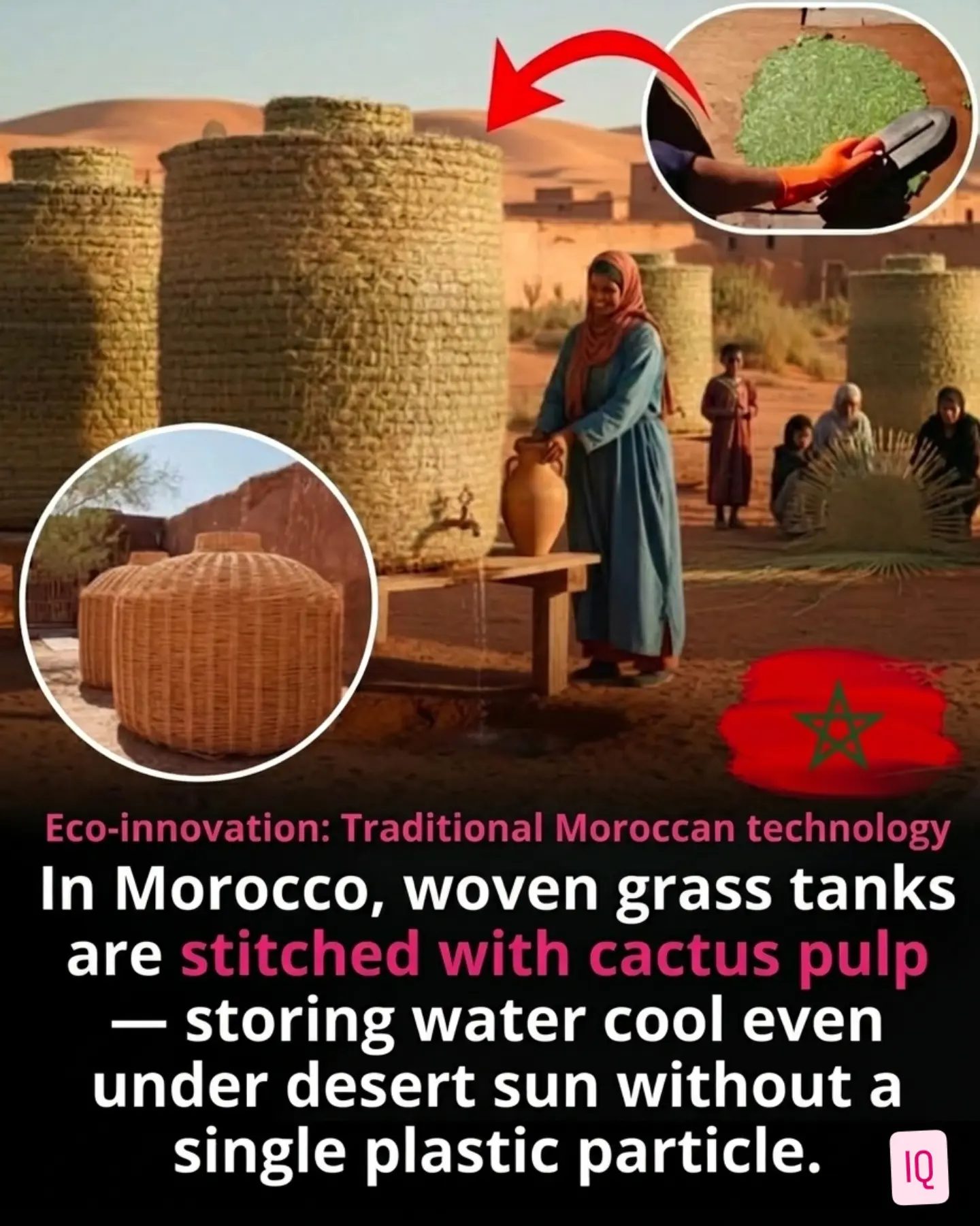
Traditional Moroccan Water Storage
In the arid landscapes of Morocco, a time-honored method of water storage has been used for centuries, offering a sustainable and eco-friendly solution to a critical challenge. This traditional technique employs woven grass tanks, meticulously stitched together using a natural binder made from cactus pulp. This ingenious system not only provides a reliable means of water storage but also ensures that the water remains cool under the intense desert sun, all without the use of any modern synthetic materials.
Why This Matters
Water storage is a vital concern, especially in arid regions where access to fresh water can be scarce. Traditional Moroccan water storage systems address this challenge with a blend of ancient ingenuity and environmental sensitivity. These systems are particularly relevant today, as modern societies seek sustainable solutions to environmental challenges.
The Woven Grass Tanks
The core of this traditional water storage system is the woven grass tank. These large structures are crafted from local grasses, which are abundantly available and renewable. The grasses are woven together to form a sturdy, flexible container. What sets these tanks apart is the use of cactus pulp as a natural binder, which not only holds the tank together but also enhances its durability and breathability.
The process of stitching the grass with cactus pulp involves meticulous craftsmanship. The cactus pulp acts as a natural adhesive, binding the grass fibers together to create a robust and durable structure. This stitching method ensures that the tank can withstand the rigors of the desert environment, including extreme temperatures and harsh weather conditions.
Evaporative Cooling
One of the most remarkable features of these traditional Moroccan water storage systems is their ability to keep the stored water cool even under the desert sun. This is achieved through a process known as evaporative cooling. The breathable nature of the woven grass allows for the evaporation of a small amount of water from the surface of the tank. As the water evaporates, it absorbs heat from the surrounding air, creating a cooling effect that keeps the stored water naturally cold.
Zero-Waste and Eco-Friendly
The traditional Moroccan water storage system stands out as a zero-waste solution, contributing nothing to plastic pollution. The use of local grasses and cactus pulp ensures that the materials are sustainable and renewable. Furthermore, the absence of modern synthetic materials means that there are no plastic particles or microplastics released into the environment. This makes the system not only effective but also environmentally friendly, aligning with modern sustainability goals.
Practical Tips for Implementing Traditional Water Storage
While the traditional Moroccan water storage system has been refined over centuries, there are practical tips that can help in implementing similar systems in other arid regions.
-
Choose the Right Materials: Opt for local, renewable materials such as grasses and natural binders like cactus pulp. This ensures sustainability and availability.
-
Craftsmanship Matters: Pay attention to the stitching and weaving process. The quality of the craftsmanship directly affects the durability and effectiveness of the tank.
-
Location and Placement: Place the tanks in shaded areas or under natural covers to maximize the cooling effect of evaporative cooling.
-
Regular Maintenance: Regularly inspect the tanks for any signs of wear and tear. Repair any damages promptly to maintain the durability and functionality of the tank.
Important Takeaways
This eco-friendly water storage system highlights the value of indigenous knowledge and traditional practices. It offers a sustainable, zero-waste alternative to modern water storage methods, especially in arid and desert regions.
The woven grass tanks, stitched with cactus pulp, are durable and effective in storing water cool, even under the desert sun. By embracing this traditional Moroccan technology, communities can address modern environmental challenges while preserving cultural heritage and promoting sustainability.
Conclusion
The traditional Moroccan method of water storage using woven grass tanks is a testament to human ingenuity and environmental stewardship. By harnessing local materials and ancient knowledge, this system provides a sustainable solution to water storage in arid regions. Whether you're exploring eco-friendly alternatives or seeking to preserve cultural heritage, the traditional Moroccan water storage system offers a model worth emulating.
Watch the Reel
Questions readers ask
What materials are used to create traditional Moroccan water storage tanks?
Traditional Moroccan water storage tanks are made from woven grass, and the natural binder used to hold the grass together is derived from cactus pulp. This makes them an eco-friendly and sustainable solution for water storage in desert environments.
How do traditional Moroccan water tanks keep water cool in the desert?
The woven grass design naturally insulates the water, and the materials used in the tanks have a cooling effect, which helps maintain a lower temperature for the water stored inside, even in the intense desert heat.
How long have traditional Moroccan water storage systems been in use?
These water storage systems have been used for centuries in Morocco's desert regions, demonstrating their effectiveness and reliability over an extended period.
Are there any modern materials used in traditional Moroccan water storage tanks?
No, traditional Moroccan water storage tanks are made entirely from natural materials. They use woven grass for the structure and cactus pulp as a binder, avoiding any modern synthetic materials.
What are the benefits of using traditional Moroccan water storage methods in deserts?
These methods provide a sustainable and reliable way to store water in arid regions. They also keep the water cool, which is crucial for maintaining water quality and preventing evaporation in the desert climate.
Can these traditional water storage methods be used in other arid regions around the world?
Yes, the principles behind traditional Moroccan water storage can be applied to other arid regions. The use of local, natural materials can make these systems adaptable and beneficial in various desert environments.
How are traditional Moroccan water storage tanks constructed?
The tanks are constructed by carefully weaving grass into a tank shape and using cactus pulp as a natural adhesive to hold the grass together, creating a sturdy and durable structure for water storage.
Related deep dives
Similar reads based on topic and creator.



Recent articles
Fresh deep dives from the latest Reels we unpacked.




Comments
Be the first to comment.