Underemployment and Unemployment: College Majors with the Highest Rates
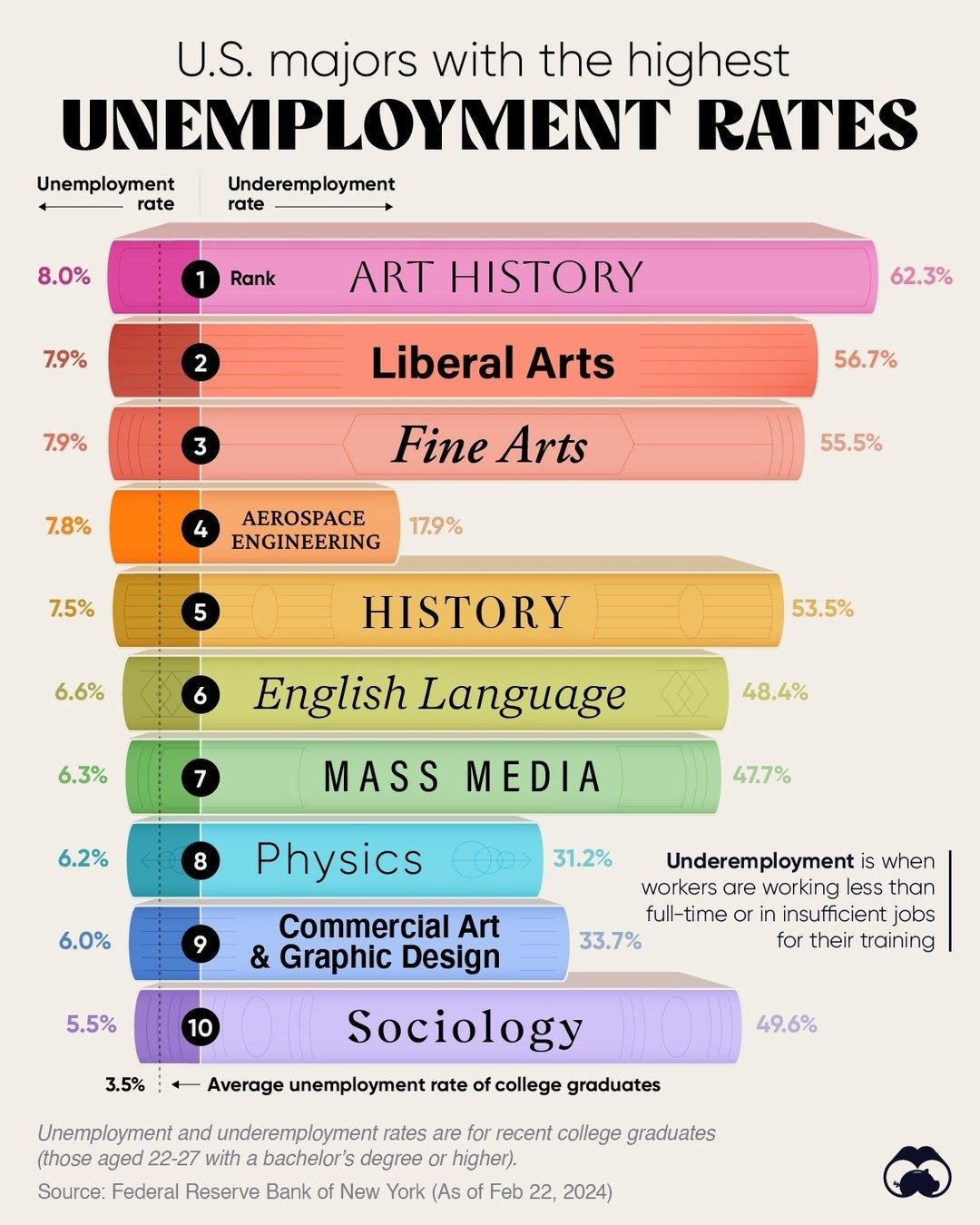
The job market presents unique challenges for recent college graduates, especially those with degrees in certain fields. Over 50% of graduates in majors like Art History, Liberal Arts, Fine Arts, and History find themselves underemployed. This situation highlights the difficulty many young professionals face when transitioning from academia to the workforce. These issues are particularly pronounced among recent graduates aged 22 to 27, who hold a bachelor’s degree or higher.
Context / Why This Matters
Understanding the unemployment and underemployment rates for various majors is crucial for both prospective students and recent graduates. These rates can influence career choices, inform job market strategies, and shape educational policies. The data from the Federal Reserve Bank of New York provides a comprehensive look at the current job market landscape for recent college graduates, offering valuable insights for those navigating their career paths.
Main Discussion
Highest Unemployment Rates
When evaluating unemployment rates, it's clear that certain majors face significantly higher challenges. According to the data, Art History graduates have the highest unemployment rate at 62.3%, followed closely by Commercial Art at 56.7% and Fine Arts at 55.5%. This trend is concerning, as it indicates a substantial mismatch between the skills acquired in these programs and the demands of the job market.
Art and Liberal Arts Majors
Graduates in Art and Liberal Arts fields often face a challenging job market. Majors like Art History, Fine Arts, and Liberal Arts have some of the highest unemployment and underemployment rates. These fields frequently require specialized skills and often lack direct career pathways, leading to higher rates of underemployment. Graduates in these areas may find themselves working in roles that do not fully utilize their training or working part-time, which can be financially and professionally limiting.
History and English Language
Another significant group affected by high unemployment and underemployment rates includes History and English Language majors. These fields also struggle with full-time employment opportunities and often see graduates taking on roles that do not align with their academic training. History graduates, for example, have an unemployment rate of 53.5%, while English Language graduates face a 48.4% unemployment rate. These figures underscore the need for more diverse career pathways and stronger connections between academic training and industry needs.
Lower Unemployment Rates
While the job market is tough for many, there are majors that fare significantly better. Aerospace Engineering graduates, for instance, have a relatively low unemployment rate of 17.9%. This disparity highlights the varying job market demands across different fields. Majors in STEM and technical fields often have more stable and abundant job opportunities, reflecting the high demand for specialized skills in these areas.
Aerospace Engineering
Aerospace Engineering stands out as a major with a relatively low unemployment rate. With a rate of 17.9%, graduates in this field are more likely to secure employment within their specified training. This suggests that technical and specialized skills are in high demand, offering better job prospects for those with relevant degrees.
Physics
Graduates in Physics also benefit from lower unemployment rates, with a rate of 31.2%. This field, like Aerospace Engineering, requires specialized knowledge and skills that are in demand across various industries. Physics graduates often find opportunities in research, technology, and engineering, which can provide more stable employment options compared to those in the humanities and liberal arts.
Practical Tips
For recent graduates and those planning their academic paths, being aware of these statistics is just the first step. There are several practical steps that can be taken to navigate the job market more effectively.
Diversify Your Skill Set
One of the most effective strategies for recent graduates is to diversify their skill sets. This can involve learning new technologies, pursuing internships, and gaining work experience in various fields. By broadening your knowledge and skills, you can increase your employability and adaptability in the job market.
Networking and Professional Development
Networking is another crucial aspect of job hunting. Connecting with professionals in your desired field can open up opportunities and provide valuable insights into the job market. Engaging in professional development activities, such as workshops, conferences, and certifications, can also enhance your credentials and make you more attractive to employers.
Exploring Alternative Career Paths
It's also beneficial to explore alternative career paths that align with your degree. Many graduates find success in fields that may not be directly related to their major but still leverage their skills and knowledge. For example, an Art History graduate can explore roles in museum administration, art conservation, or cultural event management.
Adapting to Market Demands
Staying informed about market demands and trends is essential. This involves keeping up with industry news, understanding current job market needs, and being willing to adapt your skills and career goals accordingly. By staying informed and flexible, you can better position yourself for success in a competitive job market.
Important Takeaways
The data from the Federal Reserve Bank of New York provides a clear picture of the job market challenges faced by recent college graduates. Key takeaways include:
- Recent graduates in Art History, Liberal Arts, and Fine Arts are particularly vulnerable to high unemployment rates.
- Majors like Aerospace Engineering and Physics offer better job prospects due to the demand for specialized skills.
- Diversifying your skill set, networking, and exploring alternative career paths can significantly improve employability.
- Staying informed about market demands and adapting to industry trends is crucial for job hunting success.
Conclusion
Navigating the job market as a recent graduate can be challenging, but understanding the unemployment and underemployment rates for different majors can provide valuable insights. By recognizing the current job market landscape and taking proactive steps, graduates can better position themselves for success. Whether you're a prospective student or a recent graduate, being informed and strategic in your career planning can make a significant difference in your professional journey.
Watch the Reel
Questions readers ask
Which college majors have the highest unemployment rates for recent graduates?
Recent graduates with majors like Art History, Liberal Arts, Fine Arts, and History have some of the highest unemployment rates. These fields often struggle to secure relevant full-time employment, with over 50% of graduates finding themselves underemployed or job hunting.
What is the significance of understanding unemployment and underemployment rates by college major?
Knowing the unemployment and underemployment rates for various majors helps prospective students make informed decisions about their career paths. It also assists recent graduates in developing effective job market strategies and setting realistic expectations.
Why are recent graduates in fields like Art History and Fine Arts more likely to be underemployed?
Graduates in fields like Art History and Fine Arts often face a lack of entry-level positions that directly correlate to their degrees. This scarcity, combined with a competitive job market, leads many to take on jobs that do not fully utilize their skills and knowledge.
How do underemployment and unemployment rates affect recent graduates aged 22 to 27 with a bachelor's degree or higher?
Recent graduates aged 22 to 27 with a bachelor's degree or higher face significant challenges in the job market, with many finding themselves underemployed or unemployed. Over 50% of graduates in majors like Art History, Liberal Arts, Fine Arts, and History struggle to secure relevant full-time employment.
What are some job market strategies for graduates in high unemployment college majors?
Graduates in high unemployment majors should consider gaining practical experience through internships, volunteering, or part-time jobs. Networking, building a strong portfolio, and exploring related fields can also increase their chances of securing meaningful employment. Tailoring their resumes and cover letters to highlight transferable skills is also beneficial.
Related deep dives
Similar reads based on topic and creator.

Recent articles
Fresh deep dives from the latest Reels we unpacked.




Comments
Be the first to comment.