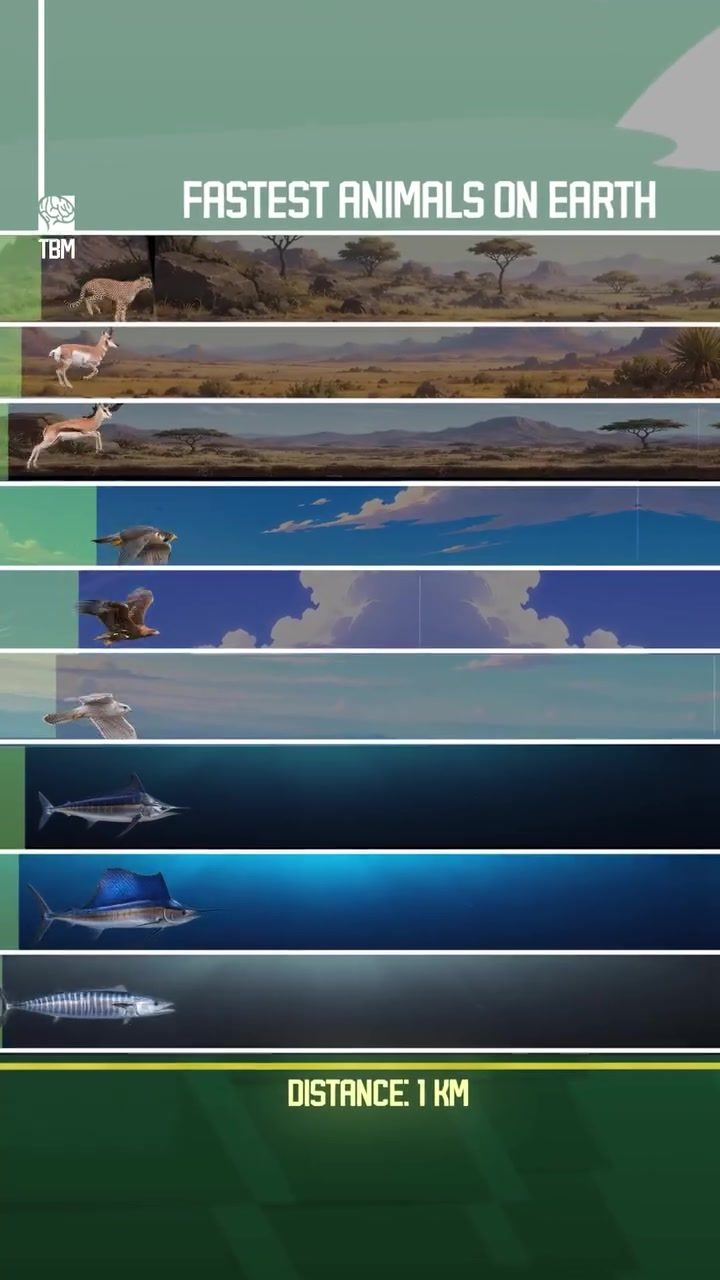
Fastest Animals on Earth
Speed is a critical element in the survival and predation strategies of many animals. Understanding the fastest animals on Earth provides insight into the remarkable adaptations and capabilities of wildlife. Whether on land, in the air, or in water, these animals showcase the pinnacle of evolutionary speed.
Context / Why this matters
Comparing the fastest animals across different environments highlights the diverse ways in which speed is achieved and utilized. From the agile movements of land animals to the swift flight of birds and the powerful swimming of marine creatures, these comparisons offer a broader perspective on animal behavior and ecological roles.
Main discussion
Fastest Animals on Land
Cheetahs: Known for their extraordinary speed, cheetahs are the fastest land animals. They can reach speeds of up to 120 km/h and cover 1 kilometer in approximately 30 seconds. This speed is essential for their hunting strategy, enabling them to catch fast-moving prey.
Pronghorn Antelopes: These animals are the second fastest on land, reaching speeds of up to 98 km/h. They can cover 1 kilometer in around 36.7 seconds. Their speed is crucial for outrunning predators and maintaining their position in the food chain.
Springboks: Known for their distinctive leaps and agility, springboks can reach speeds of up to 88 km/h, covering 1 kilometer in about 40.9 seconds. Their speed and agility make them formidable targets for predators, but their evasive maneuvers often give them an edge in survival.
Fastest Animals in the Air
Peregrine Falcons: The fastest birds in the air, peregrine falcons can reach speeds of up to 320 km/h during their high-speed dives. They can cover 1 kilometer in a mere 11.25 seconds. This speed is employed to catch other birds in mid-air, making the peregrine falcon one of the most formidable predators in the skies.
Golden Eagles: These majestic birds can reach speeds of up to 250 km/h, covering 1 kilometer in about 15 seconds. Their speed is essential for hunting, enabling them to catch fast-moving prey like rabbits and other small animals.
Gyrfalcons: Known for their powerful flight, gyrfalcons reach speeds of up to 209 km/h, covering 1 kilometer in approximately 17.2 seconds. They are adept hunters, using their speed to swoop down on prey from great heights.
Fastest Animals in the Water
Black Marlins: These are among the fastest fish in the sea, reaching speeds of up to 129 km/h. They can cover 1 kilometer in about 27.9 seconds. Their speed is crucial for catching prey and evading predators in the vast ocean.
Sailfish: Known for their distinctive dorsal fins, sailfish can reach speeds of up to 110 km/h, covering 1 kilometer in about 32.7 seconds. Their speed and agility make them formidable predators, capable of catching fast-moving prey.
Nahoo: Less recognized than other fast marine animals, the nahoo can reach speeds of up to 78 km/h and cover 1 kilometer in approximately 46.8 seconds. Their speed is essential for both hunting and escaping predators in their aquatic environment.
Practical tips
When exploring the world of the fastest animals, it's beneficial to consider the following:
-
Observation: Spend time in nature observing animals in their habitats to see their natural behaviors in action. Many animals are more active at dawn or dusk, so these times offer prime opportunities for observation.
-
Research: Use reliable resources to learn about different species, their habitats, and their behaviors. Understanding the ecological roles and adaptations of these animals can deepen appreciation for their unique capabilities.
-
Conservation: Support organizations that work to protect these animals and their habitats. Many of the fastest animals face threats from habitat loss, climate change, and human activities. Efforts to preserve their environments are crucial for maintaining biodiversity.
Important takeaways
The fastest animals on Earth exhibit extraordinary adaptations that allow them to excel in their respective environments. Whether on land, in the air, or in water, speed plays a crucial role in their survival and hunting strategies. By studying these animals, we gain insights into the intricacies of animal behavior and the importance of conservation efforts to protect these remarkable creatures.
Conclusion
The fastest animals on Earth represent the pinnacle of evolutionary adaptations for speed and agility. From cheetahs on land to peregrine falcons in the skies and black marlins in the ocean, each of these animals showcases unique abilities that make them formidable in their respective environments. Understanding these animals not only provides a deeper appreciation for wildlife but also underscores the importance of conservation efforts to protect these extraordinary creatures.
Watch the Reel
Related deep dives
Similar reads based on topic and creator.




Recent articles
Fresh deep dives from the latest Reels we unpacked.




Comments
Be the first to comment.