Immigration to the United States
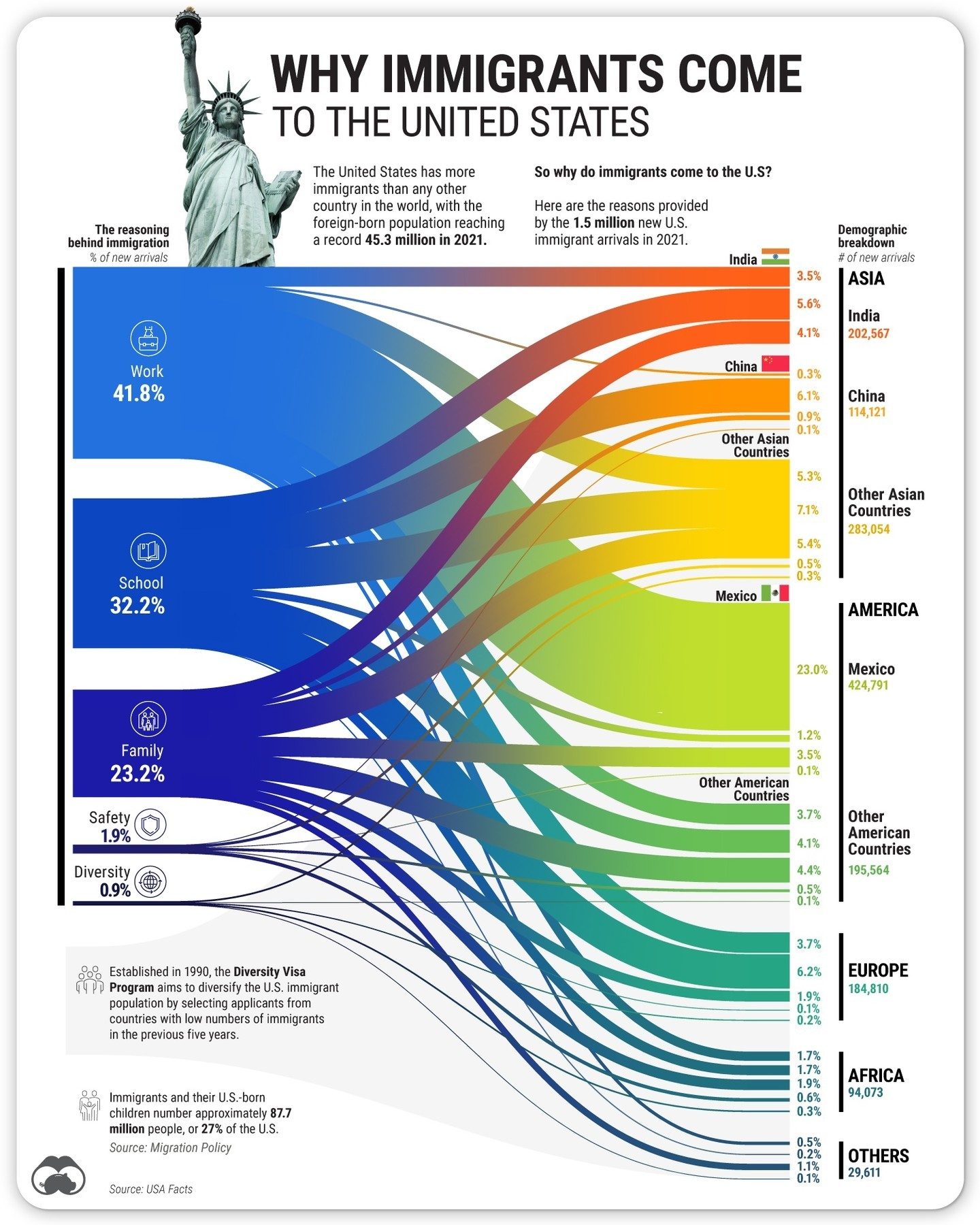
The United States is a nation shaped by immigrants from every corner of the globe. As of 2021, over 45.3 million foreign-born individuals reside in the U.S., making it the world's top destination for immigrants. These immigrants come for a variety of reasons, including reuniting with family, pursuing work opportunities, or seeking refuge from dangerous situations. The motivations behind immigration to the U.S. are diverse and multifaceted.
Context / Why This Matters
Understanding the reasons why people immigrate to the U.S. is crucial for grasping the demographic and social dynamics of the country. Immigrants contribute significantly to the nation's cultural fabric, economy, and workforce. By examining the primary motivations behind immigration, we can better appreciate the complexities of the immigration experience and the impact it has on both immigrants and the broader society.
Main Discussion
Primary Motivations for Immigration
The primary reasons why people immigrate to the U.S. can be categorized into several key areas: work, school, family, safety, and diversity. Each of these motivations plays a significant role in shaping the immigrant population and the country's cultural landscape.
Work
One of the most common reasons for immigrating to the U.S. is the pursuit of better work opportunities. In 2021, 41.8% of new arrivals cited work as their primary motivation. The U.S. offers a robust job market with a wide range of industries and sectors, attracting skilled and unskilled workers alike. The allure of higher wages, better job opportunities, and career advancement opportunities draws many to the U.S. from around the world.
School
Education is another major driver of immigration. Approximately 32.7% of new arrivals in 2021 came to the U.S. for educational purposes. The U.S. is home to some of the world's top universities and educational institutions, making it an attractive destination for students seeking quality education. Many immigrants come to pursue undergraduate, graduate, or specialized degrees, which can open doors to better career opportunities both in the U.S. and abroad.
Family
Family reunification remains a significant motivation for immigration to the U.S. In 2021, 23.2% of new arrivals listed family as their primary reason for coming to the country. The opportunity to reunite with family members already living in the U.S. is a compelling factor for many immigrants. Family-based immigration allows individuals to join spouses, parents, siblings, or children who are already established in the country.
Safety
Safety and security are paramount for many immigrants. Escaping dangerous situations, such as war, political instability, or natural disasters, drives a significant number of people to seek refuge in the U.S. While specific data on safety as a motivation for immigration in 2021 wasn't available, it's well-documented that many immigrants come to the U.S. to escape unsafe conditions in their home countries, seeking the safety and stability that the U.S. offers.
Diversity
The U.S. has a long history of promoting diversity through its immigration policies. The Diversity Visa program, established in 1990, aims to diversify the U.S. population by selecting applicants from countries with historically low levels of immigration to the U.S. This program has been instrumental in attracting immigrants from a wide range of countries, contributing to the nation's rich cultural tapestry. In 2021, a portion of new arrivals benefited from this program, highlighting the U.S.'s commitment to diversity and inclusion.
Demographic Breakdown of New Arrivals
The demographic breakdown of new arrivals to the U.S. in 2021 provides valuable insights into the countries from which immigrants originate. The data reveals a diverse mix of origins, with significant contributions from various regions.
Asia
Asia is a major source of immigrants to the U.S., with countries like India, China, and other Asian nations contributing significantly to the immigrant population.
- India: With 3.5% of new arrivals, India is a significant contributor to the U.S. immigrant population. Many immigrants from India come for work, education, and family reunification, bringing their skills and talents to various industries and sectors.
- China: Accounting for 6.6% of new arrivals, China is another major source of immigrants to the U.S. Chinese immigrants come to the U.S. for a variety of reasons, including pursuing higher education, seeking better job opportunities, and reuniting with family.
- Other Asian Countries: In addition to India and China, other Asian countries contribute to the demographic diversity of the U.S. immigrant population, with significant numbers coming from countries like the Philippines, Vietnam, and South Korea.
Americas
Latin American countries, particularly Mexico, are a significant source of immigrants to the U.S.
- Mexico: With 23.0% of new arrivals, Mexico is the largest contributor to the U.S. immigrant population. Mexican immigrants come to the U.S. for a variety of reasons, including work, family reunification, and safety. Many Mexicans seek better job opportunities and a higher standard of living in the U.S.
- Other American Countries: In addition to Mexico, other countries in the Americas, such as El Salvador, Guatemala, and Colombia, contribute significantly to the immigrant population in the U.S.
Europe, Africa, and Other Regions
While Europe, Africa, and other regions contribute a smaller percentage of new arrivals, they still play an essential role in the demographic diversity of the U.S.
- Europe: Europe accounts for a smaller percentage of new arrivals, but immigrants from countries like the United Kingdom, Germany, and France contribute to the cultural and economic landscape of the U.S.
- Africa: African countries like Nigeria, Ethiopia, and Egypt are also sources of immigrants to the U.S. Many African immigrants come for educational opportunities, better job prospects, and family reunification.
- Other Regions: Immigrants from various other countries, including those from the Middle East and Oceania, contribute to the rich diversity of the U.S. immigrant population.
Practical Tips
For those considering immigration to the U.S., understanding the process and requirements is crucial. Here are some practical tips to navigate the immigration journey:
Research Immigration Pathways
Understand the different pathways to immigration, such as family-based visas, work visas, student visas, and diversity visas. Each pathway has its own set of requirements and eligibility criteria, so it's essential to research and determine the best fit for your situation.
Gather Necessary Documents
Ensure you have all the required documents for your immigration application. This may include passports, birth certificates, marriage certificates, employment offers, and educational records. Organize and prepare these documents well in advance to streamline the application process.
Seek Professional Guidance
Consider seeking the assistance of an immigration lawyer or consultant. They can provide valuable guidance and help navigate the complexities of the immigration process, ensuring that all requirements are met and deadlines are adhered to.
Prepare for Cultural Adjustments
Immigrating to a new country involves cultural adjustments. Familiarize yourself with U.S. customs, laws, and social norms to ease the transition. Joining community groups or support networks can also provide a sense of belonging and help you adapt to your new environment.
Stay Updated on Immigration Policies
Immigration policies and regulations can change frequently. Stay updated on the latest developments and requirements by checking reliable sources such as the U.S. Citizenship and Immigration Services (USCIS) website or consulting with an immigration lawyer.
Important Takeaways
Understanding the reasons why people immigrate to the U.S. and the demographic breakdown of new arrivals provides valuable insights into the country's diverse population. The primary motivations for immigration, including work, school, family, safety, and diversity, highlight the multifaceted nature of the immigration experience. By appreciating the complexities and contributions of immigrants, we can better understand and support the rich cultural tapestry of the United States.
Conclusion
Immigration to the U.S. is a complex and multifaceted phenomenon shaped by various motivations and demographic factors. Whether driven by the pursuit of work opportunities, educational aspirations, family reunification, safety concerns, or the desire for diversity, immigrants contribute significantly to the cultural, social, and economic fabric of the United States. By understanding the reasons behind immigration and the demographics of new arrivals, we can better appreciate the diverse and dynamic nature of the U.S. population.
Watch the Reel
Questions readers ask
What are some of the most common reasons immigrants choose to move to the United States?
Immigrants are drawn to the U.S. for various reasons. These include better job opportunities, the chance to reunite with family members already living in the country, and the pursuit of safety from dangerous situations in their home countries.
How many immigrants reside in the United States as of 2021?
As of 2021, over 45.3 million foreign-born individuals reside in the United States, making it the world's top destination for immigrants.
Why is understanding the motivations behind immigration to the U.S. important?
Understanding these motivations provides insight into the demographic and social dynamics of the U.S. It also helps appreciate the contributions of immigrants to the nation's cultural fabric, economy, and workforce.
What role does family reunification play in immigration to the United States?
Family reunification is a significant driving factor for many immigrants. The ability to reunite with family members already living in the U.S. is a key reason why people choose to immigrate.
How do job opportunities influence immigration to the United States?
The U.S. is known for offering a wide range of job opportunities across various sectors. Many immigrants are attracted to the U.S. by the promise of better employment prospects and career growth.
Are there specific countries from which most immigrants to the U.S. originate?
Immigrants to the U.S. come from every corner of the globe, contributing to the country's diversity. While there are immigrants from many different countries, some of the top countries of origin include Mexico, China, and India.
Related deep dives
Similar reads based on topic and creator.

Recent articles
Fresh deep dives from the latest Reels we unpacked.




Comments
Be the first to comment.