Music Streaming Services
The music streaming industry is one of the most fiercely competitive markets today, with numerous companies battling for market share. This competition spans various fronts, including pricing, features, advertising, and exclusive content. Understanding the landscape of top online music services in the U.S. provides valuable insights into consumer preferences and market dynamics.
Context / Why This Matters
The music streaming industry has revolutionized how people access and consume music. With the shift from physical media to digital platforms, streaming services have become the primary way listeners discover and enjoy their favorite tunes. The competition among these services is not just about who has the largest library of songs but also about offering unique features, user-friendly interfaces, and exclusive content that keeps subscribers engaged and loyal.
Main Discussion
Dominant Players
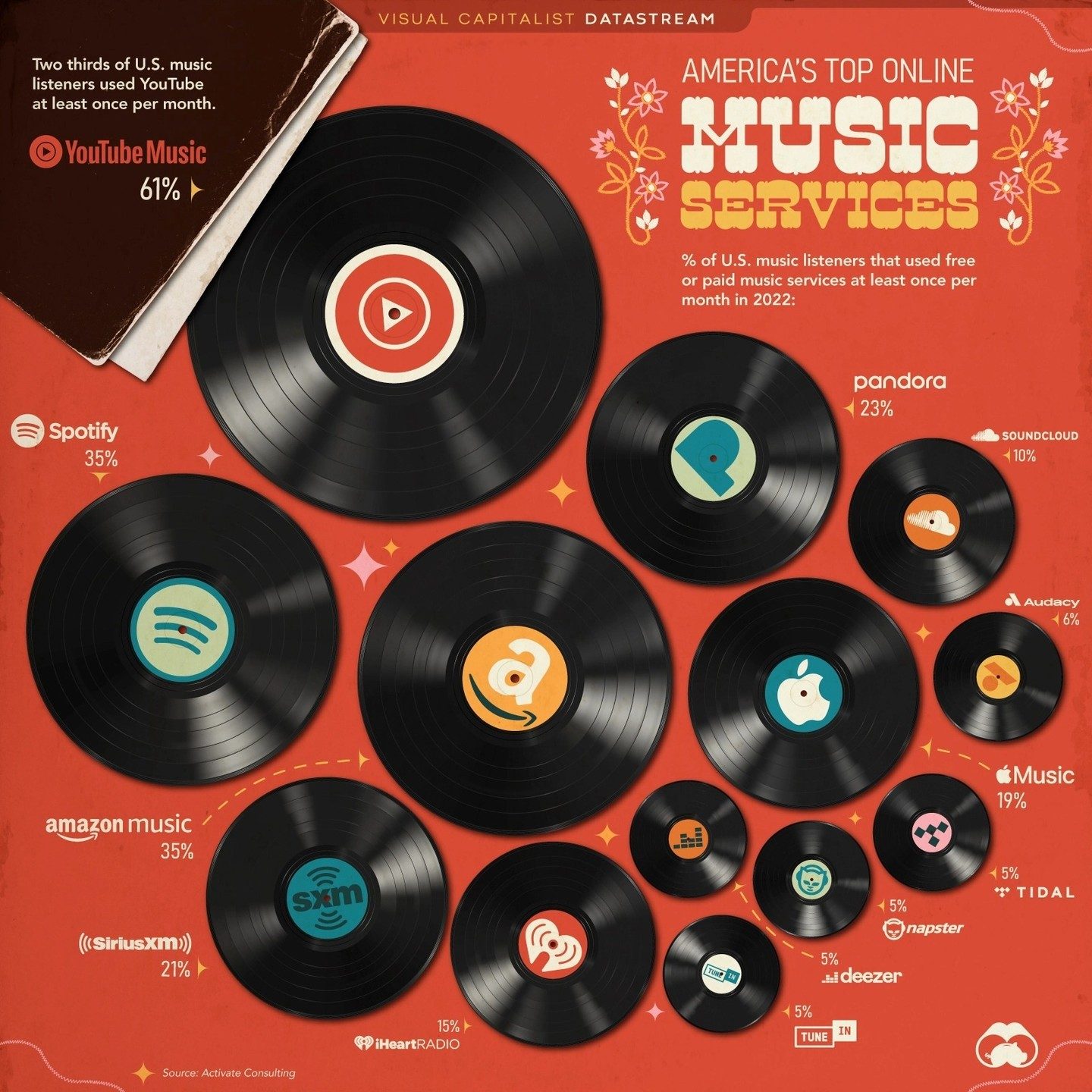
Several key players dominate the U.S. music streaming market. Leading the pack is YouTube Music, with an impressive 61% of U.S. music listeners using the service at least once a month. Following closely are Spotify and Amazon Music, both commanding 35% of the market. These figures highlight the significant impact these services have on the industry and their ability to attract and retain a large user base.
Mid-Tier Services
Other notable services include Pandora and Soundcloud, which hold 23% and 19% of the market, respectively. Pandora is known for its personalized radio stations and curated playlists, while Soundcloud is a haven for independent artists and niche genres. These platforms cater to specific user preferences, contributing to their substantial user bases.
Niche and Emerging Players
Several other services also have a notable presence, such as SiriusXM at 21%, iHeartRADIO at 15%, and Audacy at 6%. These services often offer unique features like live radio integration, exclusive content, and specialized playlists that appeal to different segments of the audience. Additionally, services like Napster, TIDAL, and Deezer each hold 5% or 4% of the market, providing niche offerings that cater to specific listener preferences.
Emerging and Specialty Services
Napster, with 5% of users, has a loyal following among those who appreciate its extensive catalog and user-friendly interface. TIDAL (also 5%) is known for its high-fidelity audio quality and exclusive content from top artists, appealing to audiophiles and music enthusiasts. Deezer (4%), Apple Music (4%), and Tune In (4%) are also noteworthy, each offering unique features that set them apart in the crowded market.
Emerging and Specialty Services
Tune In (4%), though, offers a unique blend of on-demand streaming and live radio, catering to those who enjoy a mix of both listening experiences. SiriusXM (21%) offers a blend of satellite radio and streaming, providing a wealth of exclusive content that includes live performances, talk shows, and sports broadcasts. Audacy (6%) has a strong focus on regional content and local radio stations, appealing to listeners who want a more localized experience.
Practical Tips
Choosing the right music streaming service depends on individual preferences and needs. Here are some practical tips to help you decide:
- Evaluate Your Music Collection: Consider the size and quality of the music library offered by each service. If you have a diverse taste in music, a service with a vast and varied catalog may be more suitable.
- Consider Features and Interface: Look for features that enhance your listening experience, such as personalized playlists, high-fidelity audio, and offline listening options. A user-friendly interface can also make a significant difference in your overall experience.
- Check for Exclusive Content: Some services offer exclusive releases, live performances, and artist interviews that can be a draw for fans of specific genres or artists.
- Subscription and Pricing: Compare the pricing plans and ensure they fit within your budget. Free trials can be a great way to test out different services before committing to a subscription.
Important Takeaways
The music streaming industry is a dynamic and competitive field, with numerous services vying for dominance. While YouTube Music, Spotify, and Amazon Music lead the market, there is significant demand for niche and specialized services that cater to specific listener preferences. Understanding the unique features and offerings of each service can help you make an informed decision based on your individual needs and preferences.
Conclusion
The music streaming industry is a vibrant and ever-evolving landscape, driven by fierce competition and a constant quest for innovation. Whether you are a casual listener or a die-hard music enthusiast, there is a service out there that caters to your unique preferences. By evaluating the features, content, and pricing of various services, you can find the perfect match for your music streaming needs.
Watch the Reel
Questions readers ask
Which streaming service has the most monthly users in the U.S.?
As of current data, YouTube Music leads with the highest number of monthly users in the U.S. Its integration with the popular video platform gives it a significant advantage in attracting a large user base.
How does Spotify compare to other top streaming services?
Spotify is renowned for its extensive music library and innovative features. It competes closely with YouTube Music and Amazon Music, making it a favorite among users who prioritize personalized playlists and social sharing options. Spotify has a vast user base and stands out for its free, ad-supported tier.
What makes Amazon Music unique among major streaming services?
Amazon Music stands out due to its seamless integration with Amazon's broader ecosystem, including devices like Echo speakers and Fire TV. It offers a competitive pricing structure, especially for Amazon Prime members, and provides a substantial music library. This integration helps Amazon Music maintain a significant user presence.
Why do services like Pandora and SoundCloud still have a substantial user base?
Pandora and SoundCloud cater to specific niche audiences. Pandora is popular for its personalized radio stations, while SoundCloud has a strong following among independent artists and music enthusiasts. These services offer unique features that attract users looking for something beyond mainstream streaming.
What factors contribute to the intense competition among music streaming services?
Several factors fuel the competition, including pricing strategies, exclusive content deals, user-friendly interfaces, and innovative features. Each service strives to offer something unique, whether it's superior sound quality, better personalization, or integration with other platforms.
How do the top streaming services differ in their content offerings?
Top streaming services differentiate themselves through their content libraries, which can include exclusive releases, live performances, and podcasts. Some services focus on high-quality audio for audiophiles, while others emphasize video content and artist interviews. This variety ensures that users have different reasons to choose one service over another.
What trends are shaping the future of the music streaming industry?
The future of music streaming is likely to be influenced by advancements in AI for personalized recommendations, the growth of live streaming and virtual concerts, and the increasing integration with smart home devices. Additionally, the rise of independent artists and user-generated content platforms is expected to play a significant role in shaping consumer preferences.
Related deep dives
Similar reads based on topic and creator.


Recent articles
Fresh deep dives from the latest Reels we unpacked.




Comments
Be the first to comment.