Mobile Phone Sales History
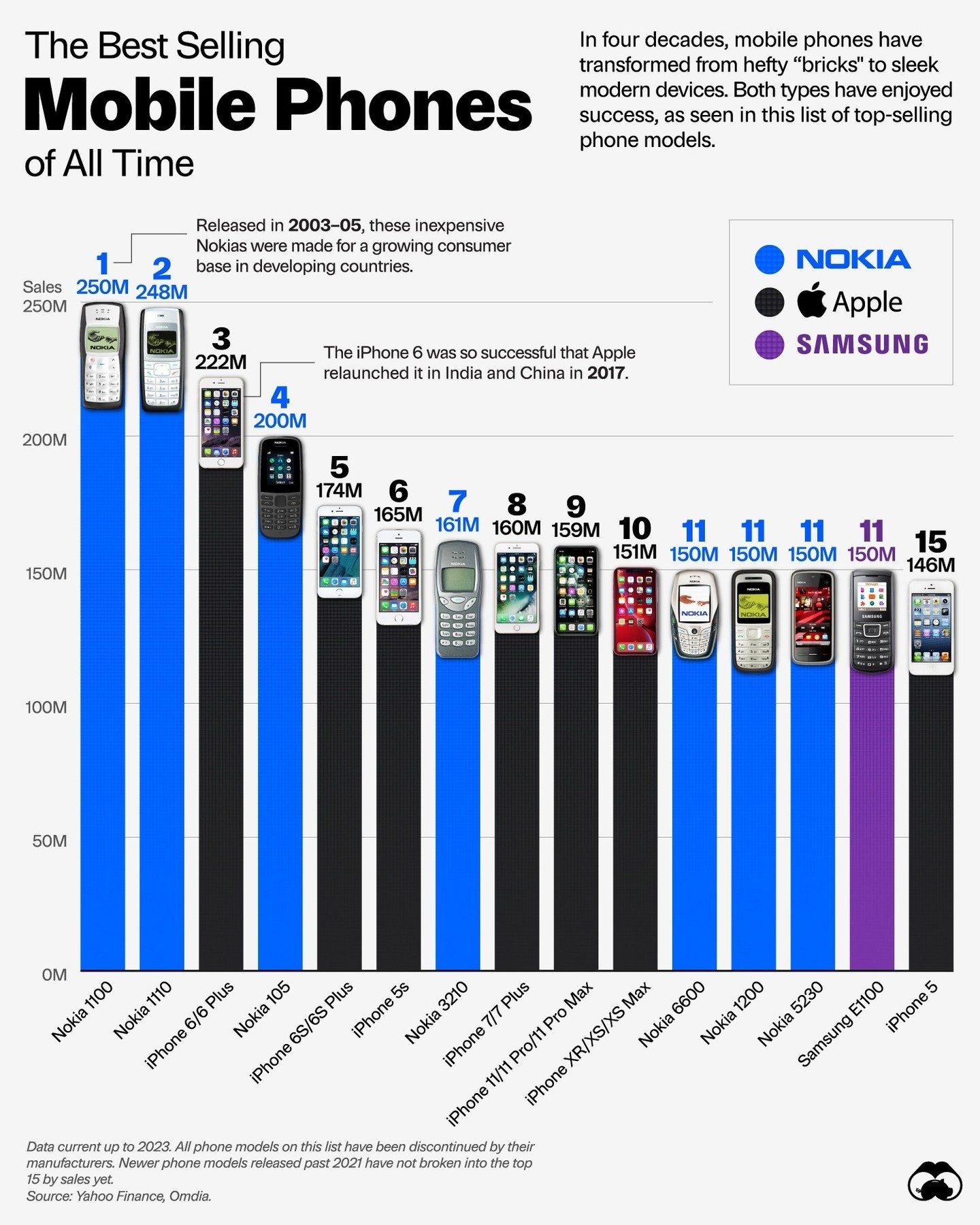
The mobile phone has evolved dramatically since its inception, with countless models hitting the market. Among these, several stand out for their unprecedented sales figures. The Nokia 1100, for instance, remains the best-selling mobile phone of all time, with over 250 million units sold. This model's success is a testament to the timeless appeal of rugged, reliable mobile phones. But what other mobile phones have made a significant impact on the market?
Context: The Evolution of Mobile Phones
Mobile phones have come a long way since the first cell phone call made by Martin Cooper of Motorola in 1973. The journey from bulky, expensive devices to sleek, affordable smartphones has been remarkable. This evolution has led to a significant increase in mobile phone users, with 7.1 billion users worldwide in 2021, making up roughly 90% of the global population. This widespread adoption has created a competitive market, with various brands and models vying for consumer attention.
The Most Sold Mobile Phones of All Time
Nokia 1100
The Nokia 1100 is a classic example of a phone that captured the market. Introduced in 2003, it quickly gained popularity due to its durability, long battery life, and affordability. The phone's success was bolstered by its wide availability in developing markets, where its features were highly valued. The Nokia 1100 remained a dominant force in the market until 2009, when it was discontinued.
Nokia 1110
The Nokia 1110, released shortly after the 1100, also made a significant impact. It sold a staggering 248 million units, making it the second-best-selling mobile phone of all time. The 1110 built on the success of the 1100, offering similar durability and affordability, but with a few additional features that appealed to consumers.
iPhone Series
The iPhone series has seen remarkable success in more recent years. The iPhone 6 Plus, iPhone 6S Plus, and iPhone 7 Plus all recorded impressive sales figures, reflecting the growing popularity of smartphones. The iPhone 6 Plus, in particular, sold 160 million units, making it one of the most successful smartphone models of all time.
Note that the iPhone XR and iPhone XS Max are lumped together in the source data, making it difficult to separate their sales. Despite this, their combined sales figure of 151 million units underscores their prominence in the market.
The Rise of Samsung
While Nokia and Apple dominate the list of best-selling mobile phones, Samsung has also made a significant mark. The Samsung E100 sold 146 million units, making it one of the most successful models from this brand. The phone's affordability and durability contributed to its widespread adoption, especially in emerging markets.
The Significance of Other Models
Other models like the Nokia 105, Nokia 3210, Nokia 6600, and Nokia 1200 have also contributed to the market's growth. These models, while not as popular as the top sellers, have played a crucial role in shaping the mobile phone landscape. The Nokia 3210, in particular, is often cited as a cultural icon, known for its customizable covers and iconic games like Snake.
Practical Tips for Buying a Mobile Phone
When choosing a mobile phone, whether new or used, consider the following practical tips:
Assess Your Needs
Before making a purchase, assess your needs. Are you looking for a basic phone for calls and texts, or do you need a smartphone for apps, internet browsing, and multimedia? Understanding your needs will help you narrow down your options and make a more informed decision.
Consider the Brand
The brand can significantly impact the phone's quality, durability, and resale value. While Nokia is known for its robust and reliable phones, Apple and Samsung offer a range of features and design options. Research different brands to see which aligns best with your needs and preferences.
Check the Specifications
Pay attention to the phone's specifications, including battery life, processor speed, storage capacity, and camera quality. These features can greatly influence your user experience. Consider future-proofing your purchase by opting for a phone with higher specifications, especially if you plan to keep it for several years.
Read Reviews and Ratings
Before making a purchase, read reviews and ratings from other users. This can provide valuable insights into the phone's performance, reliability, and potential issues. Look for reviews from reputable sources and consider both positive and negative feedback.
Important Takeaways
Nokia's Legacy
Nokia's dominance in the early 2000s highlights the brand's ability to create durable, affordable, and widely accessible mobile phones. Models like the Nokia 1100 and 1110 remain iconic, setting a high standard for reliability and durability.
The Impact of the iPhone
The iPhone series has revolutionized the mobile phone market, introducing a new era of smartphones with advanced features and sleek designs. The iPhone 6 Plus, iPhone 6S Plus, and iPhone 7 Plus are just a few examples of models that have captured the market with their innovative features and appealing designs.
Samsung's Contributions
Samsung's success with models like the Samsung E100 shows the brand's ability to offer affordable and reliable phones. These models have contributed to the company's reputation for producing dependable mobile devices.
The Evolution of Consumer Preferences
The sales figures of various mobile phone models reflect the changing preferences of consumers. From basic phones to advanced smartphones, the market has evolved to meet the diverse needs and desires of users worldwide.
Conclusion
The mobile phone market has seen remarkable growth and evolution over the years, with several models standing out for their impressive sales figures. From the Nokia 1100 to the iPhone 6 Plus and Samsung E100, these phones have left a lasting impact on the market. Understanding the history and popularity of these models can provide valuable insights into the mobile phone industry and help consumers make more informed purchasing decisions.
Watch the Reel
Questions readers ask
Why is the Nokia 1100 considered the best-selling mobile phone of all time?
The Nokia 1100 is renowned for its durability and simplicity, making it accessible to a wide range of users. It sold over 250 million units, primarily due to its long battery life and robust build, which made it a reliable choice for many consumers.
What factors contributed to the success of the Nokia 1100?
The Nokia 1100's success can be attributed to its affordability, durability, and long battery life. These features made it a popular choice in developing markets where such characteristics were highly valued.
Which other mobile phones have had significant sales figures?
In addition to the Nokia 1100, models like the iPhone 6 Plus have also made a significant impact. The iPhone 6 Plus, for example, became popular due to its larger screen size and Apple's strong brand reputation.
How has the design of mobile phones evolved over time?
Mobile phones have evolved from bulky, expensive devices to sleek, compact smartphones. This evolution has been marked by advancements in technology, such as the introduction of touchscreens and high-resolution cameras, which have made mobile phones more versatile and user-friendly.
What role did the iPhone 6 Plus play in mobile phone sales history?
The iPhone 6 Plus set new standards for large-screen smartphones, appealing to consumers who preferred a bigger display for media consumption and multitasking. Its success highlighted the growing trend towards phablets and larger devices.
Which mobile phone holds the record for the most units sold?
The Nokia 1100 holds the record for the most units sold, with over 250 million units. Its timeless appeal and reliability made it a favorite among consumers worldwide, especially in markets where durability and long battery life were crucial.
What were the key factors in the evolution of mobile phones from the 1970s to the present?
Key factors include advancements in technology, such as the development of touchscreens, cameras, and connectivity options. Market demands for smaller, more affordable devices and brands that innovated by adapting to consumer needs also played a significant role.
Related deep dives
Similar reads based on topic and creator.


Recent articles
Fresh deep dives from the latest Reels we unpacked.




Comments
Be the first to comment.