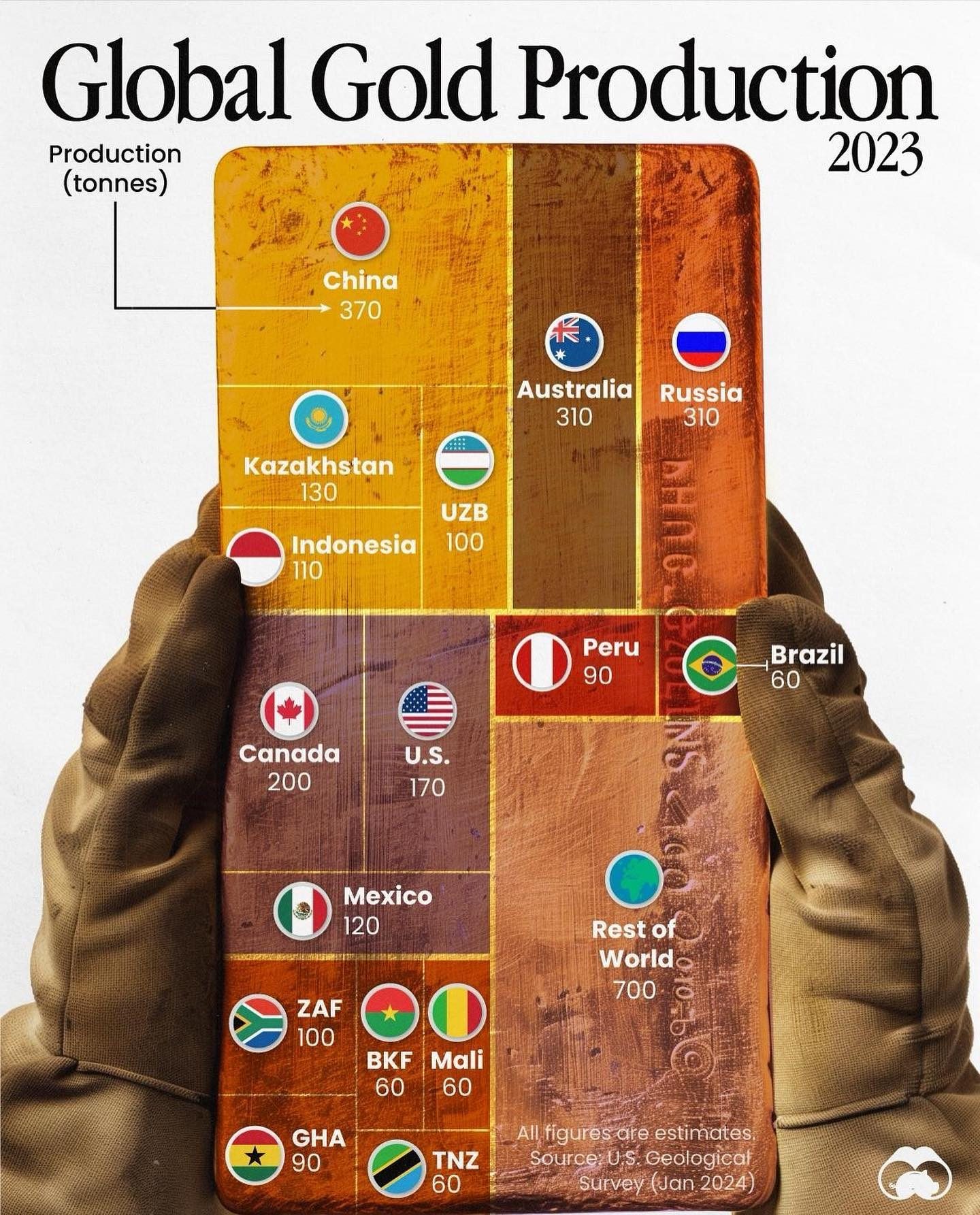
Gold Production by Country
China took the lead as the world's top gold producer in 2023, contributing over 12% of the global gold output. This significant milestone underscores China's dominant role in the global gold market, both as a producer and a consumer. The data, sourced from the latest USGS publication on gold statistics (published January 2024), provides a comprehensive overview of the world's leading gold-producing countries.
Why This Matters
Gold, often referred to as the yellow metal, is a precious metal that holds substantial economic and cultural significance worldwide. Its production and consumption patterns can influence global economic trends, investment strategies, and industrial applications. Understanding the top gold-producing countries offers insights into the distribution of global resources and economic power dynamics.
Global Gold Production by Country in 2023
The following section delves into the details of gold production by country, highlighting the key players and their contributions to the global gold market in 2023.
China
China topped the list with an impressive 370 tonnes of gold production, securing its position as the world's leading producer. This achievement is particularly notable as China also emerged as the largest buyer of gold for the year, further cementing its pivotal role in the global gold market.
Australia and Russia
Australia and Russia are tied for second place, each producing 310 tonnes of gold. Australia's extensive mining industry and Russia's rich mineral resources contribute significantly to their high production levels. These countries are crucial players in the global gold market, and their output is closely monitored by industry experts.
Kazakhstan
Kazakhstan produced 130 tonnes of gold, placing it as the fourth-largest gold producer. Kazakhstan's gold mining industry has grown rapidly in recent years, driven by favorable geological conditions and supportive government policies. The country's significant contribution to global gold production underscores its strategic importance in the sector.
Indonesia
Indonesia produced 110 tonnes of gold, making it a notable player in the global market. The country's gold mining industry is primarily concentrated in the Grasberg mine, one of the largest gold and copper mines in the world. Indonesia's geographical location and rich mineral resources make it a key contributor to global gold production.
Peru
Peru produced 90 tonnes of gold, earning it a spot among the top gold-producing countries. Peru's mining industry is historically significant and continues to play a crucial role in the country's economy. The country's rich mineral deposits and supportive regulatory environment contribute to its high gold production levels.
Brazil
Brazil produced 60 tonnes of gold, making it a significant player in the global gold market. The country's gold mining industry is primarily concentrated in the Amazon region, which is rich in mineral resources. Brazil's gold production is driven by both artisanal and large-scale mining operations, reflecting the diverse nature of its mining sector.
Canada
Canada produced 120 tonnes of gold, showcasing its strong presence in the global gold market. The country's mining industry is known for its high-quality reserves and advanced mining technologies. Canada's gold production is a testament to its rich mineral resources and robust mining infrastructure.
United States
The United States (U.S.) produced 170 tonnes of gold, highlighting its significant contribution to the global market. The U.S. has a long history of gold mining, with major producing regions including Nevada, Alaska, and Colorado. The country's gold production is driven by both large-scale mining operations and small-scale artisanal mining.
Mexico
Mexico produced 100 tonnes of gold, placing it among the top gold-producing countries. The country's gold mining industry is primarily concentrated in the state of Sonora, which is known for its rich mineral deposits. Mexico's gold production is driven by both domestic and international mining companies, reflecting the diverse nature of its mining sector.
South Africa (ZAF)
South Africa (ZAF) is a significant player in the gold mining industry, producing 60 tonnes of gold. Historically, South Africa has been one of the world's largest gold producers, and while its production has declined in recent years, it remains a crucial contributor to the global gold market.
Mali
Mali produced 60 tonnes of gold. The country's gold mining industry has seen significant growth in recent years, driven by favorable geological conditions and supportive government policies. Mali's rich mineral resources and strategic location in West Africa make it a key player in the global gold market.
Ghana (GHA)
Ghana (GHA) produced 90 tonnes of gold, showcasing its significant presence in the global gold market. The country's gold mining industry is known for its high-quality reserves and advanced mining technologies. Ghana's gold production is driven by both large-scale mining operations and small-scale artisanal mining.
Tanzania (TNZ)
Tanzania (TNZ) produced 90 tonnes of gold, making it a notable player in the global gold market. The country's gold mining industry is primarily concentrated in the Lake Victoria region, which is rich in mineral resources. Tanzania's gold production is driven by both domestic and international mining companies, reflecting the diverse nature of its mining sector.
Rest of the World
The "Rest of the World" category accounts for 700 tonnes of gold production, highlighting the significant contributions from countries not individually listed. These countries collectively play a crucial role in the global gold market, reflecting the widespread distribution of mineral resources and mining activities worldwide.
Practical Tips for Investors and Enthusiasts
For those interested in the gold market, whether as investors or enthusiasts, understanding the key players and their contributions is essential. Here are some practical tips to navigate the gold market effectively:
- Diversify Your Portfolio: Investing in gold from multiple countries can help diversify your portfolio and mitigate risks associated with political instability or economic fluctuations in a single region.
- Stay Informed: Keep up-to-date with the latest developments in the gold mining industry, including changes in production levels, new discoveries, and regulatory environments.
- Research Mining Companies: Investigate the performance and sustainability practices of mining companies in top-producing countries. This can provide insights into the long-term viability and ethical considerations of your investments.
- Consider ESG Factors: Environmental, Social, and Governance (ESG) factors are increasingly important in the mining industry. Look for companies that prioritize responsible mining practices and community engagement.
Important Takeaways
The global gold production landscape in 2023 is dominated by a few key players, with China leading the way. Understanding the production levels and contributions of top gold-producing countries provides valuable insights into the global gold market. Investors and enthusiasts can benefit from staying informed about these trends and making strategic decisions based on the latest data.
Conclusion
Gold production remains a critical aspect of the global economy, with significant implications for investment, industry, and geopolitics. China's leadership in gold production, along with the notable contributions from countries like Australia, Russia, Kazakhstan, and Indonesia, underscores the diversity and complexity of the global gold market. By staying informed about these trends and considering practical tips for investment, individuals can navigate the gold market more effectively and make informed decisions.
Watch the Reel
Questions readers ask
Which country was the top gold producer in 2023?
China was the top gold producer in 2023, accounting for over 12% of the global gold output, as per the latest USGS publication on gold statistics.
How much gold did Australia produce in 2023?
Australia produced 10.7% of the worldwide gold output. It is one of the top gold-producing countries in the world.
What is the significance of gold production in Russia?
Russia is a significant gold producer, contributing substantially to the global gold output. Its gold mining industry plays a crucial role in the country's economy and the global gold market.
What are the benefits of knowing the top gold-producing countries?
Understanding the top gold-producing countries helps in analyzing global economic trends, investment strategies, and industrial applications. It also provides insights into the geopolitical dynamics of the gold market.
Where can I find detailed data on the world's leading gold-producing countries?
The latest data on the world's leading gold-producing countries can be found in the USGS publication on gold statistics, published in January 2024. This resource offers a comprehensive overview of gold production by country.
How does China's gold production impact the global market?
China's gold production and consumption significantly influence global economic trends, investment strategies, and the overall stability of the gold market. As the leading producer, China's activities can impact worldwide gold prices and supply.
What are the emerging trends in the global gold mining industry for 2023?
Key trends in the global gold mining industry for 2023 include increased investment in exploration, advancements in mining technologies, and a focus on sustainability and environmental practices. Additionally, countries like China, Australia, and Russia continue to dominate the gold mining sector.
Related deep dives
Similar reads based on topic and creator.

Recent articles
Fresh deep dives from the latest Reels we unpacked.




Comments
Be the first to comment.