Factors that Build Trust in AI
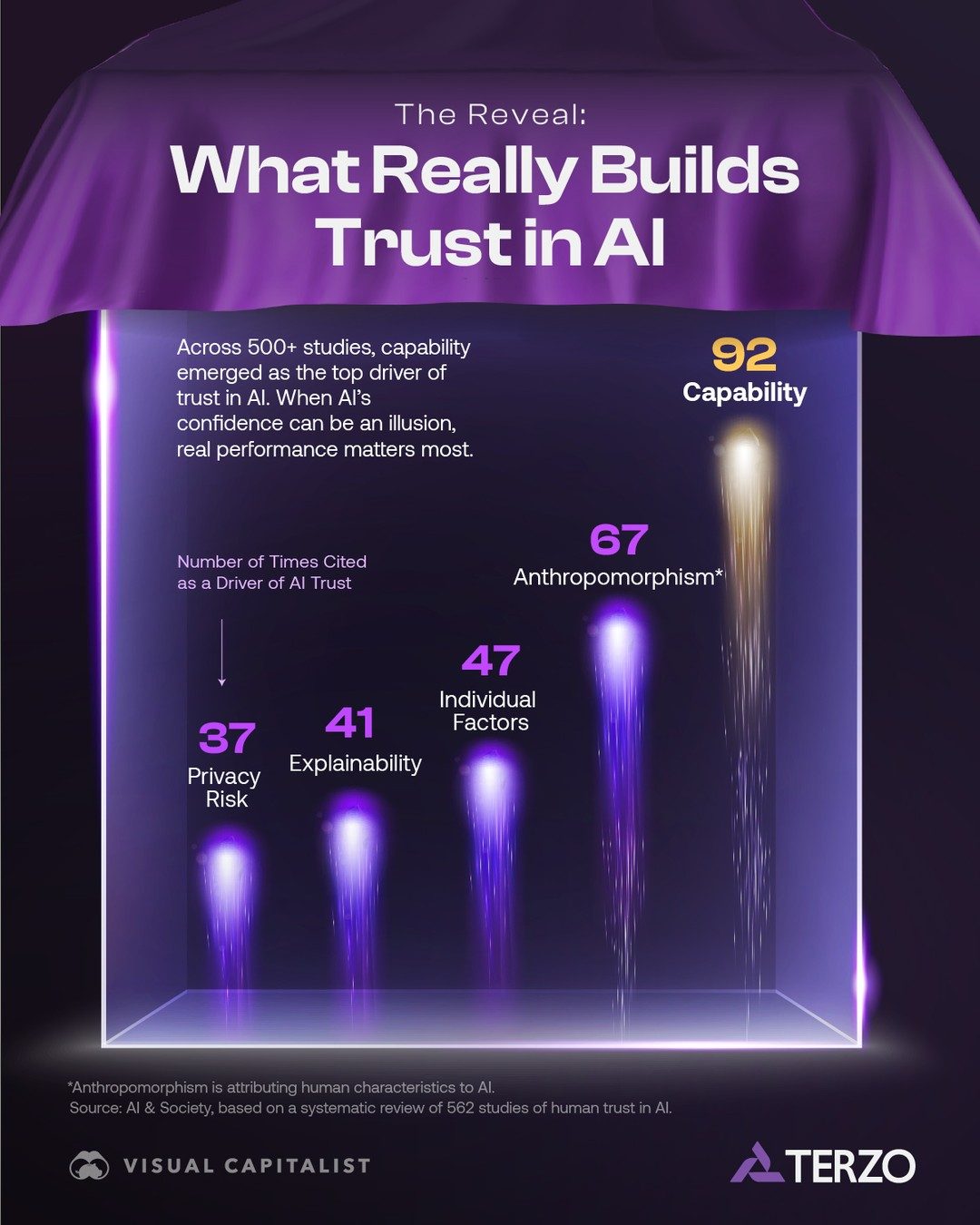
Artificial Intelligence (AI) has become an integral part of our daily lives, from virtual assistants to automated customer service. However, trust in AI remains a significant issue. Understanding the factors that build trust in AI is crucial for its successful integration into society. Recent research has identified several key factors that influence how much people trust AI, and they are ranked by the number of times cited as a driver of AI trust.
Why this matters
Trust in AI is fundamental to its widespread adoption and effectiveness. Users need to feel confident that AI systems are reliable, fair, and beneficial. Without trust, people are less likely to use AI technologies, which can limit their potential benefits. By understanding what builds trust in AI, developers and organizations can create more trustworthy and user-friendly systems.
Main discussion
Capability: The Top Driver
Capability emerged as the top driver of trust in AI, cited in 92% of studies. This metric encompases the AI's ability to perform its intended functions effectively and accurately. When AI systems consistently deliver high-quality results, users are more likely to trust them. Whether it's a recommendation engine suggesting relevant products or a self-driving car navigating traffic, capability is the cornerstone of AI trust.
Anthropomorphism: Human-Like Characteristics
Attributing human-like characteristics to AI, a concept known as anthropomorphism, significantly impacts trust. Anthropomorphism was cited as a driver of AI trust in 67% of studies. When AI systems exhibit behaviors or traits that mimic human behavior, users find them more relatable and trustworthy. For example, a chatbot that uses natural language processing to engage in conversational interactions can build a stronger connection with users compared to a more robotic system.
Explainability: Understanding the Black Box
Explaining how AI systems arrive at their decisions is crucial for building trust. Explainability was cited in 47% of studies. Users are more likely to trust AI when they understand how it works. This transparency allows users to assess the reliability and fairness of AI decisions, fostering a sense of trust and accountability. However, developing explainable AI systems can be challenging, as it often involves balancing the complexity of AI algorithms with the need for clarity.
Privacy Risk: Safeguarding User Data
Privacy risk plays a significant role in user trust, cited in 37% of studies. Protecting user data and ensuring that AI systems do not infringe on privacy is essential for building trust. Users need to feel secure that their personal information will not be misused or compromised. Implementing robust security protocols and data protection measures can help mitigate privacy concerns and build trust in AI systems.
Individual Factors: Personal Experiences and Biases
Individual factors, such as personal experiences and biases, also contribute to trust in AI. These factors were cited in 41% of studies. Each user brings their unique set of experiences and biases to their interactions with AI. These factors can influence how they perceive and trust AI systems. For example, a user who has had positive interactions with AI in the past is more likely to trust new AI technologies, while someone who has had negative experiences may be more skeptical.
Practical tips
To enhance trust in AI systems, developers and organizations can focus on the following practical tips:
- Prioritize Performance: Ensure that AI systems perform their intended functions effectively and accurately. High performance builds trust and encourages users to rely on AI solutions.
- Enhance Anthropomorphism: Incorporate human-like characteristics into AI systems to make them more relatable and trustworthy. This can involve using natural language processing, empathetic responses, and intuitive interfaces.
- Improve Explainability: Develop AI systems that can explain their decision-making processes clearly and concisely. This transparency allows users to understand how AI arrives at its conclusions, fostering trust and accountability.
- Address Privacy Concerns: Implement robust security protocols and data protection measures to safeguard user data. Ensure that AI systems comply with privacy regulations and guidelines to build trust and mitigate privacy risks.
- Tailor to Individual Factors: Recognize that users have unique experiences and biases that influence their trust in AI. Design AI systems to be adaptable and personalized, taking into account individual preferences and concerns.
Important takeaways
- Capability: The most critical factor in building trust in AI is its capability to perform tasks effectively and accurately.
- Anthropomorphism: Attributing human-like characteristics to AI can make it more relatable and trustworthy.
- Explainability: Transparent and understandable AI systems build trust by allowing users to assess the reliability and fairness of AI decisions.
- Privacy Risk: Protecting user data is essential for building trust in AI systems, as users need to feel secure about their personal information.
- Individual Factors: Personal experiences and biases significantly influence trust in AI, and AI systems should be designed to be adaptable and personalized.
Conclusion
Building trust in AI is a multifaceted challenge that involves understanding and addressing various factors. Capability, anthropomorphism, explainability, privacy risk, and individual factors all play crucial roles in determining how much users trust AI systems. By focusing on these key areas, developers and organizations can create more trustworthy and user-friendly AI solutions that have a greater chance of being widely adopted and accepted.
Watch the Reel
Questions readers ask
What are the key factors that build trust in AI systems?
Several factors contribute to building trust in AI. Capability, or the AI's ability to perform tasks accurately and reliably, is crucial. Additionally, users tend to trust AI more when it is easy to understand, or explainable. Anthropomorphism—making AI seem more human-like—also plays a role in enhancing trust, as it can make interactions more intuitive and engaging.
How does AI performance impact the level of trust users have?
AI performance significantly influences user trust. Systems that consistently deliver accurate results and operate reliably foster greater confidence. Conversely, frequent errors or malfunctions can quickly erode trust, making it essential for AI developers to prioritize performance optimization.
What role does explainability play in building trust in AI?
Explainability is vital for building trust in AI. When users understand how an AI system arrives at its decisions, they are more likely to trust its outcomes. Visual explanations, for instance, can help users grasp the AI's reasoning process, promoting transparency and trust.
How can AI developers enhance the reliability of their systems to build user trust?
To enhance reliability, developers should focus on rigorous testing, continuous improvement, and transparent communication about the AI's capabilities and limitations. Regular updates and clear documentation can also help users understand and trust the system better, making it a reliable tool for various applications.
What are some common factors that can ruin trust in AI?
Several factors can undermine trust in AI, including inconsistent performance, lack of transparency, and privacy concerns. Additionally, if AI systems are perceived as biased or unfair, it can significantly damage user trust. Ensuring fairness, transparency, and robust privacy measures are essential for maintaining trust in AI.
Why is anthropomorphism important in building trust in AI?
Anthropomorphism, or designing AI to mimic human-like characteristics, can make AI systems more relatable and easier to interact with. This can enhance user comfort and familiarity, fostering greater trust. However, it's important to balance anthropomorphism with transparency to avoid misleading users about the AI's true capabilities.
Related deep dives
Similar reads based on topic and creator.


Recent articles
Fresh deep dives from the latest Reels we unpacked.




Comments
Be the first to comment.