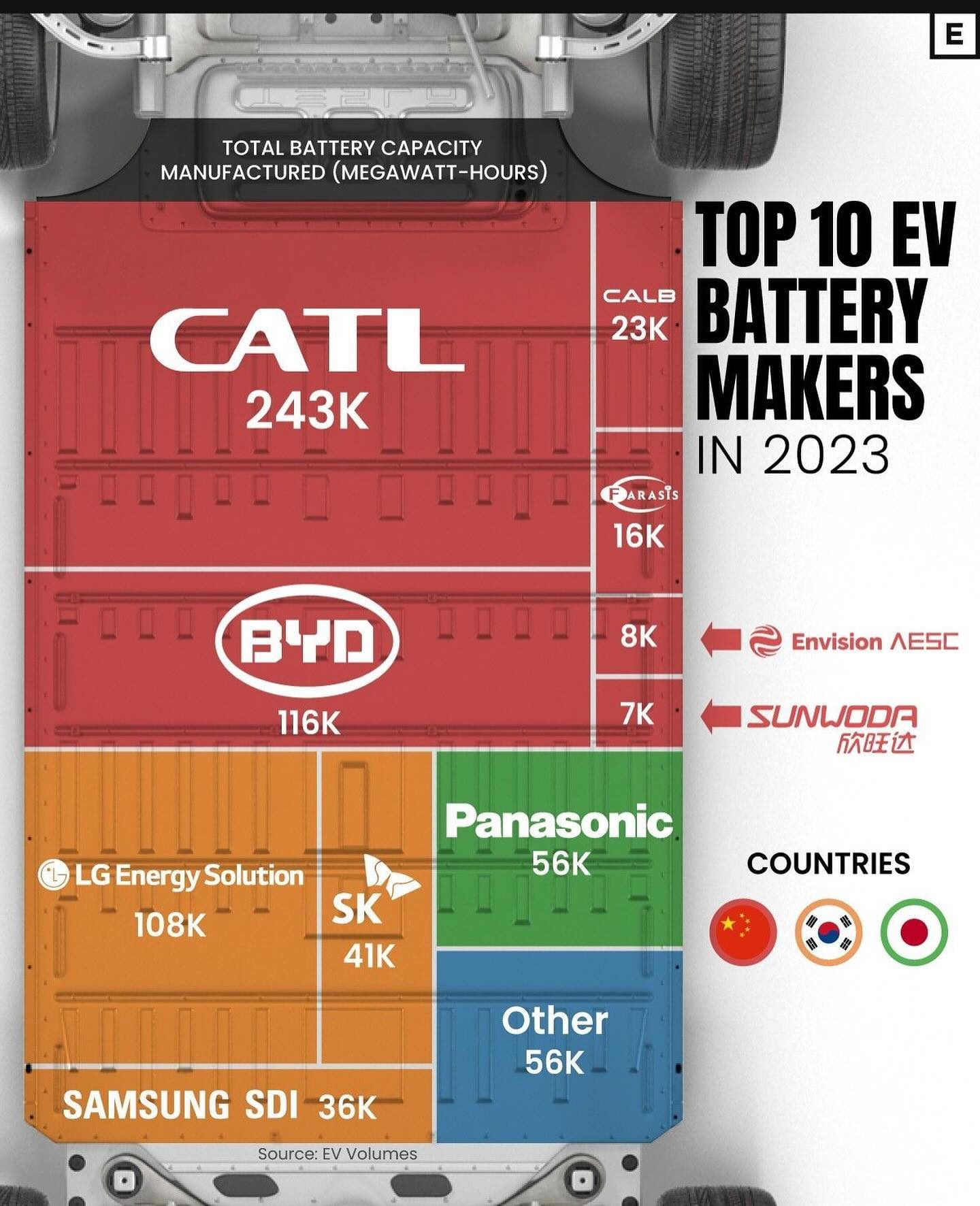
EV Battery Manufacturers
The EV battery market is experiencing rapid growth and transformation. As the demand for electric vehicles (EVs) surges, so does the need for high-capacity, reliable batteries. In 2023, the market for EV batteries is set to double from $49 billion in 2022 to $98 billion by 2029, according to Fortune Business Insights. This growth is driven by advancements in technology, increasing consumer demand, and regulatory pressures to reduce carbon emissions.
Context / Why this matters
The EV battery market is a critical component of the broader electric vehicle ecosystem. As more consumers and businesses transition to electric vehicles, the demand for efficient and powerful batteries will continue to rise. Understanding the key players and their contributions to the market is essential for anyone involved in the automotive, energy, or technology sectors. The market dynamics, especially the dominance of certain manufacturers, significantly influence the supply chain, innovation, and pricing of EVs.
Main Discussion
The Top EV Battery Manufacturers
The top 10 EV battery manufacturers are predominantly from China, Korea, and Japan. These companies are leading the charge in developing and producing batteries that power the latest electric vehicles. The market is highly competitive, with each manufacturer striving to improve battery capacity, efficiency, and durability.
Market Leaders
CATL
CATL leads the pack with an impressive 243,000 megawatt-hours of battery capacity. This Chinese company is a key player in the global EV battery market, supplying batteries to numerous automotive manufacturers. CATL's dominance is a testament to its technological advancements and manufacturing capabilities.
BYD
BYD follows closely with 116,000 megawatt-hours, solidifying its position as a major supplier in the EV battery market. Known for its innovative battery technologies, BYD is also a significant player in the electric vehicle market itself, producing both batteries and cars.
LG Energy Solution
LG Energy Solution, with 108,000 megawatt-hours, is another major contributor to the EV battery market. This South Korean company is known for its high-quality batteries and has partnerships with several leading automakers, including General Motors and Renault.
Other Key Players
Samsung SDI
Samsung SDI, a subsidiary of the tech giant Samsung, manufactures 36,000 megawatt-hours of batteries. The company is renowned for its cutting-edge technology and has been a key supplier to Tesla and other major EV manufacturers.
Panasonic
Panasonic, a well-established Japanese company, contributes 56,000 megawatt-hours to the market. Known for its high-performance batteries, Panasonic has a long-standing partnership with Tesla, making it a significant player in the EV battery industry.
SK
SK, with 41,000 megawatt-hours, is another key player in the market. This South Korean company has been rapidly expanding its battery production capabilities to meet the growing demand for EVs.
SUNUODA
Sunoda, a Chinese manufacturer, contributes 56,000 megawatt-hours to the market. Known for its innovative approaches, this company is gaining traction in the competitive EV battery market.
Envision AESC
Envision AESC, with 56,000 megawatt-hours, is a significant player in the EV battery market. The company is known for its high-quality batteries and has partnerships with several leading automakers.
The Role of Countries
The dominance of China, Korea, and Japan in the EV battery market is noteworthy. These countries have made significant investments in research and development, infrastructure, and manufacturing capabilities. Their leadership in the EV battery market is a result of long-term strategic planning and a commitment to technological innovation.
Practical Tips
Understanding Battery Capacity
When evaluating EV batteries, understanding battery capacity is crucial. Battery capacity, measured in megawatt-hours (MWh), determines how much energy a battery can store and deliver. Higher capacity batteries generally mean longer driving ranges and better performance. This is important for consumers and manufacturers alike, as it directly impacts the usability and competitiveness of electric vehicles.
Innovations in Battery Technology
Staying informed about innovations in battery technology is essential for anyone involved in the EV market. Advances in battery materials, chemistry, and design can significantly enhance performance, reduce costs, and improve sustainability. Key areas to watch include solid-state batteries, lithium-sulfur batteries, and advancements in recycling technologies.
Supply Chain Considerations
The EV battery supply chain is complex and involves multiple stakeholders, from raw material suppliers to battery manufacturers and automotive companies. Understanding the supply chain can help ensure a steady supply of batteries, manage risks, and drive innovation. This includes considerations around raw material sourcing, production processes, and logistical issues.
Regulatory and Environmental Factors
EVs are subject to various regulatory requirements and environmental considerations, which can impact the EV battery market. Regulations on emissions, battery disposal, and recycling can influence the design and production of batteries. Additionally, environmental concerns, such as the impact of mining for raw materials, can affect consumer perceptions and market dynamics.
Important Takeaways
The EV battery market is a dynamic and rapidly evolving sector, with significant growth anticipated in the coming years. The dominance of manufacturers from China, Korea, and Japan highlights the strategic importance of these countries in the global EV ecosystem. Understanding the key players, their contributions, and the broader market dynamics is essential for anyone involved in the EV industry.
Conclusion
The electric vehicle battery market is a critical component of the broader EV ecosystem, with significant implications for the automotive, energy, and technology sectors. As the demand for EVs continues to rise, the need for high-quality, efficient, and sustainable batteries will become even more pronounced. Staying informed about the latest developments, key players, and market dynamics is essential for navigating this rapidly evolving landscape.
Watch the Reel
Questions readers ask
Who are the top EV battery manufacturers in 2023?
The top EV battery manufacturers in 2023 include industry giants like CATL, BYD, and Samsung SDI. These companies are leading the electric vehicle revolution with their high-capacity, reliable battery solutions. Other notable manufacturers include Panasonic, LG Chem, and SK Innovation.
What factors are driving the growth of the EV battery market in 2023?
The EV battery market is expanding due to advancements in technology, increasing consumer demand for electric vehicles, and regulatory pressures to reduce carbon emissions. The market is expected to grow significantly, reaching $98 billion by 2029.
What is the significance of the EV battery market in the broader electric vehicle ecosystem?
The EV battery market is crucial to the electric vehicle ecosystem as it provides the power source for EVs. As more consumers and businesses adopt electric vehicles, the demand for efficient and powerful batteries will continue to rise, making it a critical area for innovation and investment.
How do companies like CATL and BYD stand out among other EV battery manufacturers?
CATL and BYD are among the leading EV battery manufacturers due to their innovative battery technologies and high production capacity. CATL is known for its lithium-ion batteries, while BYD offers a range of battery solutions, including blade batteries, which are known for their safety and efficiency.
What are the latest trends in the 2023 EV battery market?
In 2023, the EV battery market is witnessing trends such as increased investment in research and development, a focus on improving battery energy capacity, and advancements in battery technology. Companies are also working on reducing the environmental impact of battery production and disposal.
Why is it important to stay informed about the top EV battery manufacturers?
Staying informed about the top EV battery manufacturers helps in understanding the latest advancements in electric vehicle technology, making more informed purchasing decisions, and recognizing the companies driving the future of transportation. It also provides insights into the competitive landscape and market trends.
How do the top EV battery manufacturers contribute to the future of transportation?
The top EV battery manufacturers, like CATL and BYD, contribute to the future of transportation by developing high-capacity, reliable batteries that power electric vehicles. Their innovations in battery technology help in reducing carbon emissions, promoting sustainability, and making electric vehicles more accessible and efficient.
Related deep dives
Similar reads based on topic and creator.


Recent articles
Fresh deep dives from the latest Reels we unpacked.




Comments
Be the first to comment.