International Student Enrollment in the U.S.
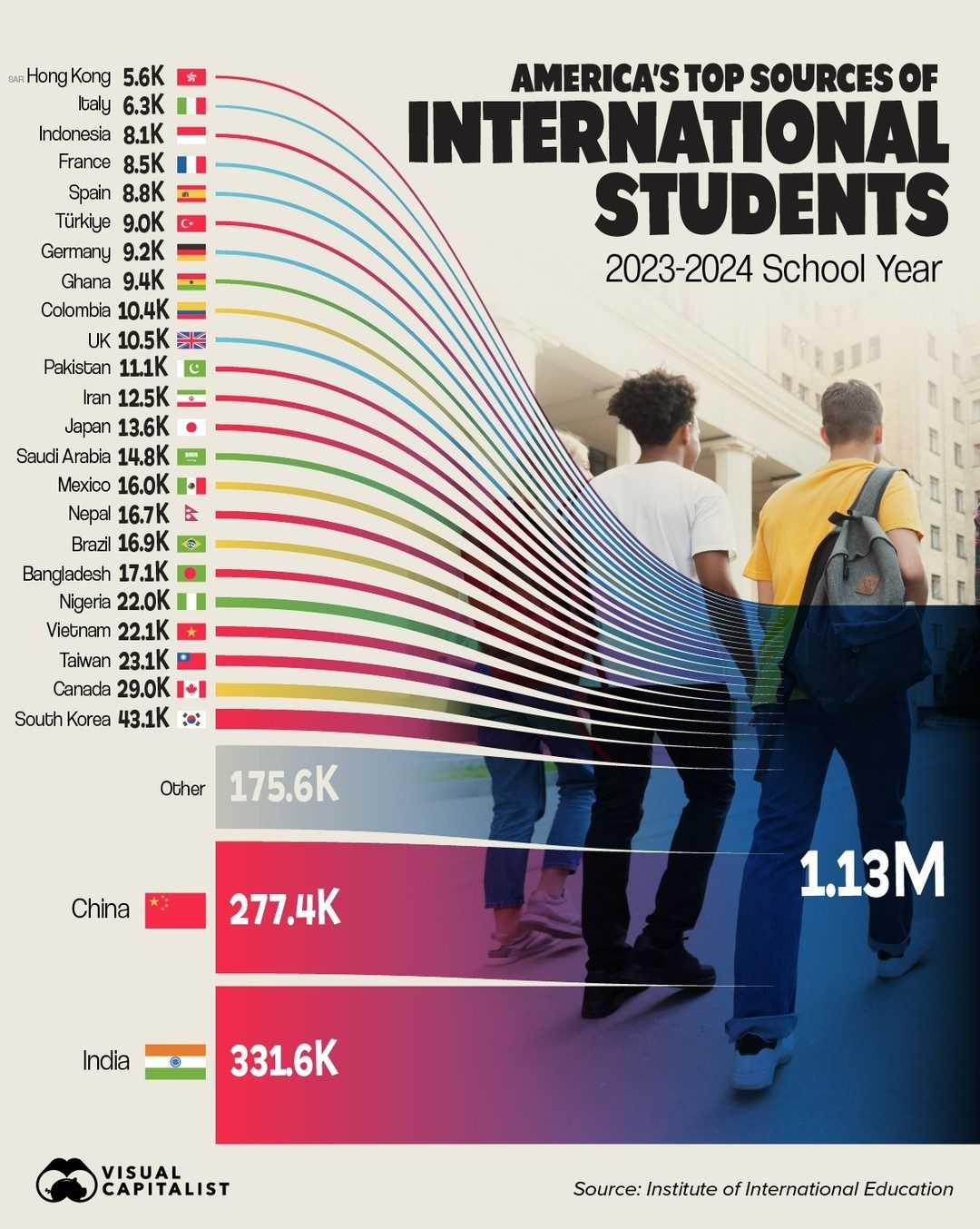
The United States is a top destination for international students, and the 2023-2024 school year was no exception. According to the Institute of International Education, the U.S. welcomed 1,126,690 students from over 210 different countries. Leading the way were China and India, which together accounted for more than half of the total international student intake. This surge in international students highlights the U.S.'s enduring appeal as a global educational hub.
Why This Matters
The influx of international students into the U.S. has significant implications for both the educational landscape and the broader economy. For universities, these students bring diverse perspectives, cultural richness, and much-needed tuition revenue. For the U.S. economy, they contribute through spending on goods and services, and many stay on to work after graduation, enhancing the nation's workforce. Understanding the countries contributing the most students helps in tailoring support services, scholarships, and recruitment efforts.
Top Countries of Origin
China and India
China and India dominate the list, contributing a combined total of over 600,000 students. China sent 277,400 students, while India sent 331,600. These numbers reflect the growing middle class in these countries and their increasing desire for a U.S. education, which is often seen as a passport to global opportunities.
Why China and India?
Multiple factors drive this trend. China and India have large, ambitious populations eager to pursue higher education abroad. Many students from these countries aim to study STEM fields, business, and other disciplines that can offer them lucrative careers upon returning home or settling abroad. Additionally, the proliferation of English language proficiency in both countries has made it easier for students to adapt to the U.S. educational system.
Challenges and Opportunities
While the numbers are impressive, they also present challenges. Universities must navigate cultural differences, language barriers, and visa regulations. However, they also offer opportunities for academic and cultural exchange, enriching the overall educational experience.
Other Significant Contributors
Beyond China and India, several other countries contribute substantially to the international student population in the U.S. Taiwan, Vietnam, and Nigeria each sent over 22,000 students. Saudi Arabia and Mexico each contributed over 14,000 and 16,000 students, respectively. Bangladesh, Nepal, and Brazil are also notable contributors.
Diverse Origins
This diversity is beneficial for U.S. universities, which can leverage the varied cultural backgrounds to enhance global learning environments. Moreover, students from these countries bring unique experiences and perspectives, enriching classroom discussions and research.
Regional Insights
Asia
Asia remains the dominant region for international students in the U.S. Besides China and India, significant numbers come from South Korea (43,100 students), Vietnam (22,000), and Taiwan (23,100). The region's cultural emphasis on education and career advancement drives this trend.
South Korea
South Korea is known for its competitive education system, which encourages many students to look abroad for higher education. South Korean students often pursue degrees in STEM fields, where they can contribute significantly to research and innovation.
Southeast Asia
Countries like Vietnam and the Philippines have seen increasing numbers of students heading to the U.S. These students often look for opportunities in business, engineering, and health sciences, with the goal of returning home to drive economic growth.
Africa
Africa is another growing source of international students, with Nigeria (22,000) and Ghana (9,400) leading the way. These countries have seen a surge in students seeking higher education abroad, often due to limited opportunities and resources in their home countries.
Nigeria
Nigeria's large population and growing middle class contribute to the high number of students seeking education abroad. These students often return with advanced degrees and valuable skills, contributing to Nigeria's economic and social development.
Europe
Europe also has a significant presence, with Germany (9,200), the UK (10,500), and France (8,500) contributing substantial numbers. These students often pursue specialized degrees or research opportunities in fields like sciences, arts, and social studies.
The European Angle
Many European students choose the U.S. for its diverse and collaborative research environments. The U.S. academic system often offers more interdisciplinary opportunities, which appeal to students from various European countries.
Practical Tips for International Students
Aspiring international students can benefit from understanding the broader trends and practical steps involved in pursuing U.S. education.
Research and Planning
Before applying, thoroughly research the institutions and programs that align with your academic and career goals. Consider factors like location, cost, faculty, and alumni network. Visit campus websites, attend virtual open houses, and talk to current or past students to gain insights.
Financial Planning
Plan for tuition, living expenses, and additional costs. Explore scholarship opportunities, assistantships, and part-time work options that can help offset expenses. Create a detailed budget and ensure you have sufficient funds to cover the entire duration of your stay.
Visa and Legal Requirements
Be aware of visa requirements and application processes. Stay informed about any changes in policies that might affect your stay. Register for SEVIS (Student and Exchange Visitor Information System) and keep your paperwork organized.
Integration and Support
Seek support services offered by universities, such as international student offices, which can provide guidance on everything from housing to health insurance. Engage with student groups and clubs to build a supportive community and enrich your overall experience.
Important Takeaways
The U.S. remains a top destination for international students, with diverse origins contributing to a rich tapestry of academic and cultural exchange. While China and India lead the way, significant numbers come from various countries, each bringing unique perspectives and contributions.
For universities, leveraging this diversity can enhance educational environments and global competitiveness. For students, understanding the trends and practical steps involved can help navigate the complexities of pursuing higher education abroad.
Conclusion
The influx of international students continues to shape the U.S. educational landscape, offering opportunities for cultural exchange, academic enrichment, and economic growth. By understanding the key trends and practical steps, international students and educational institutions are well-equipped to navigate this dynamic landscape effectively.
Watch the Reel
Related deep dives
Similar reads based on topic and creator.

Recent articles
Fresh deep dives from the latest Reels we unpacked.




Comments
Be the first to comment.