Singapore's Dominance in Single-Use Plastic Waste
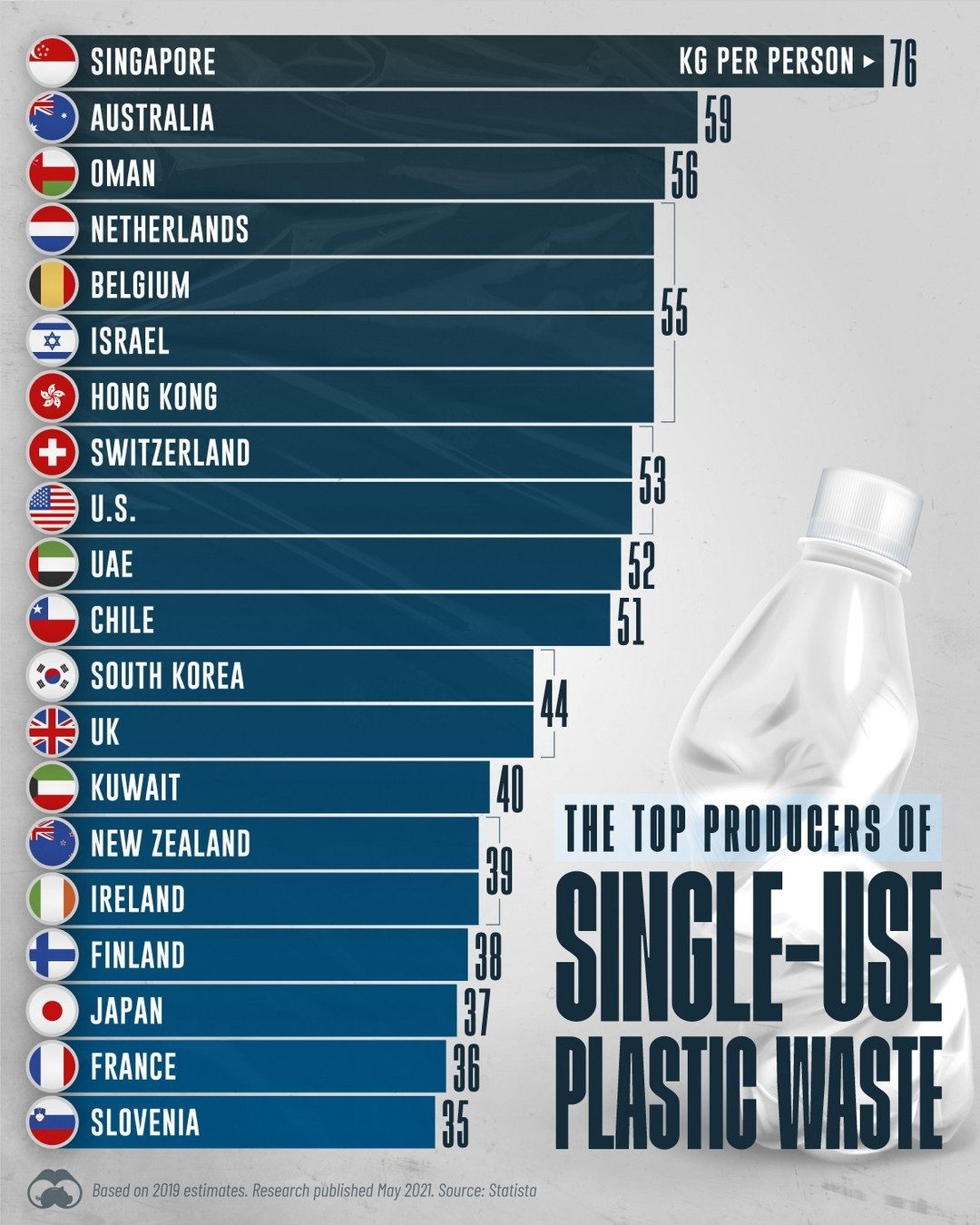
Singapore leads the world in single-use plastic waste generation, producing more than 76 kilograms per person. This figure is significant, as it highlights the global challenge of plastic waste. Plastics, which take centuries to decompose, pose long-term threats to both the environment and human health.
Why This Matters
Understanding the scale of single-use plastic waste is crucial for addressing the environmental crisis. The persistence of plastics in the environment means that the waste generated today will have impacts for generations to come. These impacts include pollution in oceans and landfills, harm to wildlife, and potential health risks to humans. By visualizing the top 20 countries generating the most single-use plastic waste, we can gain a clearer picture of where the most significant challenges lie.
Top Producers of Single-Use Plastic Waste
Single-use plastics, such as bags, bottles, and packaging, are pervasive in modern society. The 2019 data from Statista provides a snapshot of the countries most responsible for this issue. According to the data, the top 20 highest producers of single-use plastic waste per capita are:
- Singapore
- Australia
- Oman
- Netherlands
- Belgium
- Israel
- Hong Kong
- Switzerland
- United States
- United Arab Emirates
- Chile
- South Korea
- United Kingdom
- Kuwait
- New Zealand
- Ireland
- Finland
- Japan
- France
- Slovenia
The Environmental Impact
Single-use plastic waste has far-reaching environmental consequences. Plastics do not biodegrade; instead, they break down into smaller particles known as microplastics, which can pollute ecosystems and enter the food chain. This pollution affects marine life, terrestrial animals, and even humans. Microplastics have been found in the deepest parts of the ocean, on remote islands, and in the air we breathe.
Marine Pollution
Oceans bear the brunt of plastic waste. Estimates suggest that 8 million metric tons of plastic enter the ocean each year. This waste can harm marine life through ingestion, entanglement, and habitat destruction. For instance, sea turtles, birds, and fish often mistake plastic for food, leading to fatal consequences. The Great Pacific Garbage Patch, a vast accumulation of plastic waste in the Pacific Ocean, is a stark example of the scale of this problem.
Soil and Freshwater Contamination
Plastic waste also pollutes soil and freshwater systems. Microplastics in soil can disrupt plant growth and reduce soil fertility. Similarly, freshwater ecosystems, such as rivers and lakes, are becoming increasingly contaminated with plastic waste. This pollution can harm aquatic life and affect water quality, posing risks to human health.
Health Risks
The long-term health effects of plastic waste on humans are still being studied, but early research suggests that there may be significant risks. Microplastics have been detected in human organs, including the lungs, liver, and intestines. While the full extent of these health impacts is not yet understood, the presence of microplastics in the human body is a cause for concern.
Global Efforts to Reduce Plastic Waste
Addressing the global plastic waste crisis requires concerted efforts at the individual, national, and international levels. Many countries are implementing policies to reduce plastic use and improve waste management.
Policy and Legislation
Countries around the world are enacting laws to limit single-use plastics. For example, the European Union has banned several single-use plastic items, and many countries have implemented similar measures. These policies aim to reduce plastic waste by limiting the production and use of disposable plastic products.
Public Awareness and Behavior Change
Public awareness campaigns play a crucial role in reducing plastic waste. Increasing awareness about the environmental and health impacts of plastic waste can encourage individuals to change their behavior. Simple actions, such as using reusable bags, bottles, and containers, can make a significant difference in reducing single-use plastic waste.
Innovations in Waste Management
Advances in waste management technology are also key to addressing the plastic waste crisis. Recycling and waste-to-energy technologies can help reduce the amount of plastic waste that ends up in landfills and the environment. However, these technologies are not a panacea, and reducing plastic waste at the source remains the most effective strategy.
Circular Economy
Transitioning to a circular economy model, where waste is minimized and resources are reused and recycled, is another important approach. This model encourages the design of products with long-term use in mind and promotes the reuse of materials. Companies and governments are increasingly adopting circular economy principles to reduce waste and promote sustainability.
International Cooperation
The plastic waste crisis is a global issue, and international cooperation is essential for addressing it. Organizations like the United Nations and various international treaties are working to promote global efforts to reduce plastic waste. Collaboration among countries can help share best practices, develop new technologies, and enforce regulations to combat plastic pollution.
Practical Tips for Reducing Single-Use Plastic Waste
Here are some practical steps you can take to reduce your single-use plastic waste:
- Use Reusable Bags: Carry reusable shopping bags to the grocery store and for other purchases.
- Opt for Reusable Containers: Use reusable containers for food storage, instead of plastic bags and wrapping.
- Avoid Single-Use Bottles: Carry a reusable water bottle and refill it instead of buying bottled water.
- Refuse Unnecessary Plastics: Say no to plastic straws, cutlery, and other single-use items when possible.
- Choose Plastics Wisely: If you must use plastic, opt for items that can be recycled or reused.
- Recycle Properly: Follow local recycling guidelines to ensure plastic waste is properly managed.
- Support Eco-Friendly Brands: Choose products from companies that prioritize sustainability and reduce plastic use.
Important Takeaways
Single-use plastic waste is a critical issue with significant environmental and health impacts. Understanding the countries that produce the most waste can help focus efforts to reduce it. By adopting practical tips and supporting global efforts, individuals and nations can work together to address this pressing problem.
Conclusion
The challenge of single-use plastic waste is vast, but so are the opportunities for change. By visualizing the data and understanding the impact, we can take concrete steps to reduce our reliance on plastics and protect the environment for future generations.
Watch the Reel
Questions readers ask
Which country generates the most single-use plastic waste per person?
Singapore is the top country in the world for generating the most single-use plastic waste per person, with each individual contributing over 76 kilograms annually, which is substantially higher than many other countries.
How long does single-use plastic waste persist in the environment?
Single-use plastic waste can persist in the environment for centuries. The slow decomposition rate of plastics means that the waste generated today will continue to impact the environment and human health for generations to come.
What are the top 20 countries with the most single-use plastic waste?
The article lists the top 20 countries based on single-use plastic waste per capita, with Singapore at the top. To find the complete list, you can refer to the main content of the article.
What are the environmental and health impacts of single-use plastic waste?
Single-use plastic waste poses significant threats to both the environment and human health. Environmental impacts include pollution in oceans and landfills, and harm to wildlife. For humans, there are potential health risks associated with the presence of plastics in the environment.
Why is it important to track single-use plastic waste by country?
Tracking single-use plastic waste by country helps to visualize the scale of the plastic waste problem and identify the regions that need the most attention. This information is crucial for implementing targeted solutions and policies to mitigate the environmental and health impacts of plastic waste.
What can be done to reduce single-use plastic waste?
Reducing single-use plastic waste requires a multi-faceted approach, including policy changes, public awareness campaigns, and innovative solutions. Governments, businesses, and individuals all have roles to play in minimizing the amount of plastic waste generated and improving waste management practices.
What are the statistics on the most plastic waste in 2021?
For the most up-to-date statistics, you can refer to the main article. However, it is known that countries like Singapore continue to lead the per capita rankings for single-use plastic waste generation. This data is important for understanding the global context of the plastic pollution crisis.
Related deep dives
Similar reads based on topic and creator.



Recent articles
Fresh deep dives from the latest Reels we unpacked.




Comments
Be the first to comment.