Lithium Production
Lithium, a critical component in electric vehicle (EV) batteries, has seen significant shifts in production and pricing. The demand for lithium has surged due to the increasing adoption of EVs, leading to substantial changes in the global lithium market. To meet this rising demand, top producers like Australia, Chile, and China have increased their output, resulting in a recent surplus that has caused prices to collapse by more than 80% from a late 2022 record high.
Why This Matters
The supply and demand dynamics of lithium are pivotal for the EV industry. Lithium is essential for the batteries that power EVs, and fluctuations in its production and pricing can significantly impact the cost and availability of these vehicles. Understanding the key players in lithium production and the market trends can provide valuable insights into the future of the EV industry and broader energy storage solutions.
The Global Lithium Landscape
Top Producers and Their Contributions
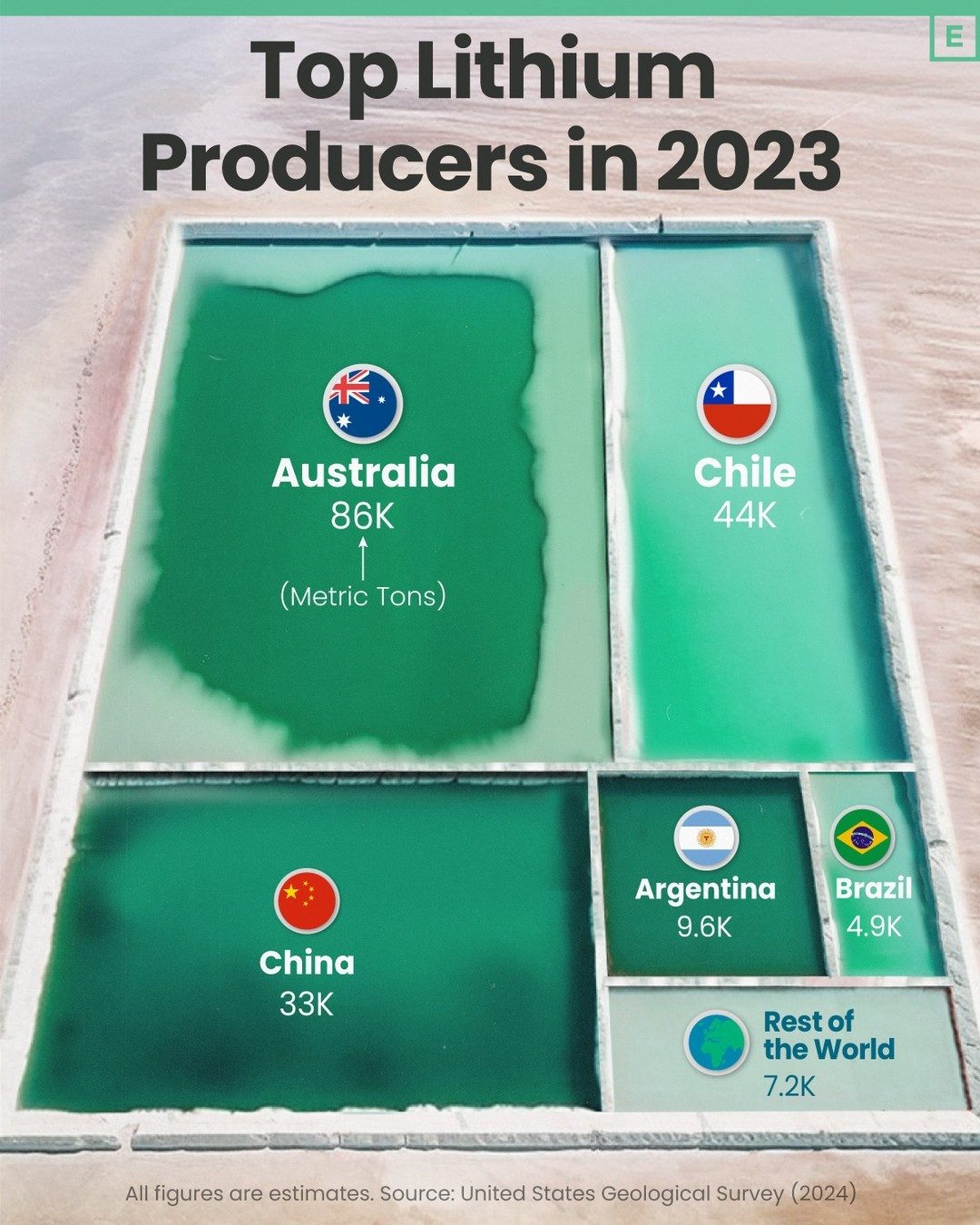
According to the United States Geological Survey (USGS) data for 2023, the global lithium production landscape is dominated by a few key countries. Here's a breakdown of the top producers:
- Australia: Produced 86,000 metric tons, making it the world's leading lithium producer.
- Chile: Produced 44,000 metric tons, contributing significantly to the global supply.
- China: Produced 33,000 metric tons, securing its position as a major player in the lithium market.
- Argentina: Produced 9,600 metric tons, highlighting its growing role in lithium production.
- Brazil: Produced 4,900 metric tons, contributing to the global supply.
- Rest of the World: Combined production of 7,200 metric tons, representing various other countries involved in lithium mining.
These figures underscore the dominant role of Australia, Chile, and China in the global lithium market, collectively producing 88% of the world’s lithium in 2023.
Regional Insights
Australia, Chile, and China have leveraged their geographical advantages and existing mining infrastructure to become the world's top lithium producers. Australia, in particular, has extensive hard-rock lithium deposits, while Chile benefits from its abundant brine resources. China, on the other hand, has invested heavily in both brine and hard-rock lithium extraction methods, solidifying its position as a major producer.
Argentina and Brazil, while smaller players, are also significant contributors due to their lithium-rich brine deposits. These countries are rapidly expanding their production capacities to meet the growing global demand for lithium.
The Impact of Increased Production
The surge in lithium production has had a profound impact on the market. The increased supply has led to a surplus, driving down prices significantly. This price collapse, which saw a drop of over 80% from late 2022 record highs, reflects the delicate balance between supply and demand in the lithium market. While this surplus has benefited consumers and manufacturers by making lithium more affordable, it has also raised concerns about market stability and future supply chains.
Key Factors Influencing Lithium Production
Rising EV Battery Demand
The primary driver of lithium demand is the rapidly growing EV market. As more countries and automotive manufacturers commit to transitioning to electric vehicles, the demand for lithium-ion batteries continues to rise. This trend is expected to persist, driving further investments in lithium production and exploration.
Technological Advancements
Technological innovations in lithium extraction and battery manufacturing are crucial for maintaining a steady supply. Advances in brine extraction techniques and hard-rock mining methods have improved efficiency and reduced costs, making lithium more accessible. Additionally, developments in battery technology are enhancing the performance and lifespan of lithium-ion batteries, further boosting demand.
Environmental and Regulatory Considerations
Environmental and regulatory factors also play a significant role in lithium production. Mining activities, particularly in regions with sensitive ecosystems, face scrutiny and regulations aimed at minimizing environmental impact. Compliance with these regulations can affect production timelines and costs, influencing the overall market dynamics.
Practical Tips for Investors and Manufacturers
Diversifying Supply Chains
Given the concentration of lithium production in a few countries, diversifying supply chains can mitigate risks associated with geopolitical instability and market volatility. Investing in multiple regions and exploring alternative lithium sources can provide a more stable supply.
Investing in Research and Development
Innovation in lithium extraction methods and battery technology is essential for sustaining the industry. Companies should invest in research and development to improve extraction processes, reduce environmental impact, and enhance battery performance and longevity.
Monitoring Market Trends
Staying informed about market trends and regulatory changes is crucial for making informed investment decisions. Understanding the supply and demand dynamics, as well as the impact of technological advancements and environmental regulations, can help stakeholders navigate the lithium market effectively.
Important Takeaways
- Australia, Chile, and China dominate global lithium production, accounting for 88% of the world’s lithium in 2023.
- The surge in lithium production has led to a recent surplus, resulting in a significant price collapse.
- The demand for lithium is driven primarily by the growing EV market and advancements in battery technology.
- Diversifying supply chains, investing in R&D, and monitoring market trends are key strategies for stakeholders in the lithium industry.
Conclusion
The lithium market is dynamic and influenced by various factors, including production volumes, technological advancements, and environmental regulations. As the demand for lithium continues to rise, driven by the EV revolution, understanding the key players and market trends will be essential for stakeholders to make informed decisions and navigate the evolving landscape. By focusing on innovation, diversification, and market awareness, the industry can ensure a stable and sustainable supply of this critical resource.
Watch the Reel
Questions readers ask
Which countries are the top lithium producers in 2023?
In 2023, the top lithium-producing countries are Australia, Chile, and China. These nations have significantly increased their output to meet the growing demand for lithium, driven by the expanding electric vehicle (EV) market.
How has the lithium market changed in 2023?
The lithium market in 2023 has experienced a notable surplus, leading to a substantial drop in prices. This shift is due to increased production from key players like Australia, Chile, and China, which has caused prices to decrease by over 80% from late 2022 highs.
Why is lithium important for the EV industry?
Lithium is a crucial component in the batteries that power electric vehicles. Fluctuations in its production and pricing can significantly impact the cost and availability of EVs, making it a pivotal material for the industry.
What are the key lithium extraction techniques used by top producers?
The top lithium-producing countries use various extraction techniques. Australia primarily employs hard rock mining, while Chile and Argentina focus on brine extraction from salt flats. China utilizes both hard rock mining and brine extraction methods.
How do lithium market trends affect the global supply chain?
Lithium market trends, such as surpluses and price collapses, can disrupt the global supply chain. These changes influence the cost and availability of EV battery materials, affecting manufacturers and consumers alike. Understanding these trends helps stakeholders navigate the market more effectively.
What is the significance of Brazil and Argentina in the global lithium supply?
While Australia, Chile, and China lead global lithium production, Brazil and Argentina also hold substantial lithium reserves and are involved in active mining operations. Argentina, in particular, is known for its extensive lithium brine resources in the salt flats of the 'Lithium Triangle,' contributing to the global lithium supply.
Related deep dives
Similar reads based on topic and creator.


Recent articles
Fresh deep dives from the latest Reels we unpacked.




Comments
Be the first to comment.