Mobile Data Usage by Country
Mobile data consumption has skyrocketed in recent years, with global data traffic per smartphone projected to reach 42 GB per month by 2027. This represents a 16-fold increase from 2017, driven by an expanding number of internet users, particularly in middle-income countries. Understanding the countries with the highest mobile data usage can provide insights into global connectivity trends and the factors influencing data consumption.
Why This Matters
The surge in mobile data usage has significant implications for telecommunications infrastructure, consumer behavior, and digital services. Countries with high data consumption often lead in digital innovation and internet penetration, offering valuable lessons for regions aiming to improve connectivity. Additionally, high data usage can strain network capacities, affecting service quality and prompting infrastructure upgrades.
Mobile Data Usage Trends
Global Growth in Mobile Data Consumption
The rapid growth in mobile data usage is closely tied to the proliferation of smartphones and affordable data plans. As of 2027, the average smartphone user is expected to consume 42 GB of data per month, a stark contrast to the 2.6 GB per month in 2017. This exponential growth is fueled by the increasing availability of high-speed mobile networks and the rise of data-intensive applications, such as streaming services, social media, and cloud-based services.
Top Countries by Mobile Data Usage
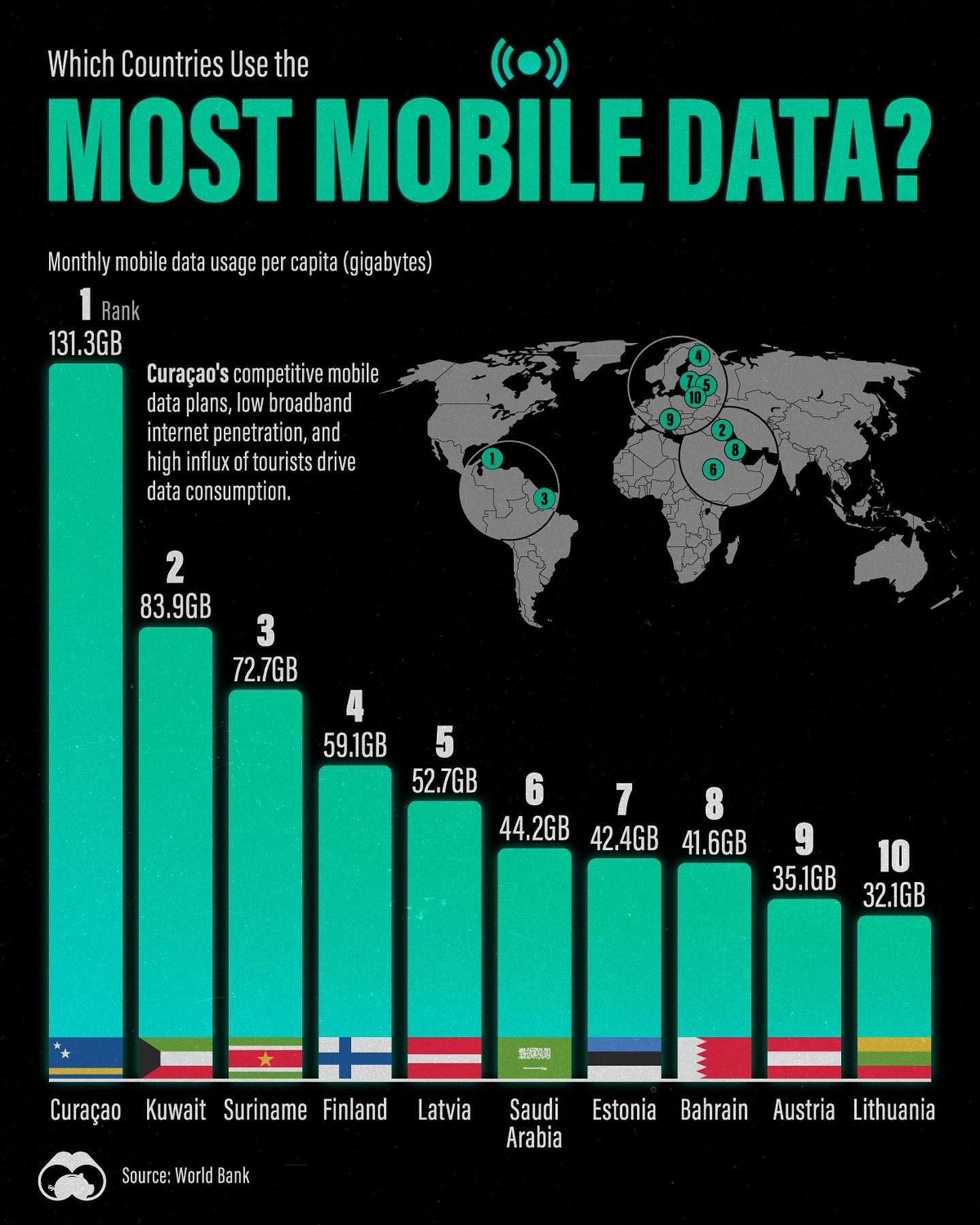
When examining mobile data usage per capita, certain countries stand out. Curaçao leads the pack with an astonishing 131.3 GB per month. Following Curaçao are:
- Kuwait at 83.9GB
- Suriname at 72.7GB
- Finland at 59.1GB
- Latvia at 52.7GB
- Saudi Arabia at 44.2GB
- Estonia at 42.4GB
- Bahrain at 41.6GB
- Austria at 35.1GB
- Lithuania at 32.1GB
These rankings highlight the diverse factors influencing mobile data usage, from competitive data plans to unique societal and economic conditions.
Factors Influencing High Mobile Data Usage
Competitive Data Plans
Countries with competitive mobile data plans often see higher data consumption. In Curaçao, for example, the combination of affordable data plans, low broadband internet penetration, and a high influx of tourists has driven significant data usage. Competitive pricing and unlimited data plans have made mobile data more accessible, encouraging users to consume more.
Broadband Internet Penetration
In regions with limited broadband internet access, mobile data becomes the primary source of connectivity. This is particularly evident in countries like Curaçao and Suriname, where the lack of widespread broadband infrastructure has pushed users to rely heavily on mobile data.
Tourist Influx
Tourist destinations often experience higher mobile data usage due to visitors who rely on mobile data for communication and navigation. In Curaçao, the influx of tourists contributes to the high data consumption, as visitors use their mobile devices extensively during their stay.
Economic and Societal Factors
Economic conditions and societal trends also play a crucial role in mobile data usage. In countries like Saudi Arabia and Kuwait, high disposable incomes and a growing tech-savvy population have driven the demand for mobile data services. Additionally, the increasing reliance on digital services, such as online shopping and remote work, has accelerated data consumption.
Practical Tips for Managing Mobile Data Usage
Monitor Data Consumption
Managing mobile data usage effectively starts with monitoring consumption. Many smartphones and carriers provide tools to track data usage, helping users identify which apps and services consume the most data. Regularly checking data usage can prevent unexpected overages and help users stay within their data limits.
Optimize App Settings
Adjusting app settings can significantly reduce data consumption. For example, disabling automatic updates and background data for non-essential apps can save data. Additionally, using data-saving modes and compressing web content can further optimize data usage.
Use Wi-Fi Whenever Possible
Relying on Wi-Fi networks, especially for data-intensive activities like streaming and downloading, can greatly reduce mobile data usage. Many public places, such as cafes, libraries, and airports, offer free Wi-Fi, making it easier to stay connected without consuming mobile data.
Choose the Right Data Plan
Selecting a data plan that aligns with usage patterns is essential. For heavy data users, an unlimited data plan may offer better value. Conversely, for users with limited data needs, a pay-as-you-go or prepaid plan can help manage costs effectively.
Utilize Data-Saving Apps
Several apps and browser extensions are designed to reduce data consumption. These tools can compress web content, block ads, and optimize video streaming, making it easier to manage data usage while maintaining online functionality.
Take Advantage of Offline Features
Many apps and services offer offline features, allowing users to download content for later use without relying on mobile data. Utilizing these features can help manage data consumption, especially in areas with limited connectivity.
Important Takeaways
- Global Trends: Mobile data traffic per smartphone is projected to reach 42 GB per month by 2027, reflecting a 16-fold increase from 2017.
- Leading Countries: Curaçao, Kuwait, Suriname, Finland, Latvia, Saudi Arabia, Estonia, Bahrain, Austria, and Lithuania top the list for mobile data usage per capita.
- Factors Influencing Usage: Competitive data plans, low broadband penetration, tourist influx, and economic conditions significantly impact data consumption.
- Management Tips: Monitoring data usage, optimizing app settings, using Wi-Fi, choosing the right data plan, utilizing data-saving apps, and taking advantage of offline features can help manage mobile data effectively.
Conclusion
The rapid growth in mobile data usage underscores the increasing reliance on digital connectivity and the evolving landscape of telecommunications. Understanding the factors driving high data consumption in countries like Curaçao and Kuwait can provide valuable insights for improving connectivity and optimizing data management. By adopting practical tips and staying informed about global trends, users can effectively manage their mobile data usage and stay connected in an ever-expanding digital world.
Watch the Reel
Questions readers ask
Which country leads in mobile data usage per capita?
Curaçao tops the list with the highest mobile data usage per capita. This small Caribbean island nation has one of the highest data consumption rates, driven by extensive smartphone usage and competitive data plans.
How does Kuwait's mobile data usage compare globally?
Kuwait ranks among the top countries for mobile data usage. High smartphone penetration and affordable data plans contribute to its elevated data consumption, making it a significant player in global mobile data trends.
What factors contribute to high mobile data usage in certain countries?
Several factors drive high mobile data usage, including the widespread adoption of smartphones, competitive and affordable data plans, and robust telecommunications infrastructure. Additionally, cultural and behavioral trends, such as high social media usage and streaming services, play a significant role.
Why is understanding global mobile data trends important?
Analyzing global mobile data trends helps identify regions with rapid digital growth and offers insights into consumer behavior and technological advancements. This knowledge can inform infrastructure development, digital service expansion, and policy decisions to enhance global connectivity.
What is the projected mobile data usage per smartphone by 2027?
By 2027, the projected mobile data usage per smartphone is 42 GB per month. This represents a significant increase from previous years, highlighting the exponential growth in data traffic driven by the proliferation of smartphones and internet users, particularly in middle-income countries.
Which countries are driving the growth in mobile data usage worldwide?
Countries with high mobile data usage, such as Curaçao and Kuwait, are significantly contributing to the global surge in data consumption. Additionally, middle-income countries are experiencing a rapid increase in internet users, fueling the overall growth in mobile data usage worldwide.
How does mobile data usage impact telecommunications infrastructure?
The surge in mobile data usage places significant demands on telecommunications infrastructure, necessitating continuous upgrades and expansions to support the growing data traffic. This includes investments in network infrastructure, such as 5G technology, to accommodate the increasing data consumption and ensure reliable connectivity.
Related deep dives
Similar reads based on topic and creator.


Recent articles
Fresh deep dives from the latest Reels we unpacked.




Comments
Be the first to comment.