Nuclear Power Generation Capacities Around the World
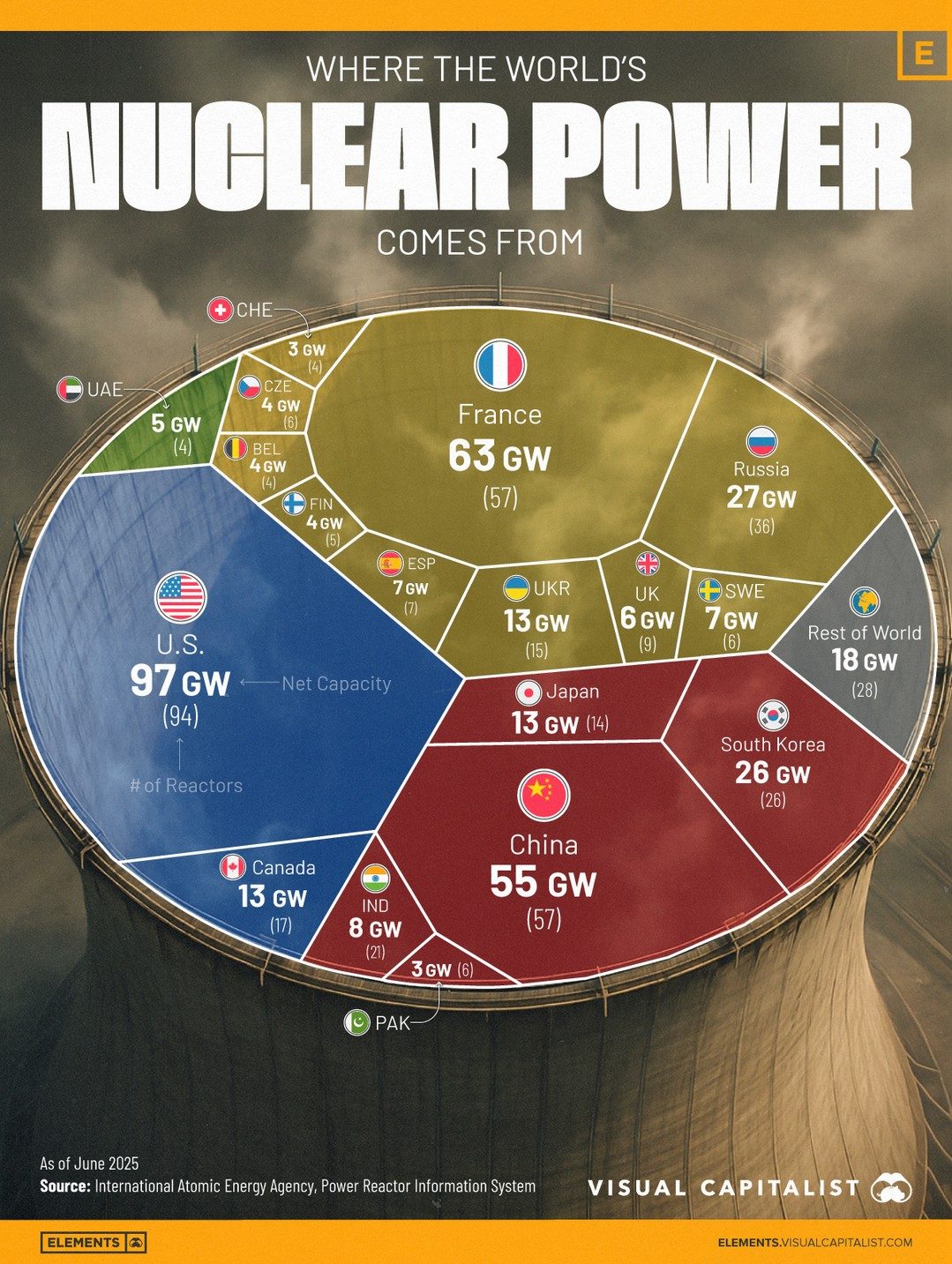
Five countries, the United States, France, China, Russia, and South Korea, dominate the global nuclear power generation landscape, accounting for 71% of the world’s nuclear generation capacity. These countries have harnessed the power of nuclear energy to a significant extent, with each playing a crucial role in global electricity production. The International Atomic Energy Agency’s Power Reactor Information System (PRIS) provides a comprehensive dataset to understand the distribution of nuclear power generation across these nations.
Why This Matters
The significance of nuclear power in the global energy mix cannot be overstated. As nations strive to reduce carbon emissions and transition to cleaner energy sources, nuclear power remains a reliable and efficient option. Understanding the distribution of nuclear power generation helps us appreciate the global reliance on this energy source and the strategic importance of each leading country's contributions to the energy market.
Nuclear Power in the U.S.
The United States leads the global nuclear power generation, boasting a capacity of 97 gigawatts (GW) across 94 reactors. This massive capacity underscores the U.S. commitment to nuclear energy as a cornerstone of its electricity production. The U.S.'s extensive nuclear infrastructure supports its electricity grid, ensuring a stable and abundant power supply.
France's Nuclear Dominance
France ranks second in nuclear power generation, with 63 GW of capacity. Nuclear energy is a critical component of France's electricity mix, providing a significant portion of its power needs. The country's reliance on nuclear energy is a testament to its technological prowess and commitment to clean, reliable energy solutions.
China and Russia's Ascendancy
China and Russia are not far behind, with capacities of 55 GW and 27 GW, respectively. China has rapidly expanded its nuclear capacity in recent years, driven by its growing energy demands and environmental concerns. Russia, with a long history of nuclear technology, continues to be a significant player in the global nuclear energy market.
South Korea's Contribution
South Korea rounds out the top five with 26 GW of nuclear capacity. The country has been a leader in nuclear technology, particularly in the development of advanced reactor designs. South Korea's focus on nuclear energy reflects its strategic approach to energy security and sustainability.
Smaller Contributors
Beyond the top five, other countries such as Canada, Japan, and the Czech Republic contribute to global nuclear power generation with capacities ranging from 13 GW to 6 GW. These countries, while smaller in scale, play important roles in the global nuclear energy landscape, showcasing diverse approaches and technologies.
The Rest of the World
The "Rest of the World" category includes countries with lesser but still significant nuclear power capacities, totaling 18 GW. These nations, though not as dominant as the top five, contribute to the global nuclear energy output and demonstrate the widespread adoption of nuclear power.
Practical Tips for Understanding Nuclear Power Distribution
Understanding the distribution of nuclear power generation is essential for anyone interested in global energy trends. Here are some practical tips for grasping the dynamics of nuclear power:
- Explore Country-Specific Data: Look into the specific nuclear power capacities and reactor numbers for each country. This data can provide insights into each nation's energy strategies and technological advancements.
- Track Nuclear Energy Policies: Policies and regulations related to nuclear energy vary by country. Staying informed about these policies can help predict future trends in nuclear power generation.
- Analyze Energy Mixes: Consider how nuclear power fits into each country's overall energy mix. This can provide a broader understanding of their energy dependencies and sustainability goals.
- Stay Updated on Technological Advancements: Nuclear technology is continually evolving. Keeping up with the latest developments can offer a clearer picture of future nuclear power capacities and efficiencies.
Important Takeaways
- The United States, France, China, Russia, and South Korea collectively generate 71% of the world’s nuclear power.
- Nuclear energy plays a crucial role in meeting global electricity demands and reducing carbon emissions.
- The International Atomic Energy Agency’s PRIS data provides valuable insights into the distribution of nuclear power generation.
- Understanding the global distribution of nuclear power can help in analyzing energy policies and technological advancements.
Conclusion
Nuclear power generation is a critical component of the global energy landscape. The leading countries in this field—the United States, France, China, Russia, and South Korea—have made significant strides in harnessing nuclear energy to meet their electricity needs. By understanding the distribution and capacities of nuclear power generation, we can better appreciate the strategic importance of nuclear energy in the global energy mix.
Watch the Reel
Questions readers ask
Which countries generate the most nuclear power worldwide?
The United States, France, China, Russia, and South Korea are the leading countries in nuclear power generation, accounting for 71% of the global nuclear power generation capacity. These nations have significantly invested in nuclear energy infrastructure and contribute the most to global electricity production through nuclear power.
What role does France play in global nuclear power generation?
France is a significant player in the nuclear power sector, with a substantial portion of its electricity generated through nuclear energy. The country is often recognized for its advanced nuclear technology and high reliance on nuclear power, contributing considerably to the global nuclear power capacity.
How does China contribute to the global nuclear energy landscape?
China has rapidly expanded its nuclear power capabilities, becoming one of the top countries in nuclear generation. The country's investments in nuclear reactors and technology have significantly increased its contribution to the global nuclear energy production.
What is the importance of Russia in the context of global nuclear power?
Russia has a robust nuclear energy sector, both domestically and through international collaboration. The country is a major supplier of nuclear technology and contributes significantly to the global nuclear power generation, making it one of the key players in the global nuclear landscape.
Why is South Korea notable in the global nuclear power industry?
South Korea is known for its advanced nuclear technology and significant investments in nuclear power plants. The country has successfully developed a strong nuclear energy sector, contributing a notable portion to the global nuclear power generation capacity.
What is the Power Reactor Information System (PRIS) and how does it relate to nuclear power generation?
The Power Reactor Information System (PRIS) is a comprehensive dataset maintained by the International Atomic Energy Agency. It provides detailed information on the distribution and operation of nuclear power plants and reactors, helping to track global nuclear power generation capacities and trends.
What global efforts are underway to expand nuclear power generation?
Global efforts to expand nuclear power generation focus on building new reactors, improving existing infrastructure, and enhancing safety measures. Countries like China and Russia, as well as international collaboration, play a pivotal role in these efforts, aiming to increase the global nuclear power generation capacity to meet rising energy demands while reducing carbon emissions.
Related deep dives
Similar reads based on topic and creator.




Recent articles
Fresh deep dives from the latest Reels we unpacked.




Comments
Be the first to comment.