Automotive Sales Data 2020 to 2025: Top Automotive Trends
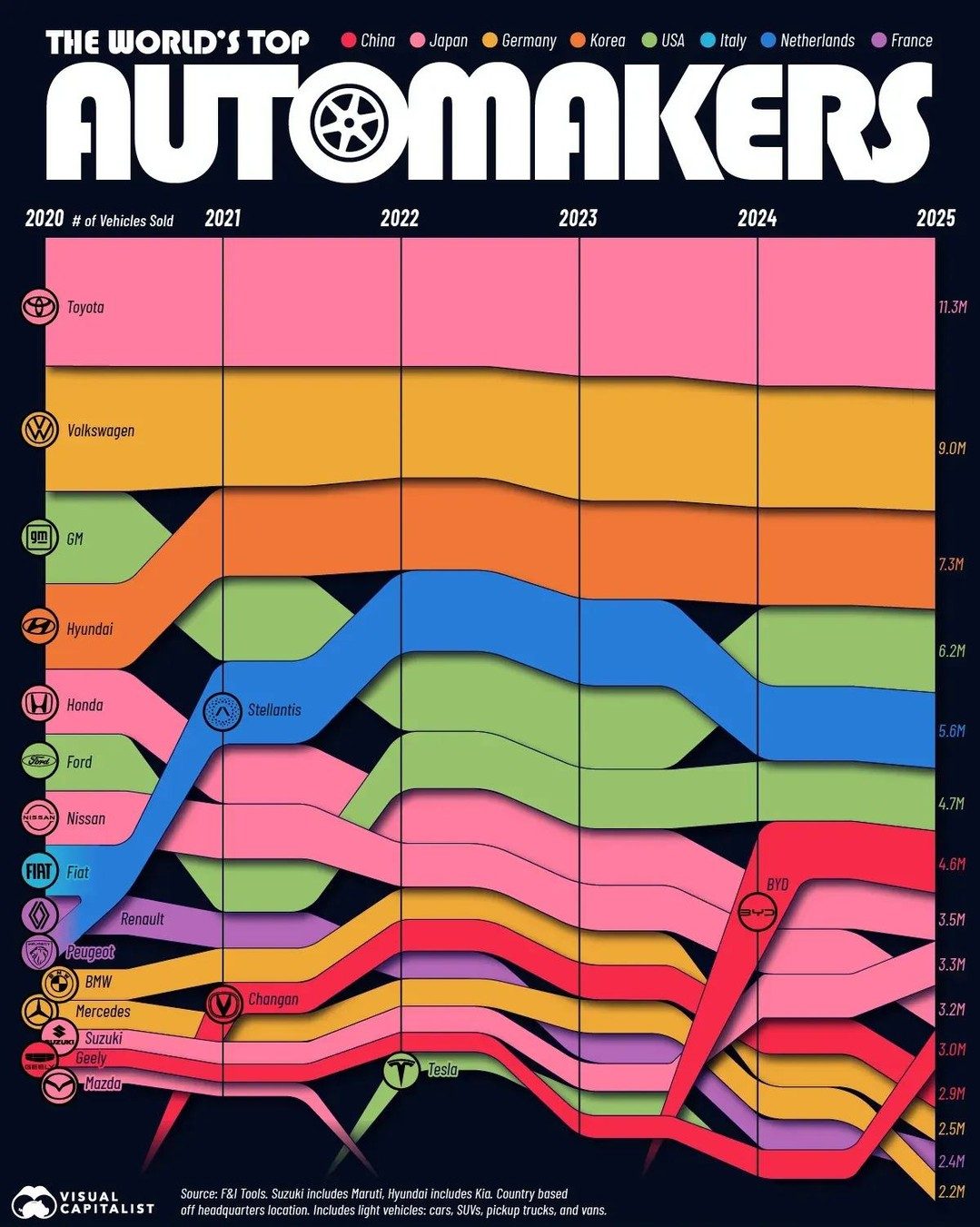
Automakers have experienced significant shifts in market dynamics between 2020 and 2025. The infographic from Capitalist provides a comprehensive look at how the top car manufacturers have fared during this period, highlighting key trends and transformations in the industry.
Context / Why this matters
The automotive industry is a barometer of economic health and technological advancement. Understanding the sales performance of major automakers from 2020 to 2025 offers insights into consumer preferences, market competition, and the impact of global events. This data is crucial for stakeholders, including investors, industry analysts, and automotive enthusiasts, as it provides a clear picture of which companies are thriving and which are falling behind.
Main Discussion
Global Leaders
Toyota and Volkswagen have consistently held the top two positions in global vehicle sales. Toyota has maintained a strong presence, while Volkswagen has shown resilience despite facing various challenges, including supply chain disruptions and regulatory changes.
Rising Chinese Automakers
Chinese automakers have made significant strides, particularly BYD and Geely. BYD's entry into the global top 10 is a testament to its rapid growth and innovation in the electric vehicle (EV) sector. Geely continues to climb the rankings, indicating a strong and strategic push into the international market.
Established Brands Slipping
Several long-established brands have seen a decline in their rankings. This shift is attributed to intensified competition, particularly from new and emerging automakers focusing on electric and hybrid vehicles. Brands like Honda and Nissan have faced challenges in adapting to the evolving market demands.
Emerging Players
The rise of companies like Tesla and Hyundai showcases the industry's shift towards electric and sustainable vehicles. Tesla, in particular, has disrupted the market with its innovative technology and consumer-centric approach, leading to significant growth in sales.
Data Visualization Insights
The infographic uses a line chart to illustrate sales volumes, allowing for a clear comparison of trends over time. This visual representation makes it easy to identify key milestones and turning points for each automaker. The inclusion of numerical data points indicates sales figures in millions, providing a precise measure of performance.
Notable Trends
- Electric Vehicle Revolution: The surge in EV sales, particularly by BYD and Tesla, underscores the global shift towards sustainable mobility. This trend is driven by consumer demand for eco-friendly options and government policies promoting EV adoption.
- Regional Dynamics: The infographic highlights the varying performance of automakers across different regions. Chinese brands have shown remarkable growth, while traditional European and American brands have had mixed results.
- Technology and Innovation: Automakers investing in advanced technologies, such as autonomous driving and connected cars, have seen better sales performance. This indicates that innovation is a key differentiator in the current market.
Practical Tips
- Monitor Market Trends: Keep track of industry reports and infographics to stay updated on the latest trends and shifts in the automotive market. This information is crucial for making informed decisions.
- Invest in Innovation: For automakers, focusing on research and development in EVs, autonomous driving, and connected car technologies can drive long-term success.
- Adapt to Regulatory Changes: Stay informed about global and regional regulatory changes affecting the automotive industry, such as emissions standards and trade policies. This information will help in strategic planning and compliance.
- Consumer-Centric Approach: Prioritize consumer preferences and feedback, particularly in the EV and hybrid vehicle segments, to stay competitive.
- Sustainable Practices: Embrace sustainable practices in manufacturing and operations to align with global environmental goals and consumer expectations.
Important Takeaways
- Toyota and Volkswagen remain the global leaders, highlighting their strong market presence and adaptability.
- Chinese automakers, particularly BYD and Geely, are rapidly gaining ground, driven by innovation and strategic market entry.
- Electric and hybrid vehicles are the future, with companies like Tesla leading the charge.
- Established brands need to innovate and adapt to stay competitive in the evolving market.
- The automotive industry is in a period of significant transformation, with new players and technologies driving market dynamics.
Conclusion
The automotive industry between 2020 and 2025 has been characterized by intense competition and rapid innovation. While Toyota and Volkswagen have maintained their dominance, Chinese automakers and electric vehicle pioneers have made significant inroads. This period has also seen several established brands struggle to adapt, highlighting the importance of innovation and sustainability in the current market landscape. For those interested in the automotive sector, staying informed about these trends and embracing technological advancements will be key to navigating the future.
Watch the Reel
Questions readers ask
Which key trends have influenced automotive sales from 2020 to 2025?
Several key trends have shaped automotive sales during this period. These include the increasing demand for electric vehicles (EVs), advancements in autonomous driving technology, and the impact of the COVID-19 pandemic on supply chains and consumer behavior. Additionally, there has been a notable shift in consumer preferences towards sustainability and digital connectivity in vehicles.
What is the current market dominance of Toyota and Volkswagen in the automotive industry?
Toyota and Volkswagen have maintained strong positions in the global automotive market. Toyota is renowned for its reliability and hybrid technology, while Volkswagen has made significant strides with its electric vehicle (EV) offerings and innovative technologies. Both brands have adapted well to changing market demands and technological advancements, ensuring their continued market dominance.
How are Chinese car brands like BYD and Geely performing in the global market?
Chinese car brands such as BYD and Geely have shown remarkable growth in recent years. BYD, in particular, has gained attention for its advancements in electric vehicle technology and battery production, while Geely has expanded its global footprint through strategic acquisitions and partnerships. These brands are rapidly gaining market share, challenging established automakers with their competitive pricing and innovative features.
What are some of the main challenges faced by established automotive brands like Toyota and Volkswagen?
Established brands like Toyota and Volkswagen face several challenges, including intense competition from new market entrants, particularly Chinese brands. Additionally, they must navigate rapid technological advancements, such as the shift towards electric and autonomous vehicles, while managing the economic uncertainties and supply chain disruptions caused by global events like the COVID-19 pandemic. Consumers' increasing demand for sustainability and digital features also poses a challenge for these brands.
How do the sales data of BYD and Geely compare to Toyota in the current market?
BYD and Geely have made significant inroads into the market, with BYD's electric vehicle sales growing rapidly due to its innovative battery technology and competitive pricing. Geely, known for its acquisitions of brands like Volvo, has strategically expanded its market reach. Despite these gains, Toyota maintains a strong foothold in the market, particularly in segments where reliability and hybrid technology are key selling points. Overall, while BYD and Geely are challenging Toyota in certain areas, Toyota's broad appeal and established brand reputation continue to be strong market advantages.
What does the future hold for the automotive industry, especially for top automakers by 2025?
The future of the automotive industry is poised for significant growth in electric and autonomous vehicle segments. Top automakers will likely see increased competition from new players, particularly Chinese brands, and will need to invest heavily in research and development to stay ahead. Additionally, the industry will focus on sustainability, digital connectivity, and personalized consumer experiences. By 2025, the landscape is expected to be more diverse, with a greater emphasis on innovation and adaptability.
Related deep dives
Similar reads based on topic and creator.


Recent articles
Fresh deep dives from the latest Reels we unpacked.




Comments
Be the first to comment.