Ocean Plastic Waste: A Global Perspective
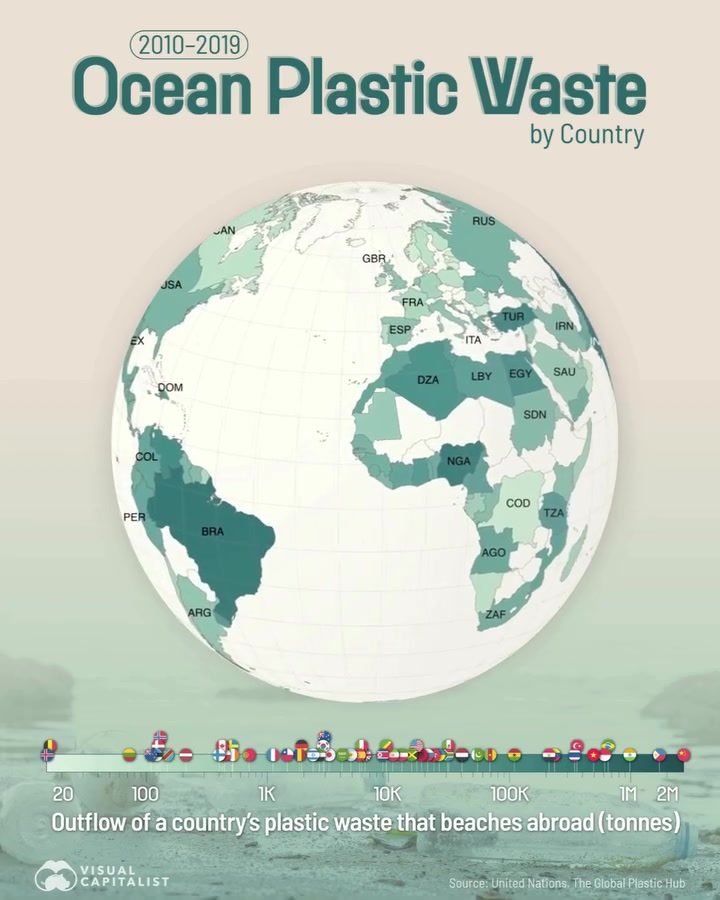
Ocean plastic waste is a pressing environmental issue, with significant contributions from various countries. The map below highlights the outflow of plastic waste from countries, revealing a concerning trend. This visualization focuses on the period from 2010 to 2019 and uses data sourced from the United Nations and The Global Plastic Hub, providing a comprehensive overview of the plastic waste leakage that ended up on foreign beaches.
Context: Why This Matters
Plastic pollution in the ocean is a critical global concern that affects marine ecosystems, wildlife, and human health. Understanding the sources of this pollution is crucial for developing effective strategies to mitigate its impact. The data presented here underscores the urgency of addressing mismanaged plastic waste and highlights the need for international cooperation.
Analyzing the Map
Outflow by Country
The map shows the outflow of plastic waste from different countries, represented by a color gradient. Darker shades indicate higher outflow of plastic waste that ended up on foreign beaches. The data spans from 2010 to 2019, providing a decade-long view of the plastic waste issue. The scale at the bottom of the map ranges from 20 tonnes to 2 million tonnes, offering a comprehensive perspective on the magnitude of the problem.
Top Contributors
The visualization reveals that seven of the top 10 contributors to ocean plastic pollution are located in Asia. Notably, China is the largest contributor, responsible for over 2.6 million tonnes of plastic waste that washed up on foreign beaches. This data underscores the significant role that Asian countries play in global plastic pollution.
Geographical Distribution
The map highlights the geographical distribution of plastic waste outflow. Countries with higher outflow are predominantly located in Asia, indicating a regional focus for addressing plastic pollution. Understanding the geographical distribution helps identify regions that need targeted intervention and support.
Main Discussion
Asia's Role in Ocean Plastic Waste
Asia's significant contribution to ocean plastic waste is a result of several factors, including rapid urbanization, industrialization, and inadequate waste management infrastructure. The region's high population density and economic growth contribute to the generation of large volumes of plastic waste. Effective waste management strategies and international cooperation are essential for mitigating this issue.
The Impact of Plastic Waste on Marine Ecosystems
Plastic waste in the ocean poses severe threats to marine ecosystems. Marine animals often mistake plastic for food, leading to ingestion and entanglement, which can be fatal. Additionally, plastic waste can disrupt marine habitats and harm coral reefs, affecting the overall health of ocean ecosystems.
Human Health and Economic Consequences
Plastic pollution in the ocean has far-reaching consequences for human health and the economy. Marine animals that ingest plastic can enter the food chain, posing potential health risks to humans. Furthermore, plastic pollution can impact tourism, fishing, and other industries that rely on the ocean, leading to significant economic losses.
Practical Tips
Addressing ocean plastic waste requires a multi-faceted approach that involves individuals, communities, and governments. Here are some practical tips to help mitigate the problem:
Reduce, Reuse, Recycle
One of the most effective ways to reduce plastic waste is to follow the 3Rs: reduce, reuse, and recycle. Minimize the use of single-use plastics, opt for reusable items, and ensure that recyclable materials are properly disposed of. Encouraging a circular economy where waste is minimized and resources are kept in use for as long as possible is crucial.
Improve Waste Management Infrastructure
Improving waste management infrastructure, particularly in areas with high plastic waste outflow, can significantly reduce the amount of plastic that ends up in the ocean. This includes investing in waste collection, treatment, and disposal facilities, as well as educating the public on proper waste disposal practices.
International Cooperation
International cooperation is essential for tackling the global issue of ocean plastic waste. Countries should work together to share best practices, provide support to regions with inadequate waste management infrastructure, and develop joint initiatives to mitigate the problem.
Important Takeaways
- Asia's Significant Contribution: Asia, particularly China, is a major contributor to ocean plastic waste, highlighting the need for targeted interventions in the region.
- Human and Environmental Impact: Plastic pollution in the ocean has severe consequences for marine ecosystems, wildlife, and human health, as well as economic losses.
- Global Responsibility: Addressing ocean plastic waste requires a global effort, with countries working together to develop and implement effective waste management strategies.
Conclusion
Ocean plastic waste is a complex and urgent issue that demands immediate attention. By understanding the sources and impacts of plastic pollution, and implementing practical solutions, we can work towards a cleaner, healthier ocean. Effective waste management, international cooperation, and public awareness are key to mitigating the problem and ensuring a sustainable future for our marine ecosystems.
Watch the Reel
Questions readers ask
Which Asian countries are the major contributors to ocean plastic pollution?
According to the data, seven out of the ten worst offenders for ocean plastic pollution are Asian countries. These include China, Indonesia, Philippines, Vietnam, Thailand, Malaysia, and Sri Lanka. China is at the top of the list.
Why is ocean plastic pollution a critical global concern?
Ocean plastic pollution poses a significant threat to marine ecosystems, wildlife, and human health. It affects the entire planet through food chains, and it's a visible reminder of the impact of our waste. It is crucial to understand the extent of the problem in order to develop effective strategies to combat it.
What time period does the data on ocean plastic pollution cover?
The data presented in the article covers the period from 2010 to 2019. This decade provides a comprehensive overview of plastic waste leakage that ended up on foreign beaches during that time.
What organizations provided the data for the ocean plastic pollution map?
The data for the ocean plastic pollution map was sourced from the United Nations and The Global Plastic Hub. These organizations provided the necessary information to create a comprehensive visualization of the plastic waste outflow from various countries.
How does the article define plastic waste leakage?
Plastic waste leakage refers to the plastic waste that ends up in the ocean from the waste outflow of countries. This can be seen in the map as the outflow of plastic waste from various countries, highlighting countries where plastic waste ends up on foreign beaches.
Related deep dives
Similar reads based on topic and creator.



Recent articles
Fresh deep dives from the latest Reels we unpacked.




Comments
Be the first to comment.