Animal Sleep Habits
Animal sleep habits vary widely, with some species spending a significant portion of their lives in a state of rest. Understanding these habits provides insight into how different animals adapt to their environments and conserve energy.
Why This Matters
Sleep is a crucial aspect of an animal's life, affecting their health, energy levels, and overall well-being. By examining the sleep patterns of various animals, we can gain a deeper understanding of their behaviors and ecological roles. This knowledge is valuable for wildlife conservation, animal care, and even for comparative studies with human sleep patterns.
Main Discussion
The Most Sleepy Animals
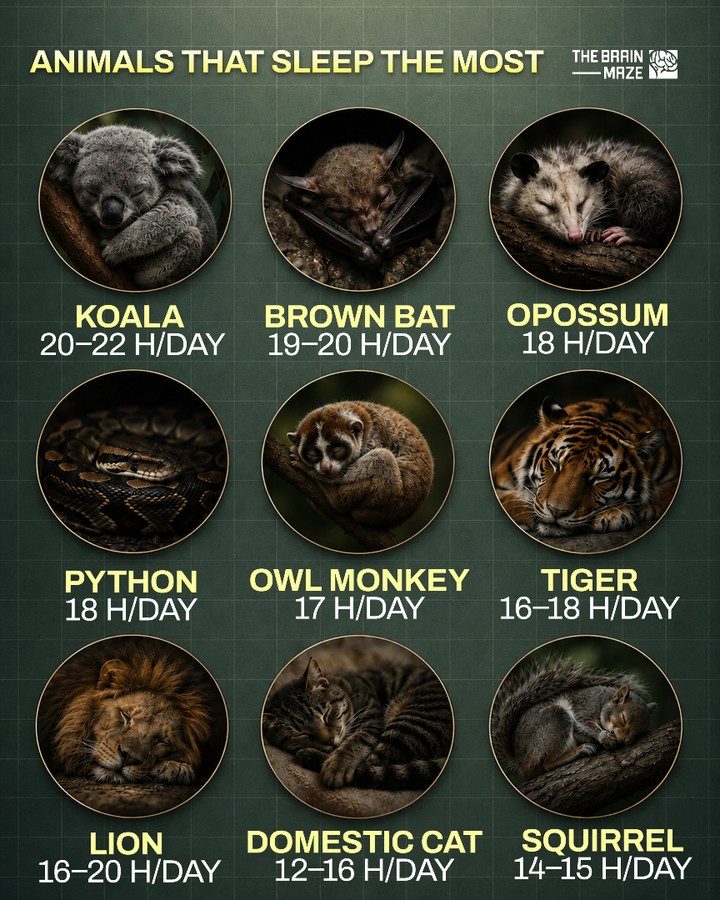
Koalas are renowned for their extensive sleep durations, resting up to 22 hours a day. This prolonged sleep helps them conserve energy, as their diet of eucalyptus leaves is not very nutritious. Brown bats and opossums are close contenders, sleeping 19-20 hours and 18 hours per day, respectively. Pythons, known for their powerful hunting abilities, also sleep for about 18 hours daily.
Birds and Primates
Owls and monkeys, despite their active nocturnal and diurnal lifestyles, sleep for around 17 hours per day. This significant amount of sleep is essential for their cognitive functions and physical recovery.
Predators and Their Sleep Patterns
Predators like lions and tigers have varied sleep patterns. Lions can sleep between 16 to 20 hours a day, while tigers sleep between 16 to 18 hours. These long sleep durations help them conserve energy for their intense hunting activities.
Smaller Animals
Even smaller animals like domestic cats and squirrels spend a considerable amount of their day resting. Cats sleep for about 12 to 16 hours, while squirrels sleep for 14 to 15 hours. This sleep is crucial for their survival, helping them stay alert and energetic during their active periods.
Practical Tips
For Pet Owners
Understanding the sleep patterns of domestic animals like cats can help pet owners ensure their pets get the rest they need. Provide a comfortable and quiet space for your cat to sleep, and avoid disturbing them during their rest periods.
For Wildlife Enthusiasts
Observing animals in their natural habitats can be a rewarding experience. Knowing their sleep patterns can enhance your understanding of their behaviors and help you plan your observations more effectively.
Important Takeaways
Sleep is a universal need across the animal kingdom, serving as a critical mechanism for recovery and energy conservation. Koalas, bats, and opossums lead the list of sleepy animals, while predators like lions and tigers also sleep for extended periods. Even smaller animals like cats and squirrels prioritize sleep to maintain their health and energy levels.
Conclusion
Animal sleep habits are as diverse as the animals themselves. From koalas to squirrels, each species has a unique sleep pattern that helps them thrive in their natural environments. Understanding these patterns can provide valuable insights into animal behavior, health, and conservation efforts. Whether you're a pet owner, a wildlife enthusiast, or simply curious about the natural world, delving into the sleep habits of animals offers a fascinating window into their lives.
Watch the Reel
Questions readers ask
Which animals are known for sleeping the most hours in a day?
Koalas are famous for sleeping up to 22 hours a day. Other animals that sleep extensively include opossums, which can sleep up to 20 hours, and brown bats, known to sleep around 20 hours a day. These prolonged sleep durations help these animals conserve energy and adapt to their environments.
How do sleep patterns in animals help us understand their behavior?
Examining an animal's sleep patterns reveals how it adapts to its environment and conserves energy. For instance, koalas' long sleep durations correspond to their low-energy diet, while nocturnal animals like brown bats have sleep patterns that align with their hunting and resting cycles.
What are the sleep patterns of tigers and why is their sleep important?
Tigers typically sleep for 16-20 hours a day. Long periods of sleep in tigers are critical for conserving energy, as it allows them to hunt more effectively during active periods. Understanding these sleep patterns can aid in their conservation and well-being.
How much do domestic cats sleep and what does this tell us about their needs?
Domestic cats sleep around 15-20 hours a day. Their sleep patterns reflect their natural hunting instincts, allowing them to conserve energy and be ready for bursts of activity. Knowing this helps ensure their daily needs are met, whether they are house pets or part of a breeding program.
How do pythons sleep and why is their sleep schedule unique?
Pythons are known for their unique sleep schedule, often sleeping in bursts throughout the day and night, totaling around 18-20 hours. This pattern is likely due to their need to conserve energy between meals, as they can go for long periods without food. Their sleep cycle is an adaptation to their hunting and digestive processes.
Related deep dives
Similar reads based on topic and creator.




Recent articles
Fresh deep dives from the latest Reels we unpacked.




Comments
Be the first to comment.