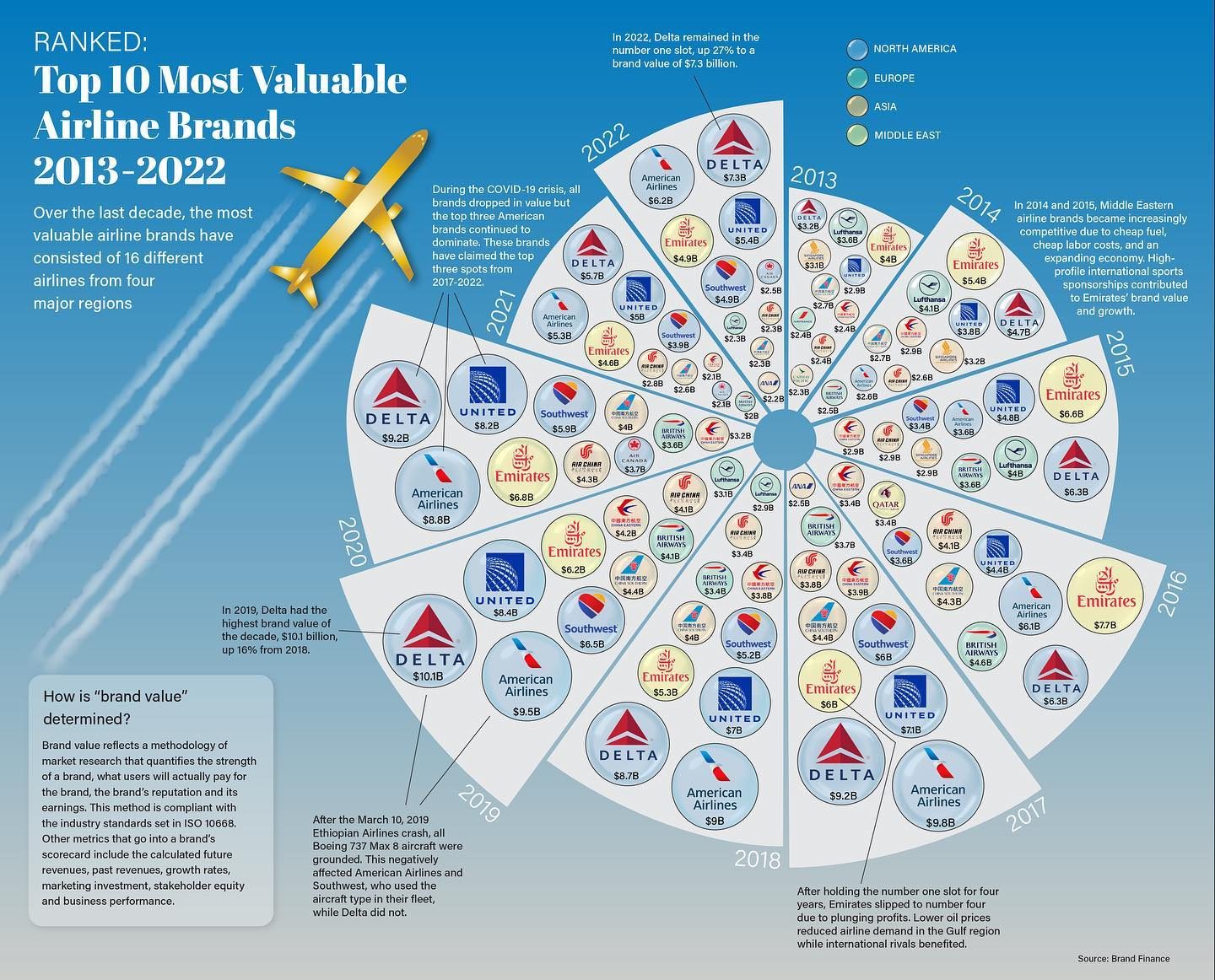
Airline Brand Value Ranking: A Decade of Fluctuating Fortunes
The global airline industry experienced remarkable growth before the pandemic disrupted years of momentum. Scheduled passenger numbers soared from 1.9 billion in 2004 to a peak of 4.7 billion in 2019, only to plummet to 1.8 billion in 2020. As the industry begins its recovery, the values of top airline brands have been significantly impacted. This analysis delves into the most valuable airline brands from 2013 to 2022, highlighting key trends and shifts in brand rankings over the decade.
Why This Matters
Understanding the fluctuations in airline brand values provides valuable insights into the industry's resilience and adaptability. The pandemic served as a stark reminder of how external factors can dramatically alter market dynamics. By examining the performance of top airline brands over the past decade, we gain a clearer picture of which airlines have weathered storms and which have emerged stronger.
Key Players and Regional Trends
The top airline brands have consistently shown a mix of regional dominance and global influence. Here is a closer look at how different regions have fared over the years:
North American Airlines
American Airlines, Delta, and United have always been strong contenders in the global market. Delta, in particular, has consistently held a top position throughout the years. Its brand value has shown remarkable stability, even during the pandemic.
American Airlines and United have also remained high on the list, demonstrating the enduring strength of North American airlines. These airlines have a significant market share and have leveraged their extensive networks and loyalty programs to maintain their brand values.
European Airlines
European carriers like Lufthansa, Ryanair, and easyJet have shown increasing value over time. Ryanair, known for its budget-friendly fares, has capitalized on the rise of low-cost carriers, consistently growing its brand value. easyJet, another budget airline, has also seen steady growth, appealing to price-conscious travelers.
Lufthansa, a flagship carrier for Germany, has maintained a strong brand value, reflecting its premium service and extensive network. Iberia, the Spanish airline, has also held its own, although its brand value has seen some fluctuations.
Middle Eastern and Asian Airlines
Emirates, the flag carrier of Dubai, has been a powerhouse in the Middle East, often ranking high due to its innovative services and extensive global network. The airline's brand value has seen significant growth, reflecting its strategic investments and global expansion.
Asia's airline brands, such as Singapore Airlines and Cathay Pacific, have also held strong positions. These airlines are known for their exceptional service and have leveraged their strong regional footprints to maintain high brand values.
Southwest Airlines
Southwest Airlines, known for its low-cost, no-frills model, has consistently been a top performer in the North American market. Its brand value has shown steady growth, reflecting its strong domestic presence and customer loyalty.
Practical Tips for Understanding Airline Brand Value
Navigating the complex world of airline brand values can be challenging. Here are some practical tips to help you make sense of the data:
Track Brand Value Over Time
Analyze the brand value of your preferred airlines over the years. This will give you a sense of their stability and growth potential. Airlines that consistently rank high are likely to offer reliable services and strong brand loyalty.
Understand Regional Trends
Pay attention to how airlines from different regions perform. For example, European low-cost carriers have shown significant growth, while Middle Eastern airlines have maintained strong brand values through strategic investments.
Consider Market Dynamics
External factors like pandemics, economic downturns, and regulatory changes can significantly impact airline brand values. Stay informed about these factors to understand the broader context of brand value fluctuations.
Important Takeaways
Delta’s Dominance
Delta has consistently held a top position, showcasing the airline's resilience and strong brand management. Its ability to maintain high brand value even during the pandemic highlights its strategic acumen.
European Budget Airlines
Budget airlines like Ryanair and easyJet have shown remarkable growth, reflecting the rising demand for affordable travel options. Their consistent performance suggests a strong future in the budget airline segment.
Middle Eastern Influence
Emirates' strategic investments and global expansion have solidified its position as a top airline brand. The Middle East's airlines are poised to continue their strong performance, driven by regional growth and strategic investments.
Conclusion
The airline industry's brand values have seen significant fluctuations over the past decade, shaped by both external events and strategic initiatives. Understanding these trends can provide valuable insights for travelers, investors, and industry stakeholders. As the industry continues to recover from the pandemic, the resilience and adaptability of top airline brands will play a crucial role in shaping the future of global travel.
Watch the Reel
Questions readers ask
Which were the top airline brands in 2013 and how did their rankings change by 2022?
The top airline brands in 2013 were led by Emirates, Delta Air Lines, and United Airlines. By 2022, the rankings shifted significantly due to the pandemic and other industry changes. For example, Emirates remained strong, while Delta and United experienced fluctuations. New contenders, such as Qatar Airways, entered the top ranks. The article provides a comprehensive look at these changes.
How did the pandemic impact the value of top airline brands?
The pandemic had a profound impact on the value of top airline brands. In 2019, the industry reached a peak with 4.7 billion passengers, but this dropped to 1.8 billion in 2020. The disruption caused significant fluctuations in brand values, with some airlines struggling to maintain their positions while others managed to adapt and even gain market share.
What are the key trends in the airline brand rankings from 2013 to 2022?
Key trends include the rise of Middle Eastern airlines like Emirates and Qatar Airways, which have invested heavily in luxury and service. Additionally, there has been a notable shift in the rankings of U.S. airlines, with some experiencing declines while others, like American Airlines, have shown resilience. The pandemic also highlighted the importance of adaptability and innovation in maintaining brand value.
Which airlines have shown the most resilience and adaptability during the pandemic?
Airlines like Emirates and Qatar Airways have demonstrated remarkable resilience. These carriers have been able to maintain high levels of service and customer satisfaction. They also have strong financial backing and strategic planning. Additionally, airlines that quickly adapted to new health and safety protocols, such as implementing enhanced cleaning measures and flexible booking policies, have fared better.
What factors influence the global airline brand rankings?
Several factors influence global airline brand rankings, including passenger numbers, financial performance, brand reputation, and customer satisfaction. The pandemic has underscored the importance of adaptability, with airlines that quickly responded to changing circumstances faring better. Additionally, factors such as route networks, fleet size, and loyalty programs play a significant role.
What can be learned from the changes in airline brand values over the past decade?
The changes in airline brand values over the past decade highlight the importance of adaptability and strategic planning. Airlines that invested in diversifying their services, improving customer experience, and maintaining strong financial health were better positioned to weather the storm. The pandemic has been a wake-up call for the industry, emphasizing the need for long-term sustainability and resilience.
Related deep dives
Similar reads based on topic and creator.




Recent articles
Fresh deep dives from the latest Reels we unpacked.




Comments
Be the first to comment.