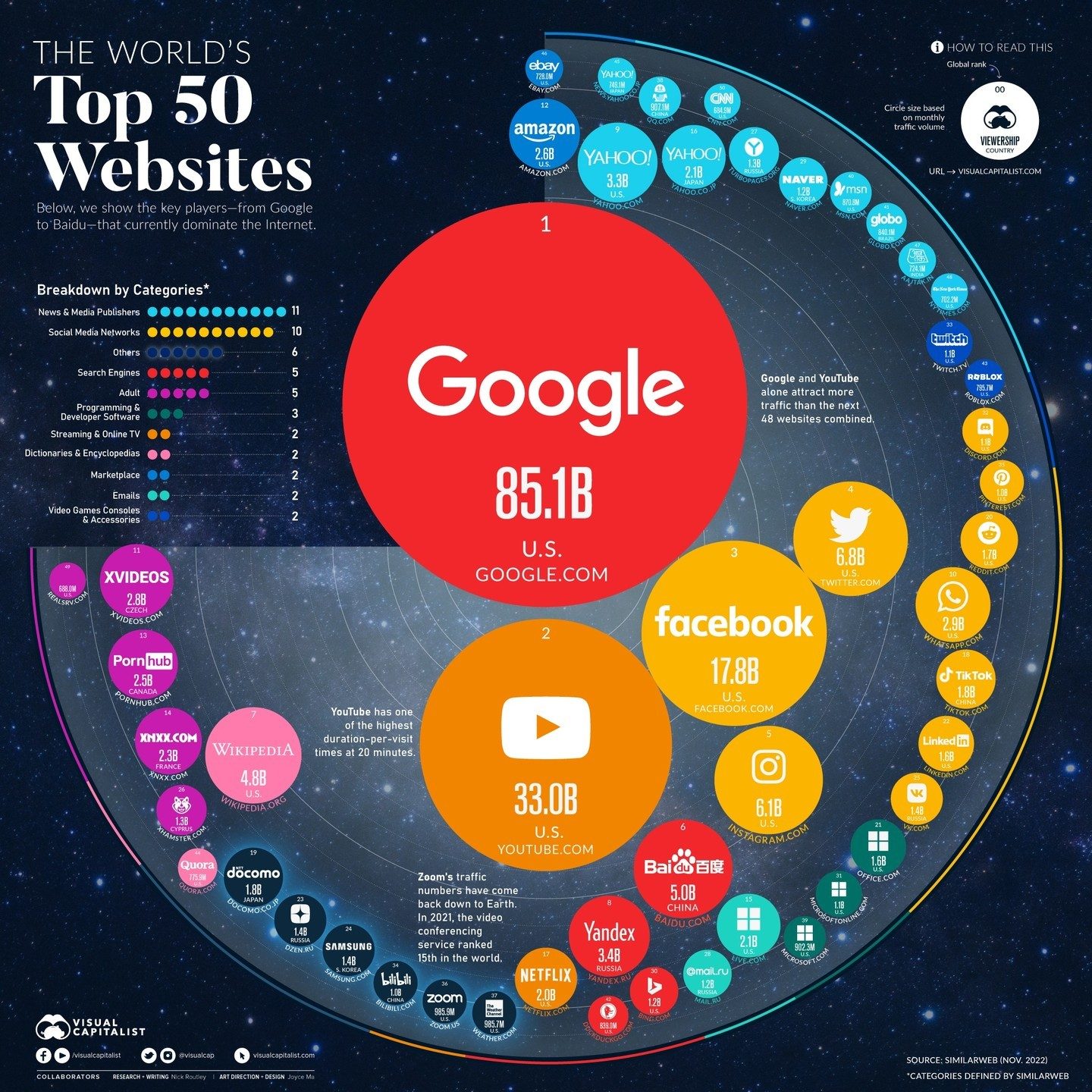
Top 50 Websites Visualization
With an estimated two billion websites in existence as of 2023, understanding the global web traffic landscape is fascinating. When ranked by traffic, these websites follow a classic power law distribution. At the lower end, a vast majority of websites are inactive and receive little to no traffic. Conversely, the top tier websites concentrate a significant portion of the overall internet traffic. This visualization provides an insightful look at the 50 websites leading the ranking.
Why this Matters
Analyzing the top 50 websites can reveal significant trends and patterns in internet usage. These websites often represent the most popular platforms, services, and information hubs used globally. By examining the traffic distribution, we can understand user preferences, the impact of different regions, and the dominance of certain services. This information is valuable for anyone seeking to understand the digital landscape, from marketers to researchers.
Main Discussion
Global Dominance
The United States dominates the list with 30 of the top 50 websites. This is not surprising, given that the U.S. is home to many of the world's leading tech companies. Some of the top websites include:
- Google: This search engine giant receives 85.1 billion visits, making it the most visited website globally. Google's dominance in search and its various services, including email, maps, and cloud storage, make it a cornerstone of internet usage.
- Facebook: With 17.8 billion visits, Facebook remains a social media powerhouse. Despite recent controversies and user fluctuations, it continues to be a significant platform for social interaction and content sharing.
- YouTube: YouTube attracts 33.0 billion visits, highlighting the immense popularity of video content. It is a hub for entertainment, education, and information distribution.
Regional Influence
While the U.S. dominates, other regions also have significant online influences. Some notable mentions include:
- China: Baidu, a leading search engine in China, receives 5.0 billion visits. It exemplifies the unique digital landscape in China, where different platforms dominate due to regional regulations and market conditions.
- Russia: Yandex, a prominent search engine and services provider in Russia, garners 3.4 billion visits. It underscores the importance of regional search engines and services tailored to local needs and preferences.
Diversification of Content
The top 50 websites also showcase a diversified content landscape. The list includes:
- E-commerce: Amazon and similar platforms highlight the growing importance of online shopping. These sites facilitate a significant portion of global e-commerce, making them crucial for both consumers and businesses.
- News and Information: Websites like CNN and Yahoo! indicate the public’s continued reliance on digital platforms for news and information. These sites provide up-to-date news, analysis, and multimedia content.
Sources and Credibility
The data for this visualization is sourced from SimilarWeb, a trusted analytics platform known for providing insights into web traffic and online behavior. The information is from November 2022, offering a recent snapshot of the digital landscape.
Practical Tips
For those looking to leverage this information, here are some practical tips:
- Understand Traffic Patterns: Recognize that a few key websites dominate global traffic. This knowledge can guide marketing strategies, content creation, and user engagement efforts.
- Regional Insights: Tailor your approach based on regional preferences. For example, if targeting the Chinese market, consider platforms like Baidu. For Russia, Yandex and local platforms are more relevant.
- Content Diversification: Create a mix of content types, such as videos, articles, and multimedia, to cater to different user preferences and platforms.
- Analytics Tools: Use tools like SimilarWeb to gain deeper insights into web traffic and user behavior. This can help in making data-driven decisions for your digital strategies.
Important Takeaways
- Dominance of a Few: A handful of websites receive the lion's share of internet traffic, reflecting the consolidation of digital power.
- Regional Variations: Different regions have their dominant platforms, shaped by local preferences and regulations.
- Content is King: Diversified content types are crucial for engaging a wide audience across different platforms.
Conclusion
The top 50 websites offer a window into the vast and complex world of global internet usage. Understanding the distribution of traffic, the regional influences, and the types of content that resonate with users can provide valuable insights for anyone looking to navigate the digital landscape. Whether you are a marketer, researcher, or simply curious about the web, this visualization can help illuminate the current trends and patterns shaping our online experiences.
Watch the Reel
Questions readers ask
Which countries dominate the top 50 websites leading global internet traffic in 2023?
The United States leads the rankings, with a significant number of the top 50 websites based in the country. Other countries also make notable contributions, but the U.S. dominates the list.
What is a power law distribution in the context of website traffic?
A power law distribution in website traffic means that a small number of websites receive a large portion of the total traffic, while the majority of websites receive very little. This is often visualized as a long tail, where a few sites dominate.
How many websites are estimated to exist in 2023, and what does this mean for global traffic?
There are an estimated two billion websites in 2023. This vast number means that while many websites exist, only a small fraction of them receive significant traffic, with the top 50 sites capturing a substantial portion of global internet use.
What kind of trends can be identified from the top 50 websites in 2023?
Analyzing the top 50 websites can reveal trends in user preferences, such as the popularity of social media platforms, search engines, and e-commerce sites. It also shows which digital services and information hubs are most frequently used globally.
Why is it important to examine the traffic distribution of the top 50 websites?
Examining the traffic distribution helps us understand the landscape of internet usage. It highlights which platforms are most influential and how users are engaging with digital content, providing insights into broader trends in technology and online behavior.
How do the top 50 websites impact the overall internet experience?
The top 50 websites significantly influence the overall internet experience by setting trends in user interaction, shaping digital marketing strategies, and driving advancements in web technologies. Their high traffic volumes make them pivotal in the digital ecosystem.
Which industries are most represented among the top 50 websites in 2023?
Industries such as internet and telecom, finance, and information technology are prominently represented among the top 50 websites, reflecting their importance in the digital landscape. These sectors often provide essential services and platforms used by a global audience.
Related deep dives
Similar reads based on topic and creator.


Recent articles
Fresh deep dives from the latest Reels we unpacked.




Comments
Be the first to comment.