Air Pollution: The 20 Most Polluted Cities in the World
Air pollution is a significant global health concern, affecting nearly the entire population. According to the World Health Organization (WHO), 99% of the world breathes air that exceeds the WHO air quality limits. One of the most comprehensive sources of data on air pollution is the IQAir World Air Quality Report, which provides detailed insights into the most polluted cities around the globe.
Context / Why This Matters
Air pollution is more than just an environmental issue; it has profound implications for public health. The air we breathe is laden with particulate matter (PM2.5), which can penetrate deep into the lungs and even enter the bloodstream. This fine particulate matter is a major contributor to respiratory and cardiovascular diseases, leading to millions of premature deaths each year. Understanding the most polluted cities helps policymakers, health organizations, and the public take targeted actions to mitigate these health risks.
Main Discussion
The 20 Most Air-Polluted Cities
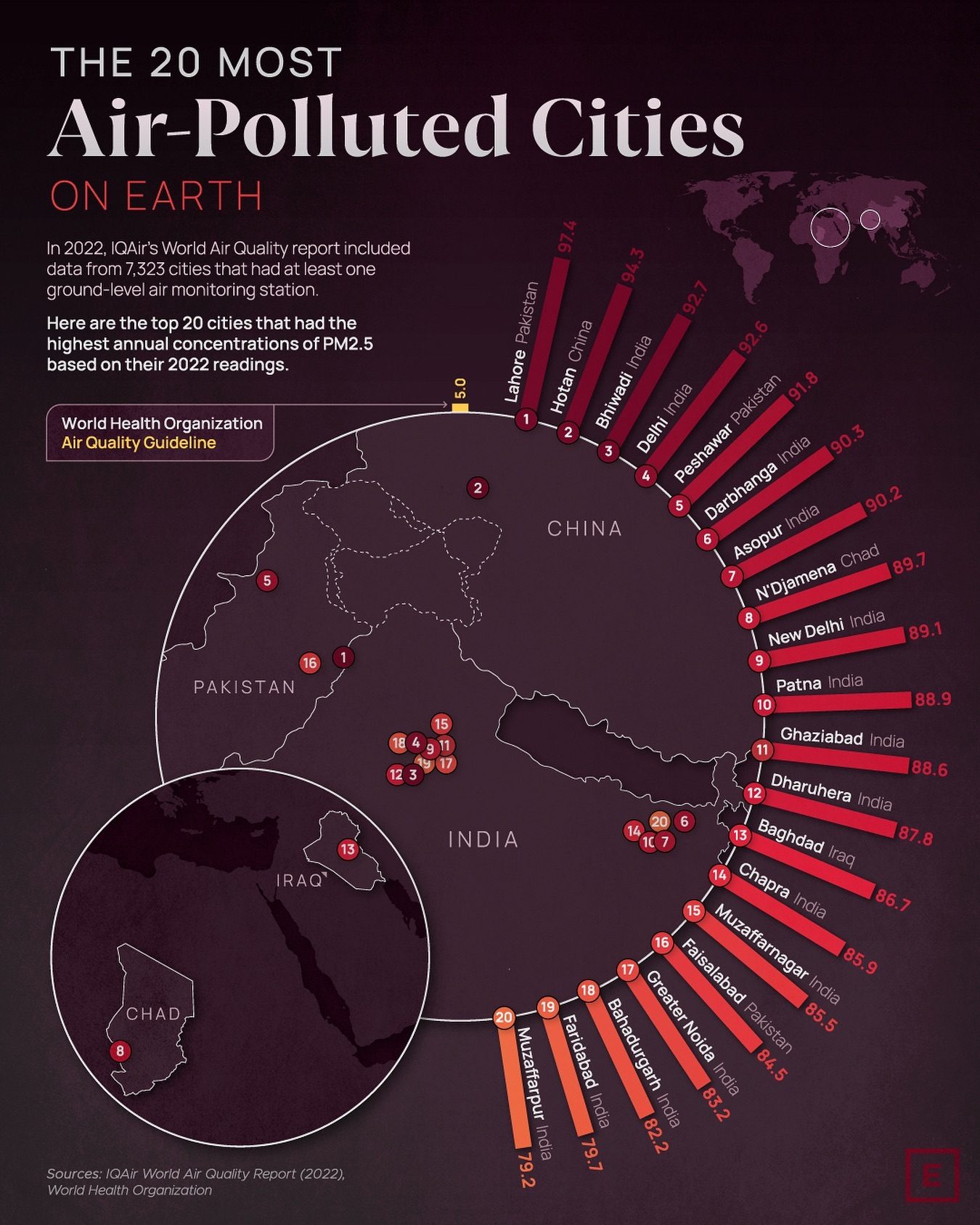
The IQAir World Air Quality Report for 2022 highlights the cities with the highest levels of air pollution. These cities face severe challenges due to a combination of industrial emissions, vehicle exhaust, and other sources of pollution. The top 20 most air-polluted cities include:
- Lahore, Pakistan: At the top of the list, Lahore faces a combination of high vehicle and industrial emissions, smoke from brick kilns, crop residue, general waste burning, and dust from construction sites.
- Hotan, China: Known for its severe air pollution, Hotan’s air quality is adversely affected by industrial activities and desert dust.
- Dharuhera, India: This city in India struggles with industrial pollution and vehicular emissions.
- Delhi, India: Delhi is notorious for its high levels of air pollution, largely due to vehicle emissions, industrial activities, and crop burning.
- Peshawar, Pakistan: Peshawar's air quality is compromised by industrial emissions, vehicular pollution, and dust.
- Darbhanga, India: This city's air pollution is predominantly from industrial sources.
- Asopur, India: Located in India, Asopur has high levels of air pollution, primarily due to industrial and vehicular emissions.
- New Delhi, India: As a major metropolitan area, New Delhi faces severe air pollution from multiple sources, including industrial activities, vehicles, and construction.
- Patna, India: Industrial activities and vehicular emissions significantly contribute to air pollution in Patna.
- Ghaziabad, India: Ghaziabad’s air quality is heavily impacted by industrial and vehicular pollution, as well as construction dust.
- Charpa, Iraq: This city faces severe air pollution from industrial and vehicular sources.
- Muzaffarnagar, India: Muzaffarnagar’s air quality is compromised by industrial and vehicular emissions, as well as dust from construction sites.
- Faridabad, India: This industrial hub in India suffers from high levels of air pollution, primarily from manufacturing activities and vehicular exhaust.
- Greater Noida, India: Greater Noida faces severe air pollution due to industrial activities, construction, and vehicular emissions.
- Murarpur, India: Industrial and vehicular pollution are the primary contributors to air pollution in Murarpur.
- Baghdad, Iraq: Baghdad suffers from high levels of air pollution due to industrial activities, vehicular emissions, and dust storms.
Sources of Air Pollution
Air pollution in these cities stems from a variety of sources:
- Industrial Emissions: Heavy industries, including manufacturing, power plants, and chemical factories, release significant amounts of particulate matter and other pollutants into the air.
- Vehicle Exhaust: Urban areas with high traffic congestion contribute to air pollution through vehicular emissions, which include nitrogen oxides, carbon monoxide, and particulate matter.
- Brick Kilns and Crop Burning: In some regions, burning crop residue and fuel in brick kilns adds to the particulate matter in the air.
- Construction Dust: Construction activities generate dust and other particulates that contribute to air pollution.
- General Waste Burning: The burning of household and industrial waste, particularly in urban areas, releases harmful pollutants into the air.
The Impact of Air Pollution
The health impacts of air pollution are well-documented and severe. Long-term exposure to PM2.5 can lead to:
- Respiratory Diseases: Conditions such as asthma, chronic obstructive pulmonary disease (COPD), and lung cancer.
- Cardiovascular Diseases: Increased risk of heart disease, stroke, and cardiovascular mortality.
- Preterm Births and Low Birth Weight: Air pollution during pregnancy can lead to adverse birth outcomes.
- Reduced Life Expectancy: Chronic exposure to air pollution can reduce life expectancy by several years.
Practical Tips
Understanding the sources and impacts of air pollution is the first step in mitigating its effects. Here are some practical tips to reduce exposure and contribute to cleaner air:
For Individuals
- Monitor Air Quality: Use air quality monitors or apps to stay informed about current air quality levels in your area.
- Limit Outdoor Activity: During high pollution days, limit outdoor activities, especially for children, the elderly, and those with respiratory conditions.
- Use Air Purifiers: Invest in indoor air purifiers to reduce the levels of particulate matter in your home.
- Wear Masks: Use high-quality masks, especially when outdoors in high-pollution areas.
For Cities and Governments
- Emissions Standards: Enforce strict emissions standards for industries and vehicles.
- Promote Public Transportation: Encourage the use of public transportation to reduce vehicle emissions.
- Green Spaces: Increase green spaces and vegetation in urban areas to help filter pollutants.
- Renewable Energy: Transition to renewable energy sources to reduce reliance on fossil fuels.
Important Takeaways
- Global Problem: Air pollution is a global issue, affecting nearly everyone.
- Impact on Health: Long-term exposure to air pollution has severe health consequences, including respiratory and cardiovascular diseases.
- Urban Centers: Major urban centers, particularly in developing countries, face the highest levels of air pollution.
- Industrial and Vehicular Emissions: The primary sources of air pollution include industrial activities, vehicle exhaust, and construction dust.
Conclusion
Air pollution is a critical global issue with far-reaching health implications. The cities highlighted in the IQAir World Air Quality Report face significant challenges, but understanding the sources and impacts of air pollution is the first step in addressing this problem. By taking individual and collective actions, cities can work towards cleaner air and better public health.
Watch the Reel
Questions readers ask
What are the top 3 most polluted cities in the world as of 2022?
According to the 2022 WHO data and IQAir report, the top 3 most polluted cities in the world are Lahore, Pakistan; Hotan, China; and Bhiwadi, India. These cities have the highest levels of particulate matter (PM2.5) in the air, greatly exceeding the WHO air quality limits.
How does the World Health Organization measure air pollution?
The WHO measures air pollution primarily by assessing the concentration of particulate matter (PM2.5) in the air. PM2.5 refers to particles that are 2.5 micrometers or smaller, which can penetrate deep into the lungs and cause significant health issues.
What are the health impacts of living in one of the top 20 polluted cities?
Living in highly polluted cities can lead to severe health issues, including respiratory diseases like asthma and lung cancer, as well as cardiovascular problems. Long-term exposure to polluted air can also weaken the immune system and increase the risk of other health complications.
How does the IQAir World Air Quality Report contribute to understanding global air pollution?
The IQAir World Air Quality Report provides a detailed analysis of air pollution levels in cities worldwide. It offers insights into the most polluted cities, trends over time, and the specific pollutants that are most prevalent, helping policymakers and the public understand the scope and sources of air pollution.
What are some of the most polluted cities in Pakistan and India as per the 2022 data?
Pakistan has several cities with high pollution levels, with Lahore being the most polluted. In India, cities like Bhiwadi, Noida, and Faridabad rank among the most polluted in the world, often exceeding the WHO's recommended limits for air quality.
How can individuals protect themselves from air pollution in highly polluted areas?
Individuals can take several steps to protect themselves from air pollution, such as using air purifiers at home, wearing masks when outdoors, and monitoring air quality levels using reliable sources like the IQAir app. Additionally, staying informed about pollution levels and avoiding outdoor activities during peak pollution hours can help reduce exposure.
What is the global significance of the 20 most polluted cities list?
The list of the 20 most polluted cities highlights the global scope of air pollution. It emphasizes the urgent need for international cooperation and local action to address this critical issue. By identifying the most affected areas, this list can guide efforts to implement effective policies and interventions to improve air quality worldwide.
Related deep dives
Similar reads based on topic and creator.


Recent articles
Fresh deep dives from the latest Reels we unpacked.




Comments
Be the first to comment.