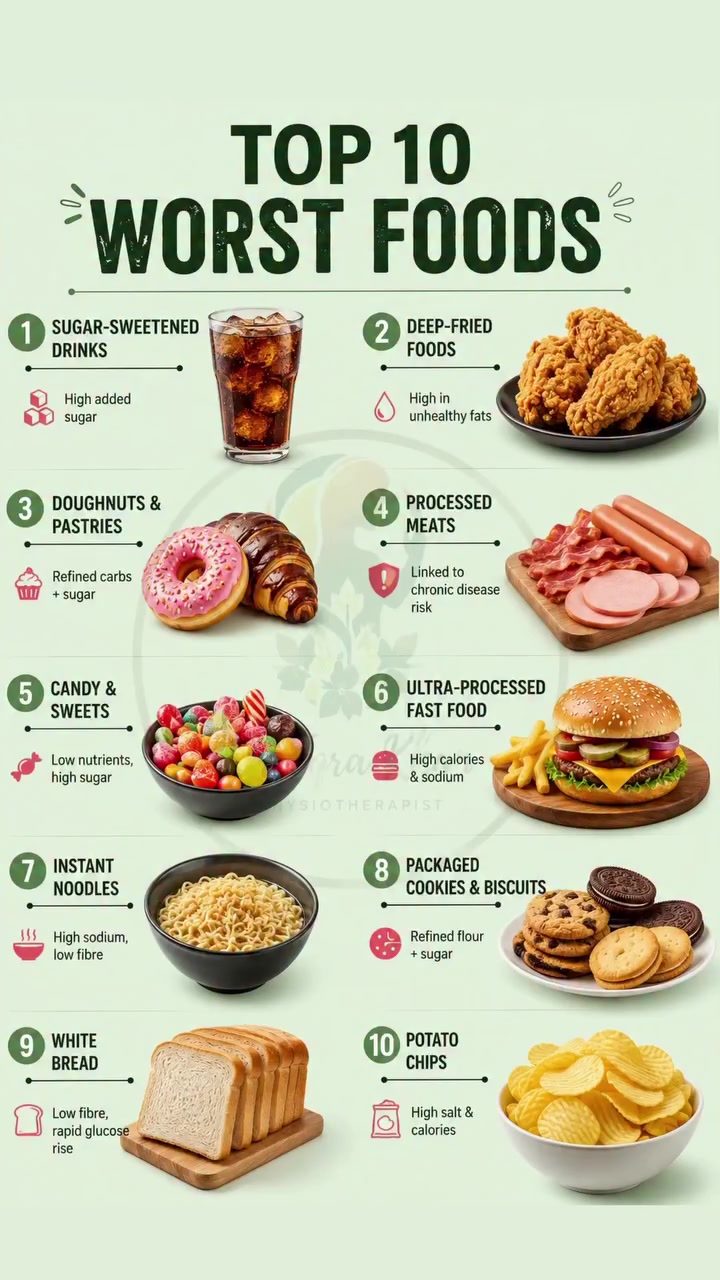
The Top 10 Worst Foods to Limit
Limiting the intake of certain foods can significantly impact overall health and reduce the risk of chronic diseases. Many common foods are high in added sugars, unhealthy fats, refined carbohydrates, or sodium. Regular consumption of these foods can lead to weight gain, insulin resistance, heart disease, type 2 diabetes, and other health problems. Understanding which foods to avoid and why can help in making better dietary choices.
Why This Matters
Maintaining a balanced diet is crucial for long-term health. The foods listed here are not inherently "bad," but their frequent consumption can negatively affect health. By being mindful of these foods and making small changes, such as choosing whole foods and increasing fiber intake, individuals can greatly enhance their overall well-being.
The Top 10 Worst Foods to Limit
1. Sugar-Sweetened Drinks
Sugar-sweetened drinks, such as soda and sweetened teas, are high in added sugars. These beverages lack essential nutrients and can contribute to weight gain, tooth decay, and an increased risk of type 2 diabetes. Instead of sugary drinks, opt for water, unsweetened tea, or infused water to stay hydrated without the added sugar.
2. Deep-Fried Foods
Deep-fried foods, like french fries and fried chicken, are high in unhealthy fats. These fats can raise cholesterol levels and increase the risk of heart disease. Limiting the intake of deep-fried foods and choosing healthier cooking methods, such as baking or grilling, can help maintain a healthier diet.
3. Doughnuts and Pastries
Doughnuts and pastries are often high in refined carbohydrates and sugar. These foods can cause rapid spikes in blood sugar levels, leading to energy crashes and contributing to weight gain. Opt for whole-grain alternatives or healthier treats like fresh fruit when possible.
4. Processed Meats
Processed meats, such as bacon, sausages, and deli meats, are linked to an increased risk of chronic diseases, including heart disease and certain types of cancer. Moderating the intake of processed meats and choosing leaner protein sources, like poultry, fish, or plant-based proteins, can help reduce these risks.
5. Candy and Sweets
Candy and sweets are low in nutrients and high in sugar, leading to a spike in blood sugar levels and contributing to weight gain. Enjoy these treats in moderation and focus on satisfying your sweet cravings with healthier options like fresh fruit or dark chocolate.
6. Ultra-Processed Fast Food
Ultra-processed fast food is often high in calories, sodium, and unhealthy fats. Regularly consuming fast food can contribute to weight gain, high blood pressure, and an increased risk of heart disease. Opt for healthier, whole-food alternatives and limit fast food intake to special occasions.
7. Instant Noodles
Instant noodles are typically high in sodium and low in fiber. Regular consumption of instant noodles can lead to high blood pressure and other health issues. While enjoying instant noodles occasionally is fine, choose whole-grain, fiber-rich alternatives for a healthier diet.
8. Packaged Cookies and Biscuits
Packaged cookies and biscuits are often made with refined flour and high sugar content. These foods can lead to weight gain and contribute to chronic health problems. Choose healthier snacks, such as fresh fruit, nuts, or whole-grain crackers, to satisfy your cravings without the excess sugar and refined carbs.
9. White Bread
White bread is low in fiber, causing a rapid rise in blood sugar levels. Opt for whole-grain bread, which provides more fiber, vitamins, and minerals. Eating white bread occasionally is not harmful for most people, but choosing whole-grain alternatives more often can improve overall health.
10. Potato Chips
Potato chips are high in salt and calories, contributing to weight gain and an increased risk of high blood pressure. Moderate your intake of potato chips and choose healthier snacks, such as fresh vegetables with hummus or a handful of nuts, to satisfy your cravings without the excess sodium and calories.
Practical Tips
Making healthier choices doesn't have to be complicated. Here are some practical tips to help you limit these foods and improve your diet:
- Choose Whole Foods: Opt for whole, unprocessed foods like fruits, vegetables, lean proteins, and whole grains.
- Stay Hydrated: Drink water instead of sugary beverages to stay hydrated and avoid excess sugar.
- Increase Fiber Intake: Incorporate more fiber-rich foods, such as whole grains, fruits, and vegetables, into your diet.
- Include Lean Protein: Add lean proteins, like poultry, fish, and plant-based proteins, to your meals to support overall health.
- Choose Healthy Fats in Moderation: Opt for healthy fats from sources like avocados, nuts, and olive oil, and limit unhealthy fats found in processed foods.
Important Takeaways
- No Single Food is “Bad”: It's the overall eating pattern that matters. Small changes can make a big difference in long-term health.
- Moderation is Key: Enjoying these foods occasionally is generally fine, but regular consumption can lead to health problems.
- Healthy Alternatives: Opt for whole, nutrient-rich foods and healthier cooking methods to support overall health.
Conclusion
By understanding which foods to limit and making conscious choices, you can significantly improve your diet and overall health. Small changes, such as choosing whole foods, increasing fiber intake, and opting for healthier snacks, can have a positive impact on your well-being. Remember, it's the overall eating pattern that matters, and making healthier choices can lead to a healthier, more balanced diet.
Watch the Reel
Questions readers ask
What are some examples of foods high in unhealthy fats?
Deep-fried foods and processed meats are high in unhealthy fats, such as trans fats and saturated fats. Examples include fried chicken, french fries, and sausages.
Should I avoid all sugar-sweetened drinks?
Yes, it's recommended to avoid or limit sugar-sweetened drinks like sodas, sweet teas, and sports drinks. They are high in added sugars and can lead to weight gain and other health issues.
Why should I avoid foods high in sodium?
Foods high in sodium, such as processed meats and canned soups, can lead to high blood pressure and other health problems, so limit them in your diet.
Are all processed foods unhealthy?
Not all processed foods are unhealthy, but many are high in unhealthy fats, sugars, and sodium. It's best to choose minimally processed foods whenever possible.
What are some examples of high-sugar foods to avoid?
Foods high in refined sugars, such as white bread, sugary cereals, and pastries, are examples of high-sugar foods to limit or avoid. These foods can cause blood sugar spikes and contribute to weight gain.
How can I reduce my intake of unhealthy foods?
To reduce your intake of unhealthy foods, focus on including whole foods in your diet, such as fruits, vegetables, lean proteins, and whole grains. Choose homemade meals over processed ones.
What are the risks of consuming low-fiber foods?
Low-fiber foods, such as white bread and processed snacks, can lead to digestive issues and contribute to weight gain. They also lack essential nutrients found in whole, high-fiber foods.
Recent articles
Fresh deep dives from the latest Reels we unpacked.




Comments
Be the first to comment.