Global Temperatures
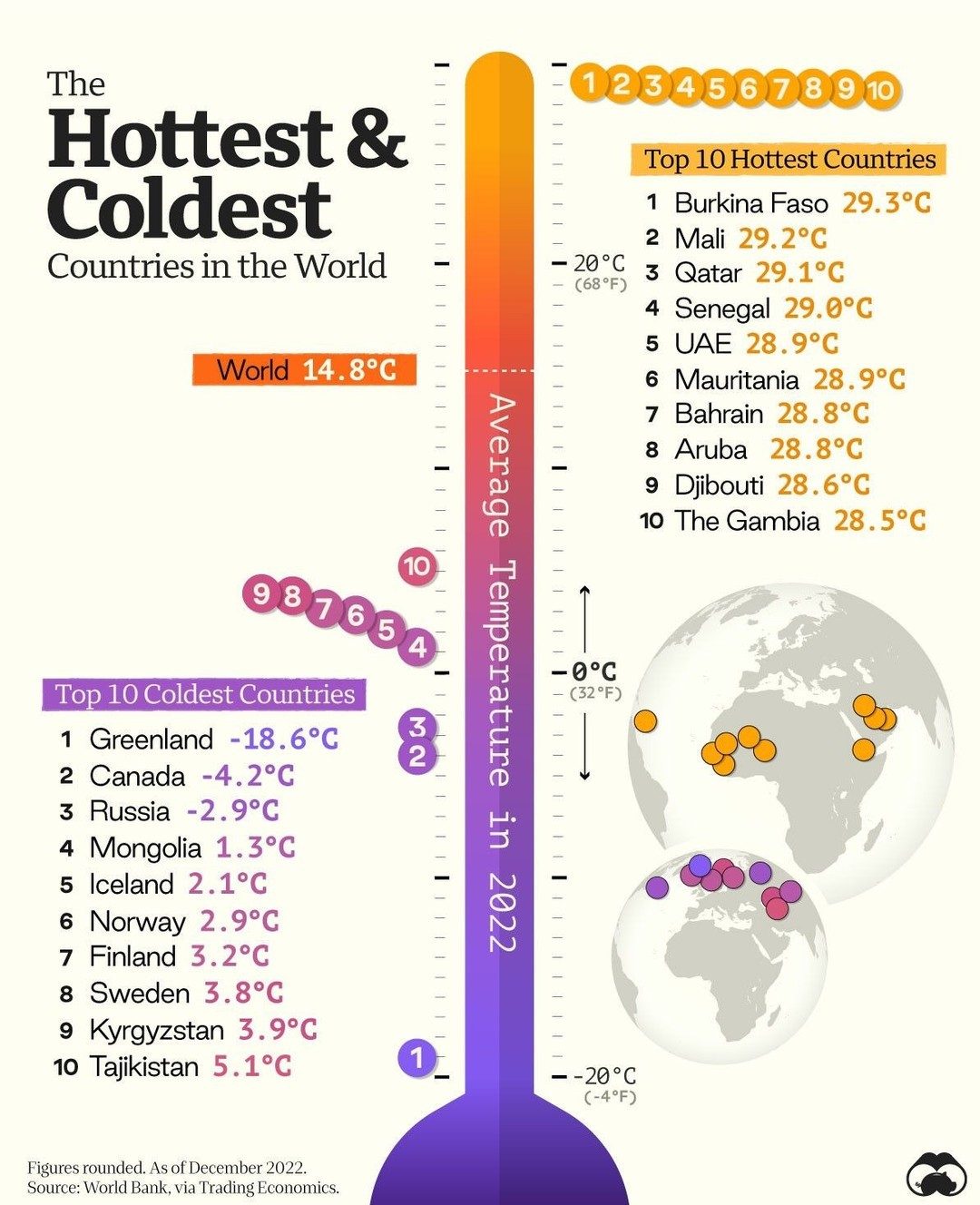
Global temperatures vary significantly from one region to another, with some countries experiencing extreme heat and others enduring intense cold. Understanding these variations is crucial for grasping the broader patterns of climate and weather. Let's dive into the details of the hottest and coldest countries based on average temperatures in 2022, as visualized using data from the World Bank via Trading Economics.
Context / Why This Matters
Temperature extremes have profound impacts on the environment, ecosystems, and human societies. The hottest and coldest countries provide valuable insights into how various factors, such as latitude, altitude, and geographic features, influence global climate patterns. By examining these extremes, we can better understand the challenges and adaptations necessary for life in these regions.
Main Discussion
The Hottest Countries
The hottest countries in the world, as of 2022, are characterized by their intense heat. These nations are primarily located in regions with high annual solar radiation and minimal precipitation, contributing to their scorching temperatures. The top 10 hottest countries, based on average temperatures, are as follows:
- Burkina Faso with an average temperature of 29.3°C.
- Mali with an average temperature of 29.2°C.
- Qatar with an average temperature of 29.1°C.
- Senegal with an average temperature of 29.0°C.
- UAE with an average temperature of 28.9°C.
- Mauritania with an average temperature of 28.8°C.
- Bahrain with an average temperature of 28.8°C.
- Aruba with an average temperature of 28.6°C.
- Djibouti with an average temperature of 28.6°C.
- The Gambia with an average temperature of 28.5°C.
These countries experience extreme heat due to their proximity to the equator, where solar radiation is most intense. The arid landscapes and sparse vegetation in many of these regions further exacerbate the high temperatures.
The Coldest Countries
Conversely, the coldest countries are primarily located in high-latitude regions, near the Arctic Circle, or at high altitudes. These regions experience severe winters and relatively cool summers, leading to extremely low average temperatures. The top 10 coldest countries in 2022 are:
- Greenland with an average temperature of -18.6°C.
- Russia with an average temperature of -2.9°C.
- Mongolia with an average temperature of 1.3°C.
- Iceland with an average temperature of 2.1°C.
- Norway with an average temperature of 2.9°C.
- Finland with an average temperature of 3.2°C.
- Sweden with an average temperature of 3.8°C.
- Kyrgyzstan with an average temperature of 3.9°C.
- Tajikistan with an average temperature of 5.1°C.
The exceptionally low temperatures in these countries are influenced by their geographical locations and the presence of vast, icy landscapes. The Arctic Circle and high-altitude regions significantly contribute to the cold climate, making these countries among the coldest in the world.
The Role of Latitude and Altitude
Latitude and altitude are critical factors in determining the temperature of a region. Countries closer to the equator generally experience higher temperatures due to the direct and intense solar radiation. Conversely, countries at higher latitudes, such as those near the Arctic Circle, receive less solar radiation, resulting in colder climates. Altitude also plays a significant role, as higher elevations typically experience lower temperatures due to the thinness of the atmosphere.
Practical Tips
Understanding the temperature extremes of different regions can be beneficial in various ways, from travel planning to agricultural practices. Here are some practical tips for navigating these extremes:
Travel Tips
-
For Hot Countries:
- Stay Hydrated: Drink plenty of water to prevent dehydration.
- Dress Appropriately: Wear light, breathable clothing to stay cool.
- Avoid Peak Hours: Plan outdoor activities during cooler parts of the day, typically early morning or late afternoon.
-
For Cold Countries:
- Layer Up: Dress in layers to trap body heat and stay warm.
- Protect Extremities: Wear gloves, hats, and warm boots to protect your hands, head, and feet.
- Stay Active: Engage in physical activities to generate body heat.
Agricultural Planning
-
For Hot Climates:
- Choose Heat-Tolerant Crops: Select crops that thrive in high temperatures and dry conditions.
- Use Shade: Provide shade for crops to protect them from excessive heat.
- Irrigation: Implement efficient irrigation systems to ensure plants receive adequate water.
-
For Cold Climates:
- Plant Cold-Resistant Crops: Select crops that can withstand freezing temperatures.
- Greenhouses: Use greenhouses to create a controlled environment for growing crops.
- Soil Preparation: Prepare the soil with organic matter to improve insulation and retain heat.
Important Takeaways
- Extreme Temperatures Impact Daily Life: In the hottest countries, managing heat is crucial for daily activities and health. In the coldest countries, staying warm is a significant challenge.
- Latitude and Altitude Matter: These factors significantly influence the climate of a region, making some areas extremely hot or cold.
- Geography Plays a Role: Proximity to oceans, mountains, and other geographical features can exacerbate or mitigate temperature extremes.
- Adaptation is Key: Whether planning a trip or engaging in agriculture, understanding and adapting to the local climate is essential for success.
Conclusion
The world's hottest and coldest countries offer a stark contrast in climate conditions, driven by factors such as latitude, altitude, and geography. From the scorching heat of Burkina Faso to the frigid cold of Greenland, these regions present unique challenges and require specific adaptations. By understanding these extremes, we can better prepare for and navigate the diverse climates of our planet.
Watch the Reel
Questions readers ask
Which countries were the hottest in 2022?
The hottest countries in 2022 were primarily located near the equator, where solar radiation is most intense. These countries include Djibouti, Libya, and Saudi Arabia, all of which experienced average temperatures that exceeded 30°C (86°F).
What makes some countries so cold?
The coldest countries in 2022, such as Russia and Canada, are typically located at high latitudes, including those near the Arctic Circle. These regions receive less solar radiation, and their climates are heavily influenced by polar air masses, leading to average temperatures well below freezing.
How do extreme temperatures affect the environment?
Extreme temperatures can lead to significant environmental challenges. In hot countries, issues like desertification and water scarcity are common, while in cold countries, permafrost thaw and habitat loss for cold-adapted species are major concerns. These challenges can disrupt ecosystems and make adaptation difficult.
What societal challenges do people in the world's hottest countries face?
People in the hottest countries often face challenges such as heat-related illnesses, limited access to water, and agricultural difficulties. In countries like Kyrgyzstan and Tajikistan, the harsh climate can also lead to food insecurity and economic hardships.
Why is it important to study the world's coldest countries?
The study of the world's coldest countries helps us understand the effects of polar climates on infrastructure and human health. These regions provide insights into how cold temperatures affect energy use, transportation, and the development of resilient communities.
What is the average temperature like in Tajikistan and Kyrgyzstan?
Tajikistan and Kyrgyzstan, both located in Central Asia, experience continental climates with significant temperature variations. Tajikistan, with its high altitude, has cool summers and cold winters. Temperatures in Kyrgyzstan tend to be slightly warmer in the summer, but both countries experience extreme cold in the winter, with temperatures dropping well below 0°C (32°F).
How do extreme climate countries influence global weather patterns?
Extreme climate countries play a significant role in global weather patterns due to their influence on atmospheric circulation. For instance, the cold air masses from polar regions can drive weather systems towards the equator, while the intense heat from equatorial regions fuels tropical storms and monsoons, contributing to the overall dynamics of the global climate.
Related deep dives
Similar reads based on topic and creator.




Recent articles
Fresh deep dives from the latest Reels we unpacked.




Comments
Be the first to comment.