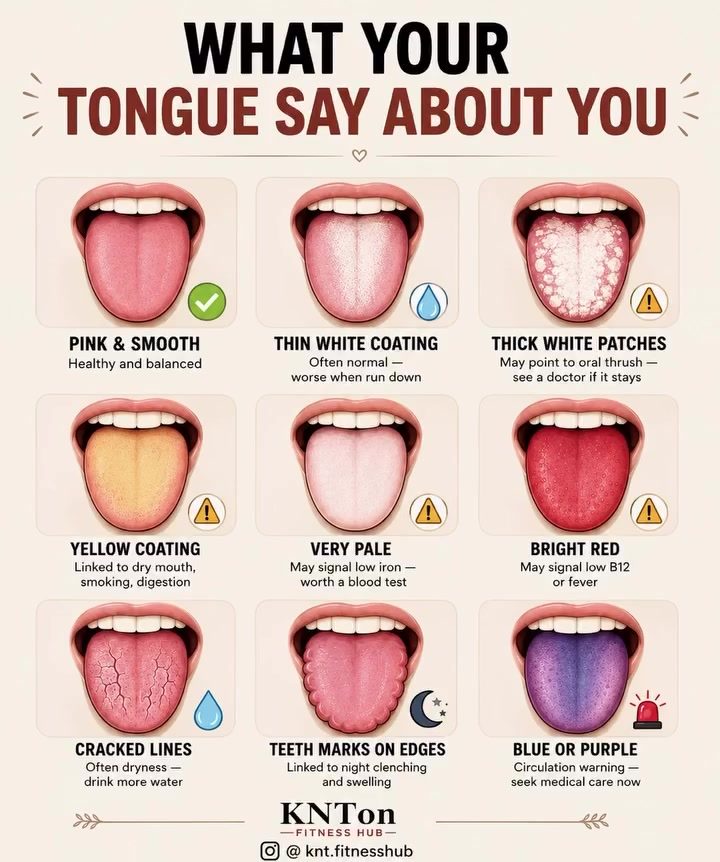
Tongue Health: Your Mini Health Report
The tongue is more than just an organ for taste and speech; it can also serve as a window into your overall health. By examining the appearance and condition of your tongue, you can gain insights into various aspects of your well-being. Understanding these signs can help you take proactive steps towards maintaining good health.
Context: Why this Matters
The tongue's surface is rich in blood vessels and nerves, making it highly responsive to changes in the body. By paying close attention to its appearance, you can identify potential health issues early. Regularly checking your tongue can help you spot problems such as dehydration, nutritional deficiencies, and even more serious conditions like oral thrush or circulation problems.
Main Discussion
The Healthy Tongue
A healthy tongue is typically pink and smooth. This indicates that your body is well-hydrated and balanced. If your tongue looks pink and smooth, you can be confident that your overall health is in good shape. Keeping your tongue in this condition is key to maintaining a healthy lifestyle.
Thin White Coating
A thin white coating on the tongue is often normal and can be a sign of a healthy immune system. However, if the coating thickens or becomes more pronounced, it may indicate that you are run down or dealing with a minor illness. This is usually nothing to worry about, but it's worth taking care of yourself and giving your body the rest it needs.
Thick White Patches
Thick white patches on the tongue can be a cause for concern. These patches may indicate oral thrush, a yeast infection in the mouth. If you notice thick white patches that do not go away, it is important to consult a doctor for proper diagnosis and treatment. Ignoring this condition can lead to complications, so prompt medical attention is crucial.
Yellow Coating
A yellow coating on the tongue is often a sign of dryness, smoking, or digestive issues. This can also indicate dehydration or poor oral hygiene. If you notice a yellow coating, it may be helpful to increase your water intake, practice good oral hygiene, and consider quitting smoking. Addressing these lifestyle factors can significantly improve your tongue's health and overall well-being.
Very Pale Tongue
A very pale tongue may signal low iron levels, or anemia. If your tongue appears pale, it is worth considering a blood test to check your iron levels. Proper nutrition and iron supplementation, if recommended by your doctor, can help restore your tongue's natural color and improve your overall health.
Bright Red Tongue
A bright red tongue can indicate low vitamin B12 levels or a fever. If you notice this color change, it is important to consult a healthcare provider for a thorough evaluation. Low vitamin B12 levels can lead to serious health issues, so prompt medical attention is essential.
Cracked Lines
Cracked lines on the tongue often indicate dehydration. Drinking more water can help alleviate this issue and restore your tongue's smooth appearance. Maintaining proper hydration is crucial for overall health, so make sure to drink plenty of water throughout the day.
Teeth Marks on the Edges
Teeth marks on the edges of the tongue can be linked to night clenching and swelling. This condition, known as bruxism, can cause discomfort and damage to your teeth. If you notice teeth marks on your tongue, it may be worth discussing with a healthcare provider or dentist. They can provide solutions to manage bruxism and prevent further issues.
Blue or Purple Tongue
A blue or purple tongue is a serious warning sign that indicates poor circulation. If you notice this color change, seek medical care immediately. Circulation problems can lead to severe health issues, so prompt attention is crucial. This is a sign that should never be ignored.
Practical Tips
- Hypertension: Maintain regular oral hygiene, including brushing and flossing daily, to keep your tongue and mouth in good condition.
- Hydration: Drink plenty of water to stay hydrated and support overall health.
- Balanced Diet: Ensure your diet includes a variety of nutrient-rich foods to maintain optimal health and prevent deficiencies.
- Regular Check-Ups: Schedule regular check-ups with a healthcare provider to monitor your overall health and address any concerns early.
- Lifestyle Changes: Consider quitting smoking and managing stress to improve your tongue's health and overall well-being.
Important Takeaways
- A healthy tongue is typically pink and smooth, indicating good overall health.
- A thin white coating is usually normal but can indicate a need for rest.
- Thick white patches may signal oral thrush, requiring medical attention.
- Yellow coating can be due to dryness, smoking, or digestive issues.
- A very pale tongue may indicate low iron levels, warranting a blood test.
- A bright red tongue can signal low vitamin B12 or a fever.
- Cracked lines often indicate dehydration, so drink more water.
- Teeth marks on the edges can be linked to night clenching and swelling.
- A blue or purple tongue is a serious warning sign of poor circulation, requiring immediate medical care.
Conclusion
Your tongue is a valuable indicator of your overall health. By understanding the signs and symptoms that your tongue may present, you can take proactive steps to maintain good health. Regularly checking your tongue and considering any changes in its appearance can help you identify potential health issues early and seek appropriate care.
Watch the Reel
Questions readers ask
What does a white tongue coating indicate about my health?
A white tongue coating can indicate several things, including dehydration, oral thrush, or a buildup of bacteria and debris. If your tongue coating is thick, it might also suggest poor oral hygiene or an overgrowth of candida, a type of yeast. If the coating persists, it's a good idea to consult a healthcare professional.
How can I tell if my tongue is showing signs of dehydration?
A dehydrated tongue often appears dry and may have a cracked or wrinkled surface. It might also be slightly swollen and could have a white or patchy appearance. If you notice these signs, it's important to increase your fluid intake to rehydrate your body.
What does a yellow tongue indicate?
A yellow tongue can be a sign of several conditions, including poor oral hygiene, a respiratory infection, or even jaundice in severe cases. The color change is often due to a buildup of dead cells, bacteria, or other debris. If your tongue turns yellow, it's important to address any underlying issues and consider consulting a healthcare professional.
What should a healthy tongue look like?
A healthy tongue is typically pink and smooth, with a thin white coating. It should be free of any significant discoloration, swelling, or lesions. The surface should be moist, indicating proper hydration, and there should be no unusual odors or tastes.
How often should I check my tongue for health signs?
It's beneficial to check your tongue regularly, ideally once a day, as part of your oral hygiene routine. This can help you spot any changes early. Look for signs of dehydration, infections, or other abnormalities. If you notice anything out of the ordinary, consult a healthcare professional for guidance.
What are the signs of oral thrush on the tongue?
Oral thrush often presents as a thick, white coating on the tongue that cannot be easily scraped off. It might also cause sore or burning sensations in the mouth and throat. If you suspect oral thrush, it's important to consult a healthcare professional, as you may need antifungal medication to treat it.
Related deep dives
Similar reads based on topic and creator.

Recent articles
Fresh deep dives from the latest Reels we unpacked.




Comments
Be the first to comment.