Cats of a different color
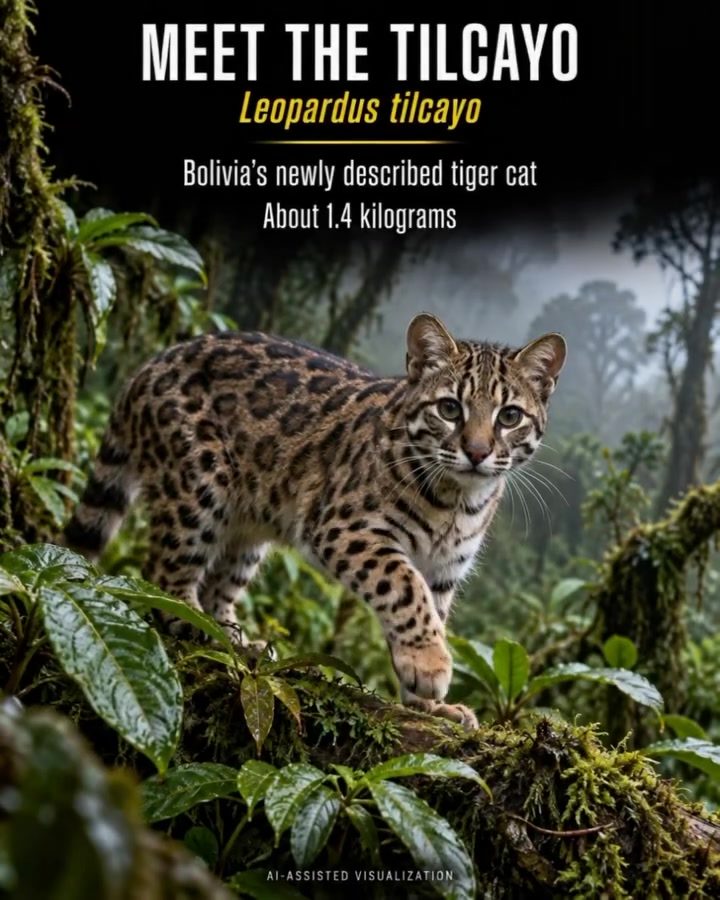
Scientists have spotted what they believe to be a Leopardus tilcayo cat. Researchers have identified it as a newly discovered species of wild cat, the first in 100 years. The Tilcayo is a diminutive feline, weighing approximately 1.4 kilograms and is smaller than an average house cat. It is distinct from other tiger cats and is notably smaller. The discovery is a testament to the mysteries that still linger in even explored habitats. This discovery of a new cat species proves how much wildlife we still have to discover. The Yungas cloud forests of Bolivia are home to the Tilcayo. It is a small, delicate cat, is known to weigh approximately 1.4 kilograms, according to the on-screen text. This habitat is rich in biodiversity and dense with vegetation. These cloud forests are known for their high humidity and diverse flora and fauna. They provide the perfect habitat for a species like the Tilcayo, which likely needs the dense cover and abundant prey that the forest offers.
The science behind the discovery
Genetic analysis was conducted on 38 Leopardus cats in the Yungas cloud forests. The analysis revealed that the 38 cats include five distinct species, and Leopardus tilcayo is one of them. This finding is a testament to the power of genetic analysis in uncovering hidden biodiversity. Scientists previously thought that what is being identified as Tilcayo and other similar cats are one species. This genetic discovery shows the complexity and diversity within what was once considered a single group. The Tilcayo was previously classified as a tiger cat but is now recognized as a distinct species. This rediscovery was made possible by advances in technology. AI-assisted educational visualization helped scientists understand this cat's behavior and habitat by representing the findings. The use of AI in wildlife conservation is not new, but it is becoming increasingly important. It allows scientists to analyze vast amounts of data quickly and accurately. For the Tilcayo, it meant being able to distinguish it from other similar species. This discovery underscores the importance of continued research and technological advancement in wildlife conservation.
Watch the Reel
Related deep dives
Similar reads based on topic and creator.




Recent articles
Fresh deep dives from the latest Reels we unpacked.




Comments
Be the first to comment.