Support for a TikTok Ban in America: A Detailed Look
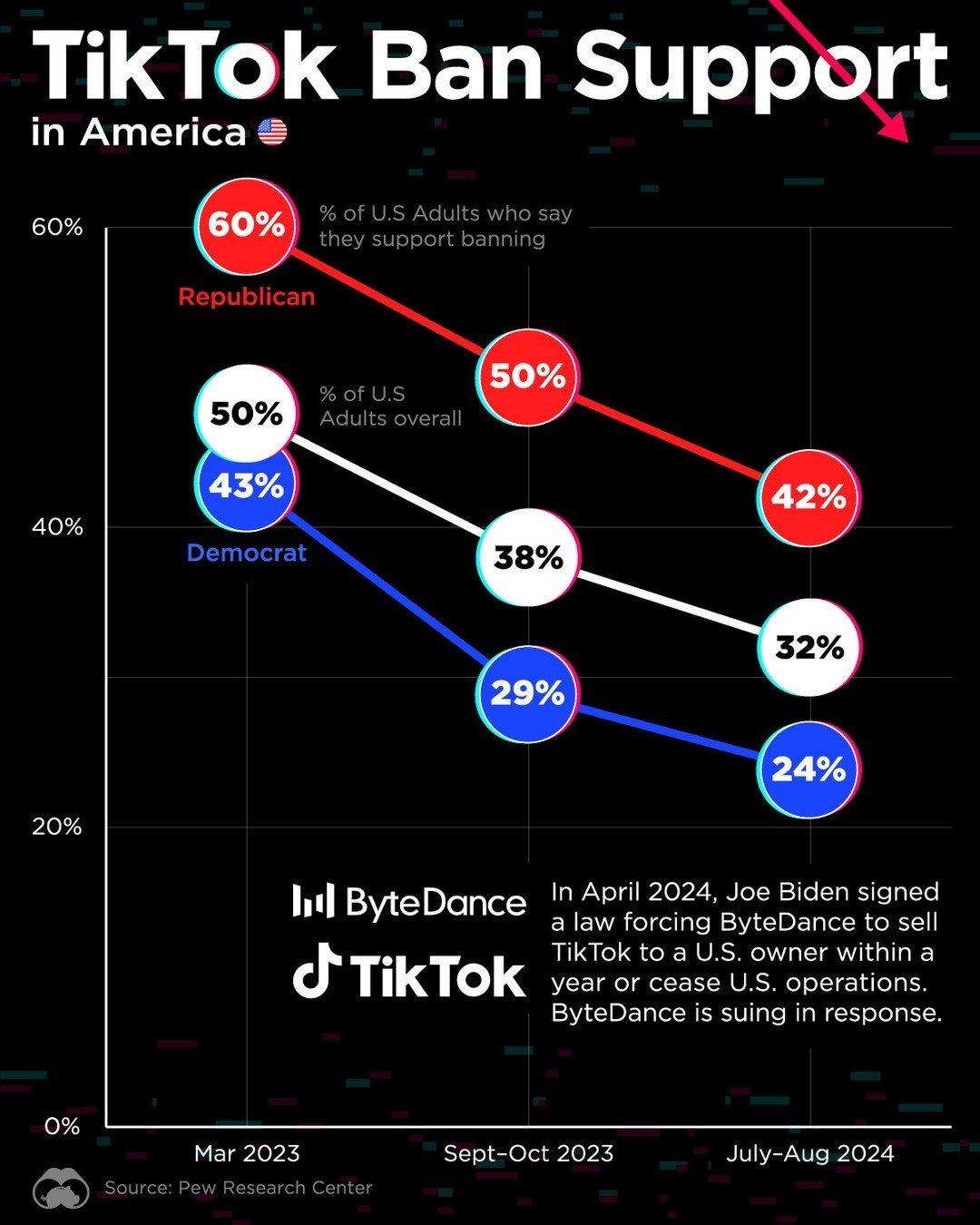
Support for a potential TikTok ban in the United States has seen a significant shift, dropping from 50% to 32% in just a year. Republicans are more likely to back the ban (42%) compared to Democrats (24%). This political divide is just one aspect of the complex landscape surrounding the future of TikTok in the U.S.
Why This Matters
The debate over banning TikTok in the U.S. is more than just a political issue; it has significant implications for national security, data privacy, and the broader tech industry. TikTok, owned by the Chinese company ByteDance, has faced scrutiny over concerns about data security and potential ties to the Chinese government. Understanding the fluctuations in public support and the legal battles underway is crucial for anyone following tech policy or interested in the future of social media.
Understanding the Data
Overall Trends in Public Opinion
Over the past year, public support for a TikTok ban has fluctuated. Data from Pew Research Center shows that in March 2023, 50% of U.S. adults supported a ban. By September-October 2023, this figure had dropped to 38%, and by July-August 2024, it stood at 32%. This gradual decline suggests a shifting public opinion, possibly influenced by various factors, including media coverage, political rhetoric, and changing perceptions of data privacy.
Political Divide
The political divide on this issue is evident. Republicans are more likely to support a TikTok ban, with 42% in favor, compared to 24% of Democrats. This divide reflects broader political stances on issues like national security and data privacy. Republicans, who tend to be more hawkish on national security, may view TikTok as a potential national security threat. Democrats, on the other hand, might be more concerned about the implications for free speech and the potential economic impact on the tech industry.
Legal Battles and Corporate Responses
U.S. Legislation
The U.S. government has taken steps to address concerns about TikTok. A recent law forces ByteDance to sell TikTok to a U.S. owner within a year or face ceasing operations in the U.S. This move is part of a broader effort to mitigate perceived national security risks. The law's provisions indicate the severity with which the U.S. government views the potential threats posed by TikTok.
ByteDance's Response
ByteDance, the parent company of TikTok, has responded to this legislation by filing a lawsuit. The company argues that the forced sale is unjustified and could set a dangerous precedent for future policy decisions. This legal battle underscores the high stakes involved and highlights the complex interplay between national security concerns and corporate rights.
Practical Tips for Staying Informed
Keeping up with the rapidly changing landscape of TikTok's potential ban can be challenging, but there are practical steps you can take to stay informed:
Follow Relevant Sources
Stay updated by following reliable news sources that cover tech policy and national security. Organizations like Pew Research Center, Reuters, and The Wall Street Journal often provide in-depth analysis and up-to-date information on developments related to TikTok and other tech policy issues.
Monitor Legal Proceedings
Keep an eye on legal developments by following updates from legal news outlets. Understanding the arguments presented by both sides can provide deeper insight into the motivations behind the ban and the potential outcomes of the legal battles.
Engage with Public Discussions
Participate in public discussions and forums where the topic of TikTok's potential ban is being debated. Engaging with different viewpoints can help you form a more balanced perspective on the issue.
Important Takeaways
- Public Opinion Shifts: Support for a TikTok ban has decreased over the past year, from 50% to 32%.
- Political Divide: Republicans are more likely to support a ban (42%) compared to Democrats (24%).
- Legal Battles: ByteDance is suing in response to a recent law that could force the sale of TikTok to a U.S. owner.
- National Security Concerns: The U.S. government's push for a ban is driven by concerns over national security and data privacy.
Conclusion
The debate over a potential TikTok ban in the U.S. is far from over. As public opinion continues to shift and legal battles unfold, staying informed about the latest developments is crucial. Whether you are a tech enthusiast, a policy wonk, or simply someone interested in the future of social media, understanding the nuances of this issue can help you navigate the complex landscape of tech policy and national security.
Watch the Reel
Questions readers ask
Why has support for a TikTok ban in the U.S. decreased over the past year?
Support for a TikTok ban in the U.S. has decreased from 50% to 32% in the past year. This shift could reflect a change in public perception or evolving awareness of the issues. It indicates that a larger segment of the American public may now perceive the benefits of TikTok—such as its role in creative expression and social interaction—as outweighing potential security concerns.
Why do Republicans and Democrats have different opinions on banning TikTok?
The varying levels of support for a TikTok ban between Republicans (42%) and Democrats (24%) reflect a significant political divide. This discrepancy could be attributed to differences in views on national security, data privacy, or the role of tech companies in society. Republicans tend to prioritize these concerns.
What are the primary concerns driving the debate over a TikTok ban?
The primary concerns driving the debate over a TikTok ban include national security, data privacy, and the potential influence of the Chinese government. These issues are particularly sensitive in the U.S., given the ongoing geopolitical tensions and concerns about foreign interference in domestic affairs.
How does the potential ban on TikTok impact the tech industry in the U.S.?
A ban on TikTok could have significant implications for the tech industry in the U.S. It could set a precedent for future regulations on foreign-owned tech companies, potentially affecting market competition and innovation. Furthermore, it may influence how other social media platforms operate and handle user data.
What role does public opinion play in determining the future of TikTok in the U.S.?
Public opinion is a crucial factor in shaping the future of TikTok in the U.S. The decline in support for a ban to 32% suggests that a substantial portion of the population does not favor such a measure. This public sentiment can influence policymakers and lawmakers in their decisions regarding potential regulations or bans on the app.
What are the potential implications of a TikTok ban on July 2024?
If a TikTok ban were to be implemented in July 2024, it could have immediate and long-term effects. In the short term, it would disrupt the social media landscape and affect millions of users who rely on the platform for entertainment and communication. In the long term, it could lead to further scrutiny of foreign-owned tech companies and potentially reshape the digital environment in the U.S.
What steps has TikTok taken to address data privacy concerns in the U.S.?
TikTok has implemented several measures to address data privacy concerns, including storing U.S. user data in the U.S. and using U.S.-based servers. The company has also established a dedicated team, TikTok for Business, to provide transparency and support for advertisers. Additionally, TikTok has engaged in various initiatives to build trust and demonstrate its commitment to user privacy and security.
Related deep dives
Similar reads based on topic and creator.


Recent articles
Fresh deep dives from the latest Reels we unpacked.




Comments
Be the first to comment.