Sustainable Bird Deterrent
Birds are essential to any ecosystem, but they can cause significant problems for farmers, particularly in rice fields. Birds can destroy crops, leading to significant losses for farmers. While there are various methods to deter birds, such as using nets, these methods are costly and not always effective. However, a sustainable and effective solution has emerged in Thailand, where farmers are utilizing plastic bottles to keep birds away.
Why This Matters
Birds are attracted to rice fields because of the easy availability of food. They can cause substantial damage to crops, especially during the ripening phase. Traditional methods of deterring birds, such as using nets or chemicals, are not always effective and can be harmful to the environment. The innovative method used in Thailand offers a more sustainable approach, minimizing environmental impact while protecting crops.
The Innovative Method
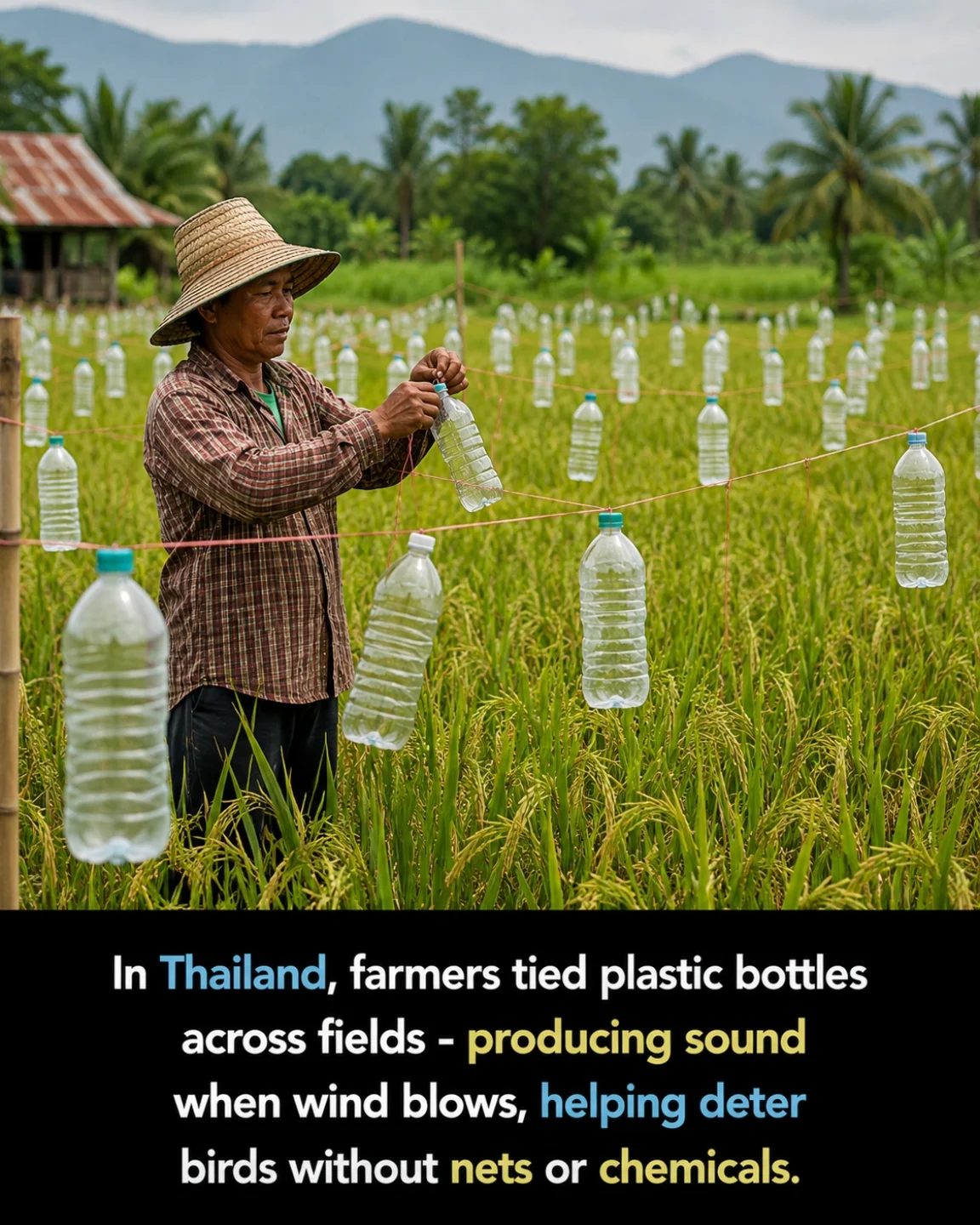
Farmers in Thailand have developed a unique and effective method to deter birds from their rice fields. By strung plastic bottles across the field, farmers create a simple yet effective deterrent. These bottles, when caught by the wind, produce a noise that scares the birds away. This method is a cost-effective and eco-friendly alternative to traditional methods.
How It Works
The process is straightforward. Farmers string plastic bottles along lines across the field. The bottles are positioned in such a way that they create noise when the wind blows. This noise is enough to scare birds away, preventing them from causing damage to the crops. The method does not require any additional tools or materials, making it an accessible solution for farmers.
Advantages of Using Plastic Bottles
- Cost-Effective: Plastic bottles are readily available and inexpensive. Farmers can reuse bottles that would otherwise be discarded, reducing waste.
- Environmentally Friendly: This method eliminates the need for harmful chemicals or extensive netting, which can have adverse effects on the environment.
- Ease of Implementation: The method is simple to set up and maintain. Farmers can easily string the bottles across their fields without requiring specialized skills or tools.
Practical Tips
If you're a farmer looking to implement this method, here are some practical tips to get you started:
Gathering Materials
You don't need much to get started. Collect empty plastic bottles from your household or community. Ensure the bottles are clean and free of any debris.
Setting Up the Bottles
Position the bottles in a way that they can catch the wind effectively. You can string them along lines or hang them from poles. The key is to ensure they produce noise when the wind blows.
Maintenance
Regularly check the bottles to ensure they are still effective. Over time, the bottles may become worn or damaged, so replacing them periodically is essential.
Monitoring Effectiveness
Observe the field to see if the method is working. If birds continue to cause problems, you may need to adjust the placement or number of bottles. Additionally, you can combine this method with other deterrents for better results.
Important Takeaways
This innovative method offers a sustainable solution to a common problem faced by farmers. The use of plastic bottles is not only cost-effective but also environmentally friendly. By adopting this method, farmers can protect their crops while minimizing environmental impact.
Conclusion
Birds are a natural part of any ecosystem, but they can pose a significant threat to crops, especially in rice fields. Traditional methods of deterring birds, such as using nets or chemicals, have their drawbacks. However, the innovative method used by farmers in Thailand provides a sustainable and effective solution. By using plastic bottles to create noise, farmers can scare birds away without harming the environment. This method is not only cost-effective but also easy to implement, making it an ideal solution for farmers worldwide.
Watch the Reel
Questions readers ask
How do Thai farmers use plastic bottles to protect their rice crops?
Thai farmers leverage discarded plastic bottles by hanging them on strings. When caught by the wind, the bottles swing and cause noise, which creates an effective and eco-friendly barrier that discourages birds from entering their rice fields.
Why are birds a problem for Thai rice farmers?
Birds can cause significant damage to rice crops, particularly during the ripening phase when the grains are most vulnerable. They are attracted to rice fields due to the easy availability of food, but can lead to substantial losses for farmers.
What makes the plastic bottle method sustainable?
The plastic bottle method is sustainable because it repurposes discarded plastic, reducing waste, and does not involve chemicals or other materials that could harm the environment. This method is both innovative and cost-effective for farmers.
Are there other methods Thai farmers use to deter birds?
Yes, some Thai farmers use traditional methods such as nets, but these can be costly and may not always be effective. The plastic bottle method has emerged as a more sustainable and effective alternative to traditional methods.
Can the plastic bottle method be applied to other crops?
While the plastic bottle method is particularly effective in rice fields, farmers might adapt a similar approach to protect other crops. This method is relatively simple and can be tailored to different agricultural settings, making it a versatile bird deterrent.
What are some benefits of the plastic bottle method over traditional methods like nets and chemicals?
The plastic bottle method is cost-effective, eco-friendly, and does not require the use of harmful chemicals. Unlike nets, it does not require significant labor to install and maintain, making it a practical solution for farmers.
Related deep dives
Similar reads based on topic and creator.




Recent articles
Fresh deep dives from the latest Reels we unpacked.




Comments
Be the first to comment.