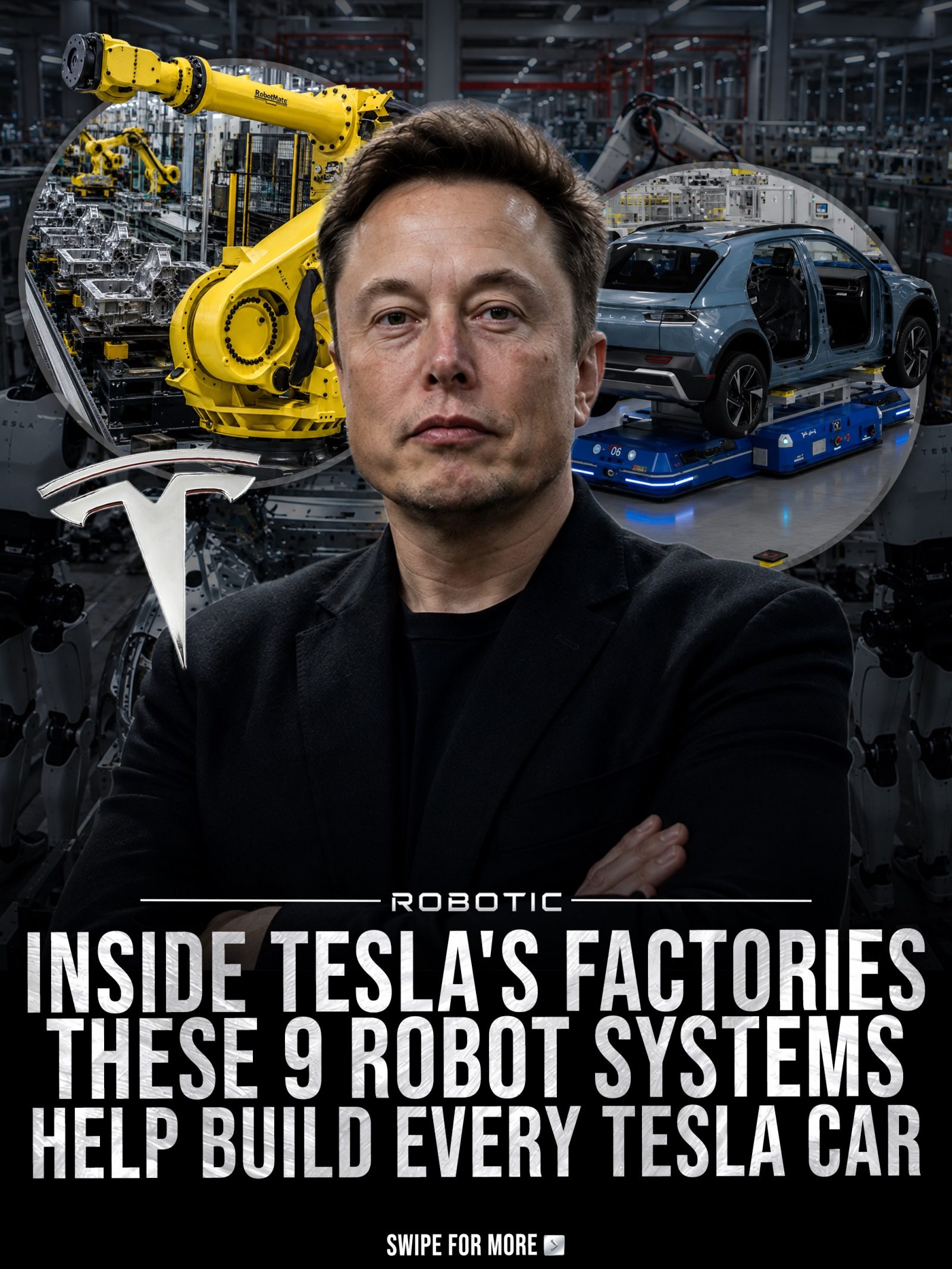
Tesla's Automated Manufacturing with Robotic Systems
Tesla's factories are a marvel of modern engineering, with diverse industrial robots building vehicles with exceptional speed, precision, and consistency. Robotic systems from various manufacturers, including FANUC, are crucial to Tesla's manufacturing process, as well as custom solutions developed by Tesla themselves. These systems handle various tasks from welding and assembly to battery production and quality inspection.
Robotic Systems in Tesla Factories
The robotic systems in Tesla factories include an array of industrial robots and custom automation equipment. From FANUC robots that transfer components and perform repetitive tasks, to Tesla Grohmann Systems designed for battery and drive-unit production, the factory floor is a dynamic assembly of state-of-the-art machinery.
FANUC Robots
FANUC robots are integral to Tesla's production lines, primarily engaged in tasks that require continuous operation with minimal downtime. These robots are adept at transferring components between machines and performing repetitive manufacturing tasks. Their speed and precision are crucial in maintaining the high standards of Tesla's production lines.
Tesla Grohmann Systems
Tesla Grohmann Systems specializes in developing custom automation equipment, particularly for the production of batteries and drive units. This equipment is designed to handle the unique requirements of these components, ensuring faster manufacturing with extremely high precision.
The Role of Automation in Tesla's Production
Automation in Tesla's factories goes beyond just robotic arms. Autonomous mobile robots, automated guided vehicles, and machine vision systems work together to create a seamless manufacturing process.
Welding and Assembly
Welding and assembly tasks are performed by a combination of robotic arms and automated guided vehicles. These systems ensure that every vehicle is assembled with the utmost precision and consistency. The robots' ability to perform these tasks continuously and with minimal error is a significant factor in Tesla's ability to produce high-quality vehicles at a rapid pace.
Material Transport and Quality Inspection
Material transport is handled by a fleet of automated guided vehicles, which move materials and components across the factory floor. These vehicles are programmed to navigate the factory efficiently, ensuring that materials are always available where they are needed.
Quality inspection is another area where automation plays a crucial role. Machine vision systems are used to check for defects in the manufacturing process, ensuring that only the highest quality components make it into the final product. These systems can detect even the smallest defects, ensuring that every vehicle produced meets the highest quality standards.
Battery Production
Battery production is a critical aspect of Tesla's manufacturing process. Tesla Grohmann Systems' custom automation equipment is specifically designed for the production of batteries and drive units. This equipment ensures that batteries are produced with the highest levels of precision and efficiency.
The Future of Automation at Tesla
Tesla's commitment to automation extends beyond the current systems in their factories. The development of the Optimus humanoid robot is a testament to Tesla's vision for a more automated future. This robot, designed to work alongside human employees, could further improve manufacturing efficiency, handling tasks that require human-like dexterity and problem-solving capabilities.
Optimus Humanoid Robot
The Optimus humanoid robot represents a new frontier in automation. Designed to work alongside human employees, Optimus could handle tasks that require human-like dexterity and problem-solving capabilities. This robot is part of Tesla's vision for a future where specialized robots and humanoids work together to create a highly efficient and productive manufacturing environment.
Practical Tips for Automating Industrial Processes
For those looking to automate their own industrial processes, several lessons can be learned from Tesla's approach.
Choose the Right Robots for the Task
Different tasks require different types of robots. For tasks that require precision and speed, such as welding and assembly, robotic arms from manufacturers like FANUC are ideal. For tasks that require human-like dexterity, a humanoid robot like Optimus may be more suitable.
Invest in Custom Solutions
Custom automation equipment, like that developed by Tesla Grohmann Systems, can significantly improve the efficiency and precision of manufacturing processes. Investing in custom solutions can provide a competitive edge in industries that require high levels of precision and efficiency.
Continuous Innovation
Tesla's commitment to continuous innovation is a key factor in its success. Staying up-to-date with the latest advances in automation and robotics can help ensure that manufacturing processes remain at the cutting edge of technology.
Important Takeaways
- Tesla's factories rely on a diverse network of industrial robots for vehicle manufacturing, ensuring speed, precision, and consistency.
- FANUC robots and Tesla Grohmann Systems' custom automation equipment play crucial roles in various manufacturing tasks.
- Automation extends to welding, assembly, material transport, quality inspection, and battery production.
- Tesla's future vision includes the Optimus humanoid robot, enhancing automation and efficiency in manufacturing.
Conclusion
Tesla's approach to manufacturing, with a heavy reliance on robotic systems and automation, sets a benchmark for the industry. By integrating various robotic systems from different manufacturers and developing custom automation equipment, Tesla ensures that its vehicles are produced with the highest standards of quality and efficiency. As the company continues to innovate with technologies like the Optimus humanoid robot, the future of manufacturing at Tesla looks increasingly automated and efficient.
Watch the Reel
Questions readers ask
Which companies provide the robotic systems used in Tesla's factories?
Tesla utilizes robotic systems from several prominent companies, with notable contributions from FANUC. Additionally, Tesla has developed its own custom automation solutions, such as those from Tesla Grohmann, which cater to specific manufacturing needs, particularly in battery and drive-unit production.
What tasks are performed by the robotic systems in Tesla's automated car manufacturing process?
The robotic systems in Tesla's factories handle a wide range of tasks, including welding, assembly, battery production, and quality inspection. These systems ensure rapid, precise, and consistent vehicle assembly, which is crucial for Tesla's high-efficiency manufacturing process.
How do FANUC robots contribute to Tesla's manufacturing process?
FANUC robots play a significant role in Tesla's manufacturing process by transferring components and performing repetitive tasks. Their precision and reliability make them essential for maintaining the high standards of Tesla's automated vehicle assembly.
What makes Tesla Grohmann Automation unique in Tesla's factory systems?
Tesla Grohmann Automation is unique because it was developed to address specific needs in Tesla's manufacturing process. This custom automation is particularly focused on battery and drive-unit production, which are critical components of Tesla's vehicles.
How do robotic systems enhance the precision of Tesla's automated welding process?
Robotic systems, such as those from FANUC and Tesla Grohmann, are programmed to perform welding tasks with exceptional precision. This ensures consistent and high-quality welds, which are vital for the structural integrity and safety of the vehicles.
What role do Tesla's custom automation solutions play in the overall manufacturing process?
Tesla's custom automation solutions, like those from Tesla Grohmann, are tailored to the specific needs of Tesla's manufacturing process. This ensures that every aspect of the assembly, from battery production to final vehicle assembly, is optimized for efficiency and precision.
Related deep dives
Similar reads based on topic and creator.


Recent articles
Fresh deep dives from the latest Reels we unpacked.




Comments
Be the first to comment.