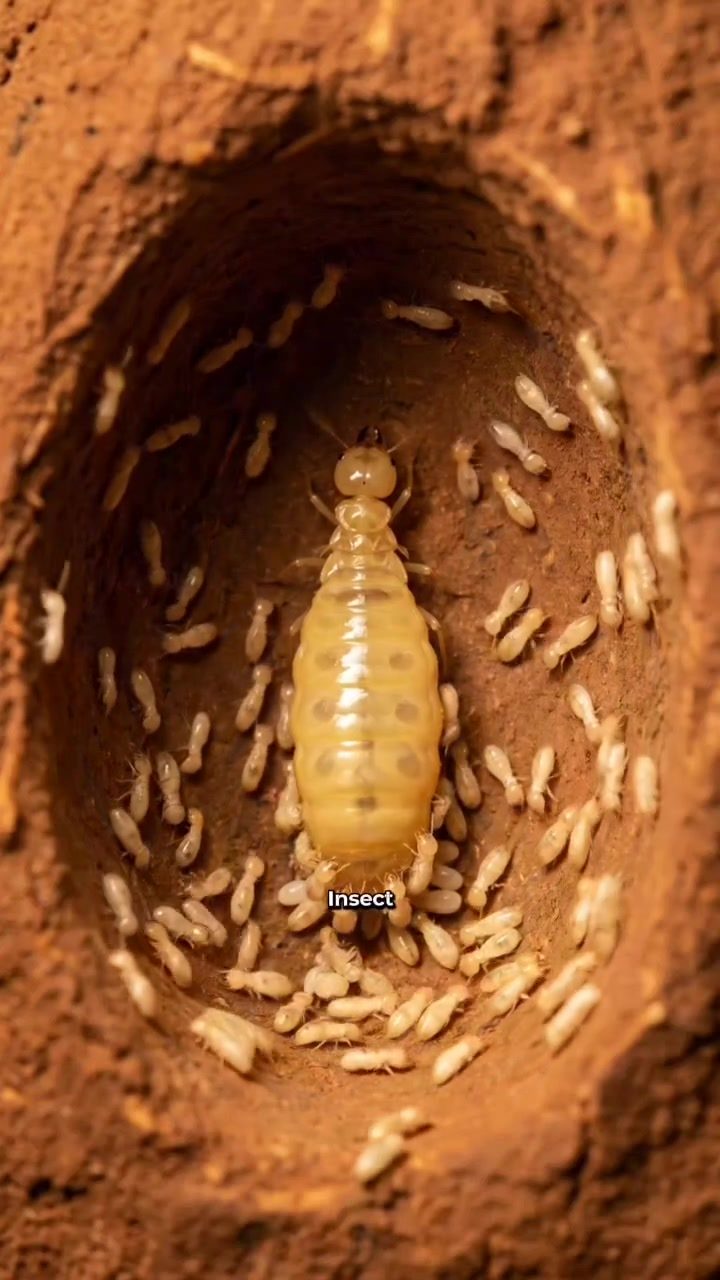
Termite Queens: Masters of Reproduction and Colony Control
The termite queen is an extraordinary insect, renowned for her remarkable reproductive capabilities and unique role within the colony. Her life cycle and behaviors offer fascinating insights into the world of subterranean insects and their complex social structures.
Why This Matters
Termite queens are pivotal figures in the success and survival of their colonies. Their ability to produce an astounding number of eggs ensures the continuity and growth of the colony, while their unique biology and behavior mechanisms maintain social order. Understanding the termite queen provides a window into the intricate world of these subterranean creatures.
The Life and Reproductive Cycle of a Termite Queen
The Termite Queen's Reproductive Prowess
The termite queen is the most reproductively extreme animal on Earth. She lays about one egg every three seconds for up to 50 years, producing around 30,000 eggs per day. This means she can lay over 10 million eggs in a single year. Her continuous egg-laying is sustained without any seasonal breaks, pauses, or periods of dormancy. The sheer volume of her reproductive output is unparalleled in the animal kingdom.
The Termite Queen's Environment
The termite queen lives a sedentary life, remaining permanently sealed inside a single chamber at the center of the termite mound. Initially, when she is newly emerged, she is the same size as any worker in the colony. However, over years, her abdomen expands significantly with developing eggs until it reaches an impressive 10 centimeters in length. This expansion transforms her into a sausage-shaped mass of reproductive tissue. Her immobility and permanent state within the chamber are essential for her role as the sole reproductive female in the colony.
Worker Termites and the Queen's Support
Worker termites play a crucial role in supporting the queen's reproductive activities. They feed her continuously by mouth-to-mouth contact, ensuring she receives the necessary nutrients to sustain her extraordinary egg production. The workers also collect each egg and carry it to nursery chambers, where the eggs are cared for until they hatch.
Suppression of Rival Queens
One of the most intriguing aspects of the termite queen's biology is her ability to suppress the reproductive capabilities of other females in the colony. Her pheromones chemically inhibit the reproductive system of any potential rival queens, ensuring that no other female can emerge as a reproductive competitor. This mechanism guarantees that the colony maintains a singular reproductive focus, which is essential for its survival and growth.
Termite Larvae: The Future of the Colony
Termite larvae are a critical part of the colony's development. These larvae, which are white and worm-like, play a significant role in the termite's lifecycle. They feed on wood and other organic matter, aiding in the colony's overall nutrition and structural needs.
Development and Care of Termite Larvae
Larvae undergo a metamorphosis that eventually transforms them into adult termites. This transformation is a critical phase in the colony's lifecycle. Worker termites are responsible for the care of the larvae, ensuring they are well-fed and protected until they mature. This dedicated care ensures the future strength and sustainability of the colony.
Practical Tips for Observing Termite Colonies
Understanding the biology and behavior of termite queens and their larvae can be beneficial for those interested in studying these insects. Here are some practical tips for observing termite colonies:
Equipment and Safety
When observing termite colonies, it is essential to have the right equipment. A magnifying glass or microscope can help in identifying the different stages of termite larvae and their development. Additionally, protective gear such as gloves and a mask can protect against potential allergic reactions or bites.
Ethical Observation
Ethical observation involves respecting the natural habitat of termites. Avoid disturbing their nests or colonies, as this can disrupt their delicate social structures. Always prioritize the welfare of the termites and their environment.
Important Takeaways
The termite queen's ability to lay an astonishing number of eggs without moving from her chamber is a testament to her extraordinary reproductive capabilities. Her pheromones play a crucial role in maintaining social order within the colony by suppressing the reproductive capabilities of other females. The termite queen's unique biology and behavior make her a fascinating subject of study for those interested in the intricacies of subterranean insects and their complex social structures.
Conclusion
The termite queen is a remarkable example of nature's engineering, showcasing an unparalleled reproductive capacity and a unique social structure. Her life cycle and the roles of worker termites and larvae within the colony provide a deeper understanding of the fascinating world of termites. Whether you are an avid naturalist or someone curious about the intricacies of subterranean biology, the termite queen offers a captivating glimpse into the wonders of the insect world.
Watch the Reel
Questions readers ask
How long does a termite queen typically live and how does her lifespan compare to other colony members?
A termite queen can live for several decades, with some even reaching up to 50 years. This lifespan is significantly longer than that of worker termites, which usually live for a few years. The extended lifespan of the queen is crucial for the long-term survival and growth of the colony.
What is the daily egg production rate of a termite queen?
A termite queen can lay thousands of eggs per day. Over the course of a year, this adds up to millions of eggs. This high rate of reproduction is vital for maintaining and expanding the colony's population.
How do worker termites support the termite queen?
Worker termites play a crucial role in sustaining the queen's life by providing her with food and protecting her. They ensure she receives a constant supply of nutrients and also maintain her living area, allowing her to focus entirely on reproduction.
What happens to a termite queen's offspring after they hatch?
After hatching, the offspring develop into various castes within the colony, including workers, soldiers, and new reproductives. The worker termites care for the larvae, ensuring they receive proper nutrition and protection as they grow.
Can a termite colony survive without a queen?
No, a termite colony cannot survive without a queen. The queen's role in reproduction is indispensable for the colony's growth and continuity. Without her, the colony would not be able to produce new members to replace those that die or to expand its population.
What triggers a termite queen to produce eggs?
The termite queen's egg production is influenced by various factors, including the colony's needs and the availability of resources. Pheromones released by the workers can stimulate the queen to produce more eggs, ensuring the colony's population is well-maintained.
What is the process for a new termite queen to take over an existing colony?
When an existing queen dies, a new reproductive termite, often called a princess, will take over. This process involves a nuptial flight event where winged reproductives leave the colony to mate. The newly mated princess returns to the colony and starts producing eggs. They are nourished and protected by workers as they adjust to their new role.
Related deep dives
Similar reads based on topic and creator.




Recent articles
Fresh deep dives from the latest Reels we unpacked.




Comments
Be the first to comment.