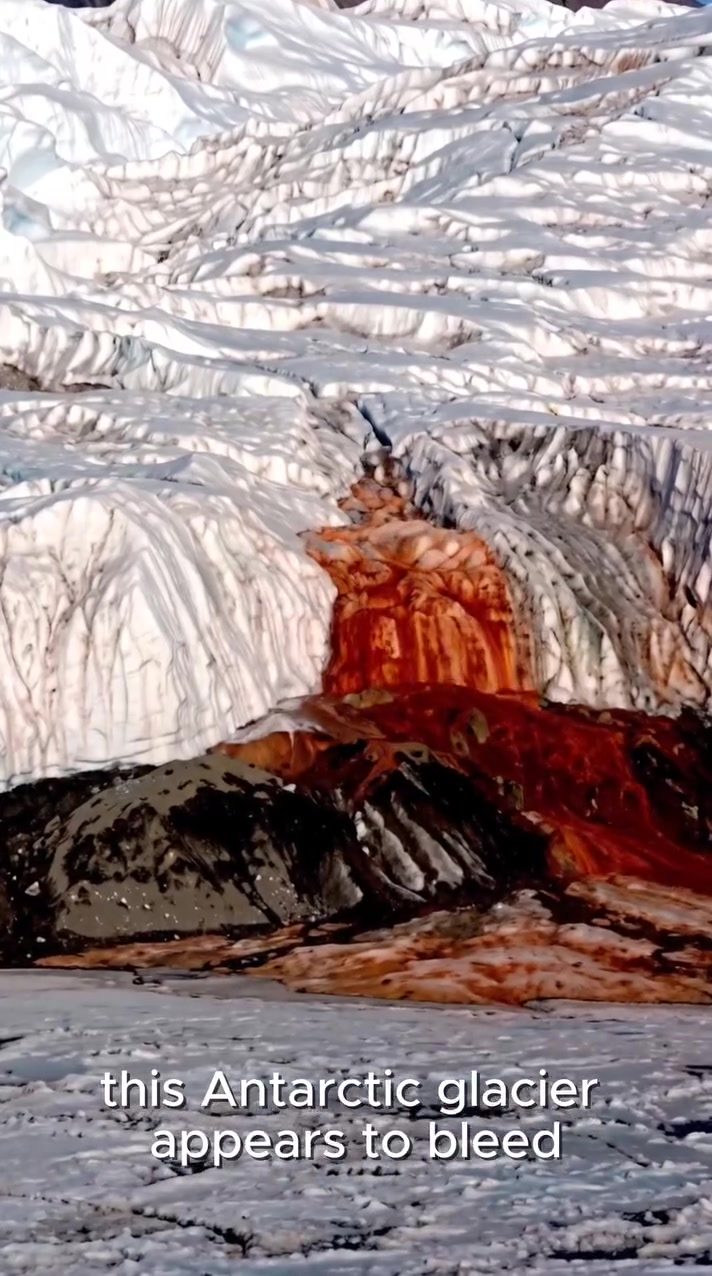
Antarctic Glacier Bleeding: The Enigma of Blood Falls
Context / Why this matters
The Antarctic continent is home to many natural wonders, and one of the most peculiar is the phenomenon known as Blood Falls. This rust-red outflow at the end of Antarctica’s Taylor Glacier has captivated scientists and nature enthusiasts alike. The intriguing sight of a glacier appearing to "bleed" raises numerous questions about the geological and biological processes at work in one of the world's most extreme environments.
Main discussion
The Origin of the Red Liquid
The reddish hue of the outflow is due to iron-rich brine that emerges from beneath and within the ice. This brine is hypersaline, which means it has a higher concentration of salt than typical seawater. The red color develops as the iron-rich material interacts with the atmosphere, creating a striking visual contrast against the ice and snow.
Ancient Seawater
The brine at Blood Falls is believed to be ancient seawater trapped within the glacier's depths when the landscape was a system of fjords. This ancient water has been isolated for thousands of years, providing a unique window into past climatic conditions and the geological history of the region. The presence of this ancient brine has been linked to the movement of ice and the formation of the glacier, providing a deeper understanding of the geological processes at work in Antarctica.
Microbial Life in Extreme Conditions
The most remarkable aspect of Blood Falls is the presence of microbial life within the cold, dark, and oxygen-poor environment. These microbes have adapted to survive in conditions that would be lethal to most other forms of life. They rely on alternative chemical processes for energy, rather than photosynthesis, which is the process by which most plants and some bacteria convert light into energy.
The Role of NASA
NASA researchers have played a crucial role in studying Blood Falls. Their findings have shed light on the complex interplay between geological and biological processes. The discovery that the brine may trace back to ancient seawater has opened up new avenues for research into the origins of life on Earth. Scientists are particularly interested in understanding how life forms can survive and thrive in such extreme environments, as this knowledge could potentially inform the search for life beyond Earth.
Impact on Climate Studies
Blood Falls serves as a natural laboratory for studying the effects of climate change. The ancient brine trapped within the glacier provides a baseline for understanding how the environment has changed over time. The interaction between the brine and the atmosphere offers insights into the chemical processes that occur in the presence of iron-rich materials, which can affect the composition of the atmosphere and the climate. The interaction between the brine and the atmosphere offers insights into the chemical processes that occur in the presence of iron-rich materials, which can affect the composition of the atmosphere and the climate.
Practical tips
Understanding Extreme Environments
To appreciate the significance of Blood Falls, it's helpful to understand the broader context of extreme environments. These environments, such as deep-sea vents and polar ice caps, can teach us about the limits of life and the conditions under which it can thrive. Exploring these environments can provide valuable insights into the adaptability of life and the potential for life to exist in other parts of the universe.
Geological Exploration
For those interested in geology, studying the interaction between ancient seawater and modern geological processes can be particularly enlightening. Blood Falls is a prime example of how the Earth's geological history can be preserved and studied through the analysis of ice and brine. This knowledge can be applied to other regions of the world where similar processes may be at work, helping to unravel the mysteries of the Earth's past.
Biological Adaptation
The microbial life found in Blood Falls offers a unique opportunity to study biological adaptation. Researchers can learn how these microbes have evolved to survive in such harsh conditions, which can have implications for understanding the origins of life and the potential for life to exist in other parts of the universe. This knowledge can also inform the search for life in other extreme environments, such as the icy moons of Jupiter and Saturn.
Important takeaways
The phenomenon of Blood Falls at Taylor Glacier in Antarctica is a fascinating example of the interplay between geological and biological processes in one of the world's most extreme environments. The presence of iron-rich brine, ancient seawater, and microbial life provides valuable insights into the Earth's geological history and the adaptability of life. Studying Blood Falls can offer a deeper understanding of the conditions under which life can thrive and the potential for life to exist in other parts of the universe.
Conclusion
The "bleeding" glacier at Taylor Glacier in Antarctica is a testament to the wonders of the natural world. The interaction between ancient seawater, iron-rich brine, and microbial life creates a unique and complex ecosystem that has captivated scientists and nature enthusiasts alike. As research continues, the mysteries of Blood Falls are sure to reveal even more about the Earth's geological history and the potential for life in extreme environments.
Watch the Reel
Questions readers ask
What causes the red coloration at Taylor Glacier's Blood Falls?
The red color is due to iron-rich brine seeping out from beneath the glacier. When this brine comes into contact with oxygen in the air, the iron oxidizes, giving the water its distinctive red hue. This process is similar to how iron rusts when exposed to air and water.
How does the brine get trapped beneath the Taylor Glacier?
The brine is a remnant of an ancient seawater that was trapped beneath the glacier millions of years ago. As the glacier advanced, it enclosed pockets of this iron-rich seawater, which has since been preserved in a liquid state due to the pressure and unique conditions within the glacier.
Why is the brine hypersaline, and what does that mean for its properties?
The brine is hypersaline, which means it contains a higher concentration of salt than typical seawater. This high salinity lowers the freezing point of the water, allowing it to remain liquid even at the extremely cold temperatures beneath the glacier. Additionally, the high salt content also increases the density of the brine, causing it to sink and flow out from the glacier.
What are the implications of the microbial life found in the brine?
The discovery of microbes thriving in the brine challenges our understanding of life's limits, and provides insights into how life might survive in other extreme environments, both on Earth and potentially on other planets. The microbes found in this unique habitat help scientists study the potential for life in harsh conditions.
What can the study of Blood Falls tell us about past climates?
The ancient seawater trapped beneath Taylor Glacier provides a unique window into Earth's past. By analyzing the chemistry of the brine, scientists can gain insights into atmospheric conditions and climate patterns from millions of years ago. This information can help us better understand long-term climate trends and the dynamics of glacial systems.
Related deep dives
Similar reads based on topic and creator.



Recent articles
Fresh deep dives from the latest Reels we unpacked.




Comments
Be the first to comment.