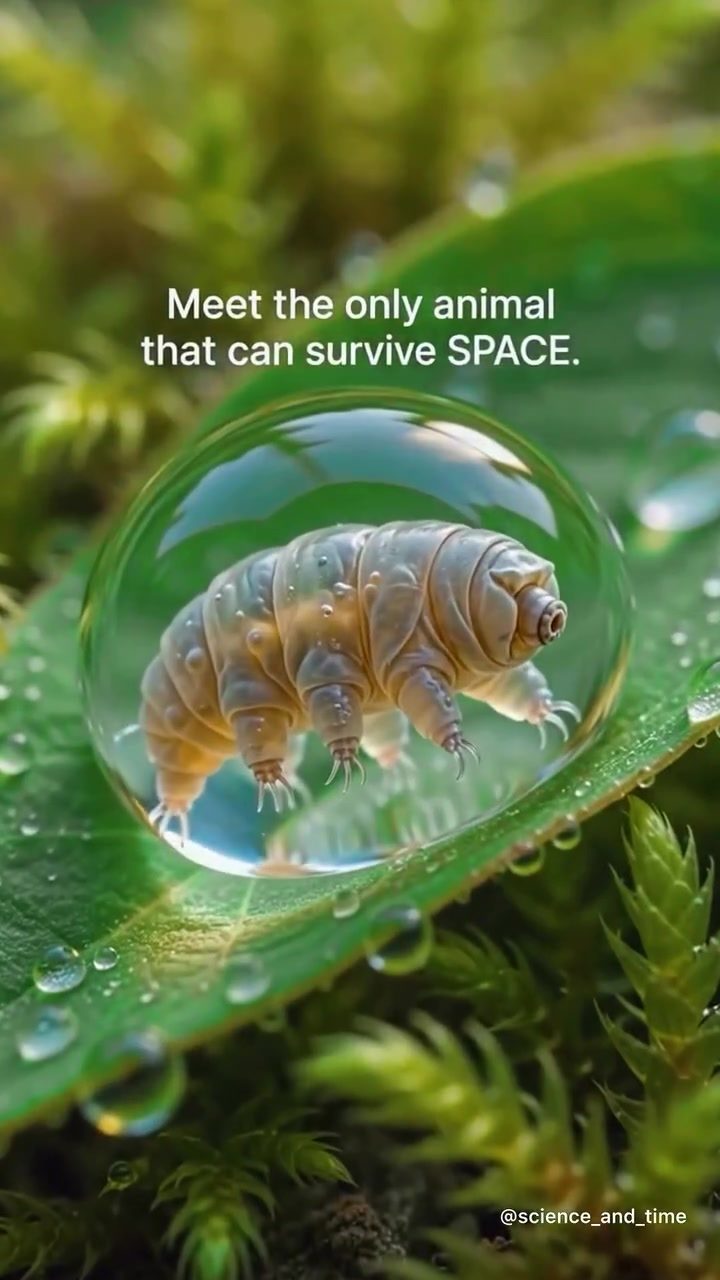
##Tardigrades: The World's Toughest Tiny Survivor
The tardigrade, a microscopic animal often called the water bear or moss piglet, is renowned for its extraordinary ability to withstand conditions that would be lethal to almost any other form of life. Measuring less than half a millimeter, these tiny creatures can endure freezing temperatures, extreme heat, crushing pressure, intense radiation, and even the vacuum of space. Their secret lies in a remarkable state called cryptobiosis, which allows them to shut down their metabolisms and enter a state of suspended animation, able to withstand these harsh conditions.
##Why Survival Matters
The extraordinary survival capabilities of tardigrades have captured the interest of scientists worldwide. By studying these resilient creatures, researchers hope to gain insights into the limits of life and the potential for life to exist on other planets. Tardigrades serve as a model organism for understanding how living beings might endure the harsh conditions of space and other extreme environments.
The Phenomenon of Cryptobiosis
The ability of tardigrades to survive extreme conditions is attributed to their unique cellular mechanisms, particularly a state called cryptobiosis. In this state, the tardigrade's metabolic processes come to a nearly complete halt, allowing it to endure conditions that would be fatal to other organisms. This state is often triggered by the absence of water, and it can last for extended periods, even lasting for years, before the tardigrade can be revived with the reintroduction of water.
How It Works
When a tardigrade enters a cryptobiotic state, its cells undergo significant changes:
- Dehydration: The tardigrade loses most of its water content, which prevents ice crystals from forming and damaging its cells.
- Molecular Protection: Special proteins, known as tardigrade-specific intrinsically disordered proteins (TDPs), help protect the DNA and other cellular structures from damage. These proteins act as a molecular shield, ensuring that the tardigrade's genetic information remains intact.
- Repair Mechanisms: Once water returns, the tardigrade's cells rapidly repair any damage that may have occurred during its time in stasis. Within minutes, the tardigrade wakes up and resumes its normal activities, as if nothing had happened.
The Role of Water
Water plays a crucial role in the tardigrade's survival. When conditions become inhospitable, the tardigrade can remove almost all of its water, entering a dormant state. This allows it to survive harsh environments, including the vacuum of space. When water returns, the tardigrade quickly rehydrates and resumes its life, making it one of the most resilient creatures on Earth.
The Vacuum of Space
Tardigrades are the only known animals that can survive the vacuum of space. In experiments conducted by scientists, tardigrades have been exposed to the harsh conditions of space, including extreme temperatures, intense radiation, and the absence of oxygen. These experiments have shown that tardigrades can remain alive in space for extended periods, making them a fascinating subject of study for astrobiologists.
Extreme Temperatures
Tardigrades can survive temperatures ranging from near absolute zero (-272°C or -458°F) to over 150°C (302°F). In their cryptobiotic state, the tardigrade's metabolism slows down to the point where it is nearly undetectable. Once rehydrated, they can survive for years without any food.
The Cellular Secrets
The tardigrade's secret to survival lies within its cells. Special proteins, such as tardigrade-specific intrinsically disordered proteins (TDI’s), have been identified as key players in protecting the tardigrade's DNA and other cellular structures from damage. These proteins help maintain the integrity of the tardigrade's genetic material, ensuring that the creature can survive extreme conditions and resume its life when conditions improve.
Practical Tips
While the tardigrade's survival mechanisms are fascinating, there are practical implications for understanding and applying these principles in other contexts. For instance, scientists are exploring the use of tardigrade-specific proteins in developing new medical treatments and technologies that could enhance the survival of human cells in extreme conditions. These proteins could potentially be used to develop drugs that protect cells from damage during medical procedures or to improve the storage of biological samples.
Important Takeaways
- Tardigrades are microscopic animals known for their extraordinary ability to survive extreme conditions.
- Their survival is attributed to a unique state called cryptobiosis, where their metabolic processes nearly halt.
- Special proteins within their cells protect their DNA and other cellular structures from damage.
- Tardigrades can survive the vacuum of space, extreme temperatures, and other harsh conditions.
- Studying tardigrades could provide insights into the limits of life and potential survival mechanisms for space exploration.
Conclusion
The tardigrade is a remarkable example of nature's ability to adapt and survive in even the harshest environments. By understanding the mechanisms behind their resilience, scientists can gain valuable insights into the limits of life and potential applications for human health and space exploration. These tiny creatures, smaller than a grain of sand, are legendary in their ability to survive, making them a subject of ongoing scientific study and fascination.
Watch the Reel
Questions readers ask
What makes tardigrades so resilient to extreme conditions?
Tardigrades possess an extraordinary ability to enter a state called cryptobiosis. During this state, they greatly slow down or shut down their metabolism, effectively entering suspended animation. This allows them to survive in environments that would be fatal to most other organisms, including extreme temperatures, radiation, and even the vacuum of space.
How long can tardigrades survive in suspended animation?
Tardigrades can remain in cryptobiosis for extremely long periods. Some studies suggest that they can survive for decades, and potentially even centuries, in this state.
What is the size of a tardigrade?
Tardigrades are microscopic animals, measuring less than half a millimeter in length. Despite their tiny size, they possess remarkable survival capabilities.
Can tardigrades survive in space?
Yes, tardigrades have shown an incredible ability to survive the harsh conditions of space. They can withstand the vacuum, cosmic radiation, and extreme temperature fluctuations, making them one of the most resilient known lifeforms.
What triggers a tardigrade to enter suspended animation?
Tardigrades enter cryptobiosis in response to adverse environmental conditions. This can include extreme temperatures, lack of water, or exposure to toxic chemicals. When conditions improve, they can rehydrate and return to their active state.
What can scientists learn from tardigrade survival mechanisms?
Studying tardigrades can provide insights into new methods for preserving biological materials. Their unique survival mechanisms may inspire advancements in medicine, space exploration, and environmental conservation.
How do tardigrades reproduce after surviving extreme conditions?
After returning to favorable conditions, tardigrades can resume their normal metabolic processes and reproduce. They typically lay eggs, and their reproductive cycle can be quite rapid, helping them to quickly repopulate their environment after surviving extreme conditions.
Related deep dives
Similar reads based on topic and creator.




Recent articles
Fresh deep dives from the latest Reels we unpacked.




Comments
Be the first to comment.