Solar Cooking in Morocco
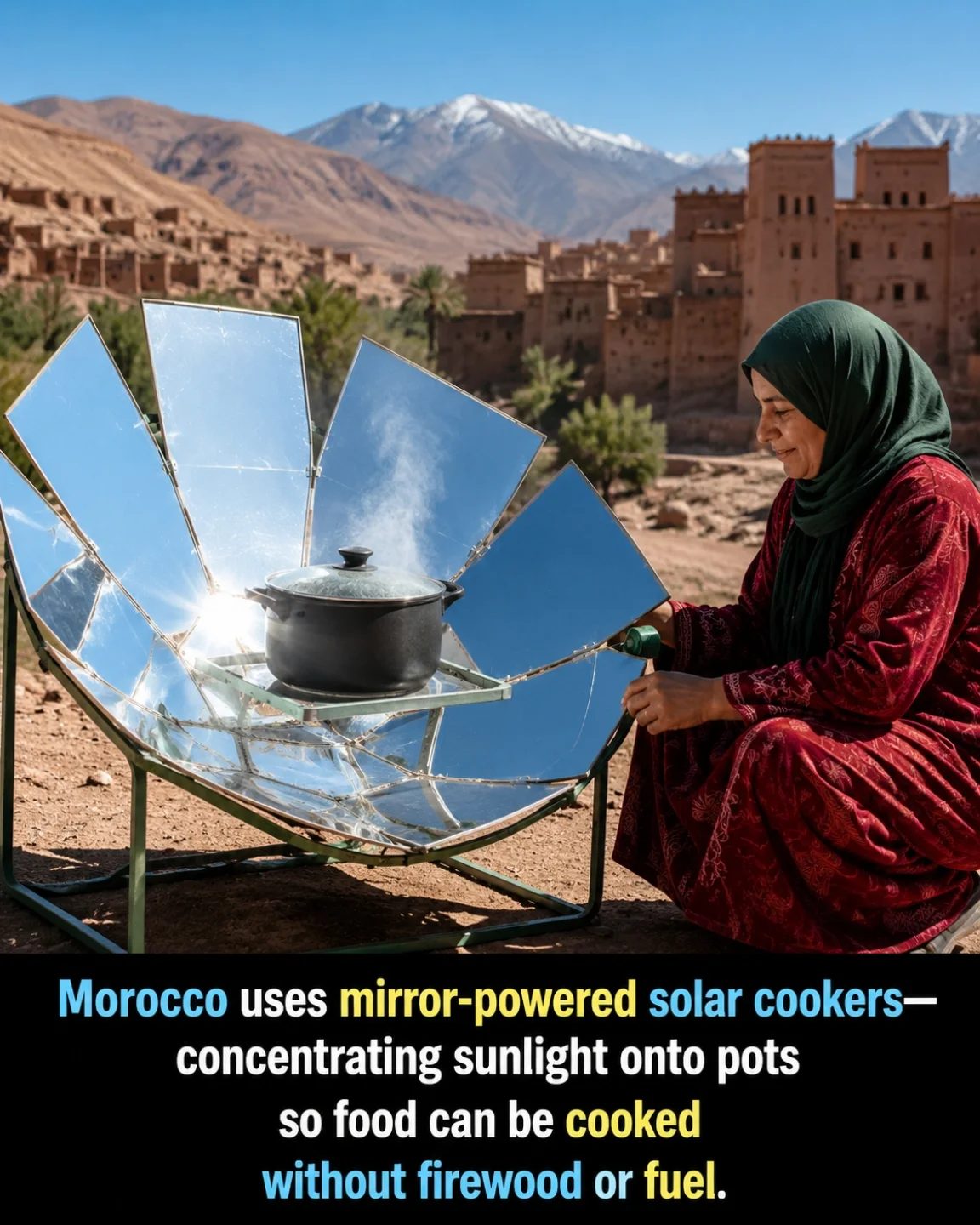
Solar cooking is a sustainable and innovative method of cooking food using the power of the sun. In Morocco, this practice is particularly prevalent, utilizing mirror-powered solar cookers that concentrate sunlight onto pots to eliminate the need for firewood or fuel.
Context / Why this matters
Solar cooking holds significant importance in regions like Morocco, where access to fuel can be limited and deforestation is a growing concern. By harnessing the power of the sun, solar cookers provide an eco-friendly and cost-effective solution for cooking food. This method not only reduces the environmental impact but also supports sustainable living practices, which are crucial for preserving natural resources and maintaining ecological balance.
Main discussion
The mechanics of solar cooking
Solar cookers work by concentrating sunlight onto a cooking vessel, generating heat that is used to cook food. In Morocco, this process is typically achieved using mirrors that reflect and focus sunlight onto pots. The intense heat generated by this concentration is sufficient to cook a variety of dishes, from stews and vegetables to bread and rice.
Concentrating sunlight
The key to effective solar cooking lies in the ability to concentrate sunlight. Mirrors are strategically positioned to reflect sunlight onto a focal point, where the cooking vessel is placed. This concentration of light rays creates intense heat, which is then transferred to the food, cooking it efficiently.
Eliminating the need for fuel
One of the most significant benefits of solar cooking is the elimination of the need for firewood or fuel. Traditional cooking methods often rely on burning wood or other combustible materials, which can lead to deforestation and contribute to air pollution. Solar cookers, on the other hand, use renewable energy from the sun, making them a sustainable and environmentally friendly option.
The benefits of solar cooking in Morocco
Environmental sustainability
In Morocco, where deforestation is a pressing issue, solar cooking offers a sustainable alternative to traditional cooking methods. By reducing the demand for firewood, solar cookers help preserve forests and protect the environment. This practice not only conserves natural resources but also contributes to the overall sustainability of the region.
Cost-effectiveness
Solar cookers are a cost-effective solution for cooking food, especially in areas where access to fuel can be limited or expensive. By harnessing the power of the sun, solar cookers provide a free and abundant source of energy, reducing the financial burden on households and communities.
Health and safety
Traditional cooking methods that rely on open fires or stoves can pose health and safety risks, including respiratory issues and accidental fires. Solar cookers, however, operate without the need for an open flame, making them a safer option for cooking. This reduces the risk of accidental fires and improves the overall safety of the cooking environment.
Practical tips
Choosing the right solar cooker
When selecting a solar cooker, it's essential to consider the specific needs and conditions of your location. For example, in Morocco, where sunlight is abundant, a mirror-powered solar cooker can be an effective choice. These cookers use mirrors to concentrate sunlight, making them ideal for regions with high solar radiation.
Optimizing performance
To get the most out of your solar cooker, it's important to position it correctly. This typically involves placing the cooker in a spot where it can receive direct sunlight for an extended period. Additionally, using reflective surfaces around the cooker can help maximize the amount of sunlight it receives, improving its performance.
Maintenance and care
Regular maintenance and care are essential for keeping your solar cooker in optimal condition. This includes cleaning the mirrors and other reflective surfaces to ensure they remain free of dirt and debris, which can reduce their effectiveness. Additionally, it's important to store the cooker in a safe and dry place when not in use to protect it from the elements.
Important takeaways
- Solar cooking is a sustainable and eco-friendly method of cooking that relies on the power of the sun.
- Mirror-powered solar cookers are commonly used in Morocco to concentrate sunlight onto pots, eliminating the need for firewood or fuel.
- This method offers numerous benefits, including environmental sustainability, cost-effectiveness, and improved health and safety.
- Choosing the right solar cooker, optimizing its performance, and maintaining it properly are crucial for achieving the best results.
Conclusion
Solar cooking in Morocco is a testament to the potential of renewable energy in everyday life. By harnessing the power of the sun, solar cookers provide a sustainable and cost-effective solution for cooking food, reducing the environmental impact and promoting sustainable living practices. Whether you're looking to reduce your carbon footprint or simply want a more efficient way to cook, solar cooking is a method worth exploring.
Watch the Reel
Questions readers ask
What makes solar cooking a sustainable choice in Morocco?
Solar cooking is sustainable in Morocco because it uses the abundant sunlight to prepare meals, reducing the need for firewood or fuel. This minimizes deforestation and lowers air pollution, making it an eco-friendly cooking method suitable for the region's climate and resources.
How do solar cookers in Morocco function?
Solar cookers in Morocco use mirrors to concentrate sunlight onto pots, generating heat to cook food. This technology allows for effective cooking without the need for conventional fuels, making it a unique and innovative solution for sustainable living.
What are the benefits of using solar cookers inMorocco?
Solar cookers in Morocco offer several benefits, including cost savings from reduced fuel consumption, decreased dependence on dwindling natural resources, and a lower carbon footprint, making it a sustainable and eco-friendly technique.
How does solar cooking in Morocco address deforestation?
Solar cooking helps combat deforestation by reducing the demand for firewood, which is often harvested unsustainably. By using sunlight for cooking, solar cookers preserve forests and promote a more sustainable approach to cooking.
Can solar cookers in Morocco be used for all types of cooking?
Solar cookers can be used for a variety of cooking tasks, from boiling water to baking bread, depending on the design and concentration of sunlight. However, they are most effective for slow-cooking and may require adjustments for cloudy weather or specific cooking needs.
Are there different types of solar cookers used in Morocco?
Yes, there are various types of solar cookers used in Morocco, including box cookers, panel cookers, and parabolic cookers. Each type has its own design and functionality, catering to different cooking needs and sunlight conditions.
What are the challenges of adopting solar cooking in Morocco?
While solar cooking is beneficial, challenges include the need for consistent sunlight, initial investment in solar cookers, and the requirement for users to adapt their cooking techniques. Additionally, cloudy weather can temporarily disrupt the cooking process.
Related deep dives
Similar reads based on topic and creator.



Recent articles
Fresh deep dives from the latest Reels we unpacked.




Comments
Be the first to comment.