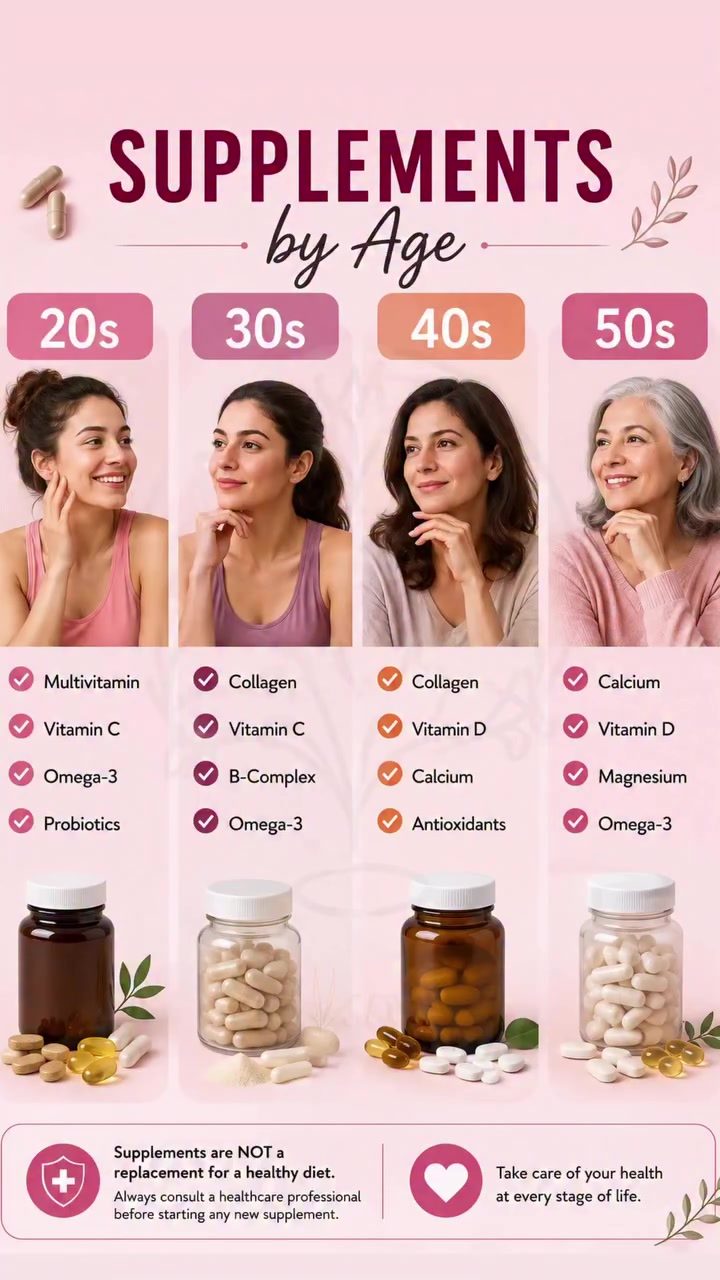
Supplements by Age
Understanding the specific nutritional needs that come with each stage of life is essential for maintaining good health. As we age, our bodies undergo various physiological changes that can alter our nutritional requirements. This guide provides an overview of the supplements that may be beneficial for different age groups, from the 20s to the 50s.
Why This Matters
While a balanced diet is the cornerstone of good nutrition, supplements can play a crucial role in filling nutrient gaps. Whether you are in your 20s or 50s, understanding which supplements to take can help you maintain optimal health and support your body's changing needs. However, it's important to recognize that individual health, diet, and any nutrient deficiencies should also guide supplement choices, not just age.
Supplements in Your 20s
Your 20s are a critical period for establishing good health habits. During this decade, the body is still growing and developing, making it essential to support it with the right nutrients. Some key supplements to consider include:
-
Multivitamin: While a balanced diet is ideal, a multivitamin can help fill any nutrient gaps, especially if you have specific dietary restrictions or preferences.
-
Vitamin C: Known for its immune-boosting properties, Vitamin C is also an antioxidant that aids in collagen production, supporting skin health, and wound healing.
-
Probiotics: These support gut health, which is crucial for overall well-being. Probiotics can help maintain a healthy gut microbiome, aiding in digestion and nutrient absorption.
-
Omega-3: Essential for brain health and cognitive function, Omega-3 fatty acids are found in fish oil and are also important for heart health and reducing inflammation.
Supplements in Your 30s
In your 30s, the focus often shifts toward maintaining energy levels, supporting skin health, and addressing any nutrient deficiencies that may arise from lifestyle changes or increased stress. Common supplements for this age group include:
-
Collagen: This protein supports skin, bone, and joint health. Collagen supplements can help maintain skin elasticity and reduce the appearance of fine lines and wrinkles.
-
Vitamin C: Again, Vitamin C plays a crucial role in collagen production and immune function, making it a valuable supplement for those in their 30s.
-
B-Complex: This group of vitamins, including B6, B12, and folic acid, is essential for energy metabolism, nerve function, and maintaining healthy skin and blood cells.
-
Omega-3: Continuing to support brain and heart health, Omega-3 fatty acids remain important during this decade.
Supplements in Your 40s
For those in their 40s, maintaining bone health, supporting energy levels, and reducing inflammation become increasingly important. Key supplements to consider are:
-
Collagen: As with the 30s, collagen supports skin, bone, and joint health, which becomes even more critical in the 40s.
-
Vitamin D: This vitamin is essential for bone health, immune function, and mental well-being. Many people in their 40s may be deficient in Vitamin D, especially if they spend a lot of time indoors.
-
Calcium: Crucial for bone health, calcium supplements can help maintain bone density and reduce the risk of osteoporosis, which becomes more prevalent in the 40s.
-
Antioxidants: These compounds help protect the body from oxidative stress and inflammation, which can contribute to various age-related conditions.
Supplements in Your 50s and Beyond
In your 50s, health concerns often shift towards bone health, maintaining muscle mass, and cognitive function. Key supplements for this age group include:
-
Calcium: Essential for bone health, calcium can help maintain bone density and reduce the risk of fractures.
-
Vitamin D: Continues to be crucial for bone health, immune function, and mental well-being.
-
Magnesium: This mineral supports muscle and nerve function, helps regulate blood sugar levels, and is involved in many biochemical reactions in the body.
-
Omega-3: Maintaining brain health and reducing inflammation remains important in your 50s, and Omega-3 fatty acids can support cognitive function.
Practical Tips
Consult a Healthcare Professional
Before starting any new supplement regimen, it is crucial to consult a qualified healthcare professional. This is especially important if you are pregnant, breastfeeding, or taking medications that could interact with supplements.
Personalize Your Supplement Plan
Everyone's nutritional needs are different, and supplements should be tailored to individual health, diet, and lifestyle. While general guidelines can be helpful, it's essential to consider your unique requirements and consult with a professional to develop a personalized plan.
Monitor and Adjust
Regularly review your supplement regimen with your healthcare provider to ensure it is still meeting your needs. As your age and lifestyle change, your nutritional requirements may also evolve.
Prioritize a Healthy Diet
While supplements can be beneficial, they should never replace a healthy, balanced diet. Focus on consuming a variety of nutrient-dense foods to support your overall health.
Important Takeaways
- Individual Needs Vary: Supplement choices should be based on individual health, diet, medications, and any nutrient deficiencies, not just age alone.
- Age-Specific Needs: Different age groups have unique nutritional requirements, and supplements can help support these needs.
- Consult a Professional: Always consult a qualified healthcare professional before starting any new supplement regimen.
- Healthy Diet First: Supplements should complement a healthy, balanced diet, not replace it.
Conclusion
Supplements can play a valuable role in supporting health and wellness at every stage of life. Understanding which supplements to take based on your age and individual needs can help you maintain optimal health and address specific nutritional deficiencies. Remember, supplements are not a replacement for a healthy diet, and it's essential to consult a healthcare professional before starting any new supplement regimen. With the right approach, supplements can be a valuable tool in maintaining your health and well-being as you age.
Watch the Reel
Questions readers ask
What are the key supplements for those in their 20s?
In your 20s, focusing on overall health is key. Consider taking multivitamins to ensure you're getting a broad range of nutrients, vitamin C for immune support, and probiotics for gut health. These supplements can help fill any gaps in your diet and support your body's needs during this active decade.
Which supplements are beneficial for those in their 30s?
For those in their 30s, maintaining energy levels and supporting overall health can be a focus. Multivitamins, omega-3 supplements, and probiotics can be beneficial. Omega-3s, in particular, can support heart health and reduce inflammation, which is important as lifestyle factors may start to impact overall health.
What supplements should women in their 40s consider?
Women in their 40s may want to consider taking probiotics to support digestive health and multivitamins, particularly those with iron. This is also a good time to start taking collagen and calcium supplements. These nutrients can help support bone health, skin elasticity, and overall vitality.
Are there specific supplements for men in their 50s?
For men in their 50s, calcium and vitamin D supplements can be particularly important. These nutrients can help support bone density and muscle function, which may decline with age. Additionally, omega-3 supplements and probiotics can continue to support heart and digestive health.
How do nutritional needs change from your 20s to 50s?
As individuals age, their bodies undergo various changes that can impact their nutritional needs. For instance, bone density may decrease, and metabolism may slow down, making it harder to absorb certain nutrients. This is why supplementing with nutrients like calcium, vitamin D, and omega-3s can be beneficial for maintaining overall health and vitality.
Why might someone in their 20s consider taking vitamin C supplements?
In your 20s, vitamin C supplements can be beneficial for several reasons. They support immune function, which is crucial for overall health and well-being. Vitamin C also aids in collagen production, which is important for maintaining healthy skin, bones, and connective tissues.
What role do probiotics play in the 40s?
Probiotics can be particularly beneficial for individuals in their 40s. They help support a healthy gut microbiome, which is essential for digestive health and immune function. Probiotics can also aid in the absorption of other nutrients, making them a valuable addition to a balanced diet during this decade.
Recent articles
Fresh deep dives from the latest Reels we unpacked.




Comments
Be the first to comment.