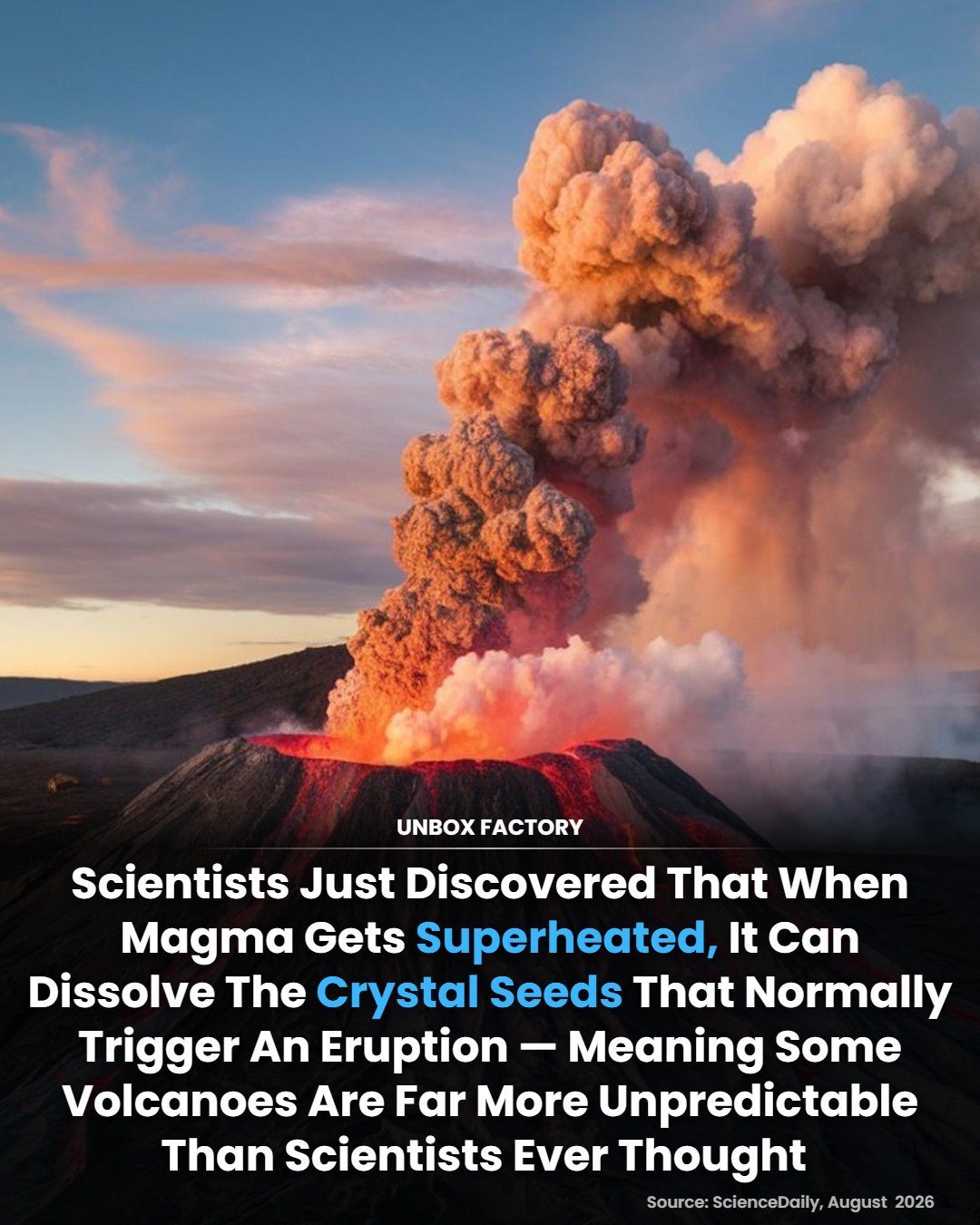
Volcanic Eruptions: The Role of Superheated Magma
Volcanic eruptions are powerful and often unpredictable natural phenomena. Recent scientific discoveries have shed light on a critical factor influencing volcanic activity: the behavior of superheated magma. This new understanding could revolutionize our approach to predicting and mitigating volcanic risks.
Why This Matters
Around 1,350 potentially active volcanoes worldwide pose significant hazards to hundreds of millions of people living in their vicinity. Accurate eruption forecasting is essential for timely evacuations, infrastructure protection, and disaster preparedness. The recent discovery about superheated magma and its interaction with microscopic mineral crystals could significantly enhance our ability to predict volcanic eruptions.
Understanding the Discovery
The Role of Crystal Seeds
Microscopic mineral crystals, often referred to as "nucleation seeds," play a crucial role in volcanic eruptions. These crystals act as triggers, facilitating the release of dissolved gases from magma. This process leads to the buildup of pressure and, ultimately, an eruption. However, when magma becomes extremely hot, or "superheated," these crystal seeds can dissolve, altering the dynamics of the eruption.
Superheated Magma and Volcanic Unpredictability
When magma reaches superheated temperatures, it can dissolve the crystal seeds that normally initiate eruptions. Without these seeds, dissolved gases remain trapped inside the magma for extended periods. This delay in gas release allows pressure to build to much higher levels, potentially leading to more intense and unpredictable eruptions. The discovery suggests that some volcanoes may remain stable for longer than previously expected before erupting suddenly and with little warning.
Implications for Volcanic Forecasting
The finding that superheated magma can dissolve crystal seeds has significant implications for volcanic forecasting. Traditional models rely heavily on the presence of these nucleation seeds to predict eruptions. The new discovery challenges these models, indicating that volcanoes may behave in ways that are far more unpredictable than scientists had thought. This unpredictability makes forecasting significantly more challenging, requiring enhanced monitoring and more sophisticated modeling techniques.
Practical Tips for Enhanced Volcanic Monitoring
To better prepare for and mitigate the risks associated with volcanic eruptions, several practical steps can be taken:
Advanced Monitoring Technologies
Implementing advanced monitoring technologies can help detect superheated magma and its potential to dissolve crystal seeds. This includes the use of seismometers, gas sensors, and satellite imaging to monitor volcanic activity continuously. Real-time data analysis can provide early warnings and help notify authorities and local communities.
Improved Risk Assessment Models
Incorporating the new findings into risk assessment models can improve their accuracy and reliability. Scientists can develop more sophisticated algorithms that account for the behavior of superheated magma and its impact on eruption triggers. This will help in better understanding the likelihood and intensity of future eruptions.
Community Preparedness
Educating communities about the new discoveries and the potential for more unpredictable volcanic behavior is crucial. Public awareness campaigns can inform residents about the signs of impending eruptions and the necessary precautions to take. Evacuation drills and emergency response plans should be regularly updated to reflect the latest scientific insights.
Enhanced Infrastructure
Investing in robust infrastructure that can withstand volcanic hazards is essential. This includes building structures that are resistant to ashfall, lava flows, and seismic activity. Designing and implementing early warning systems can also help minimize the impact of volcanic eruptions on communities and infrastructure.
Important Takeaways
The recent discovery about superheated magma and its ability to dissolve crystal seeds that trigger volcanic eruptions is a critical advancement in our understanding of volcanic activity. This finding underscores the need for enhanced monitoring, improved risk assessment models, and community preparedness. As we continue to learn more about the complex processes driving volcanic eruptions, we can better protect communities and infrastructure from these powerful natural events.
Conclusion
Volcanic eruptions remain one of the most unpredictable and dangerous natural phenomena. The discovery that superheated magma can dissolve crystal seeds, delaying eruptions and making them more unpredictable, highlights the need for advanced monitoring, improved models, and community preparedness. By incorporating these insights into our approaches, we can better mitigate the risks associated with volcanic activity and enhance the safety of communities living near active volcanoes.
Watch the Reel
Questions readers ask
What is superheated magma and how does it affect volcanic eruptions?
Superheated magma refers to magma that reaches extremely high temperatures. At these temperatures, it can dissolve microscopic mineral crystals that typically act as triggers for volcanic eruptions, leading to more stable volcanoes that erupt suddenly and unpredictably.
How does the discovery of superheated magma's role change our understanding of volcanic eruption triggers?
Traditionally, microscopic mineral crystals were thought to be key triggers for volcanic eruptions. However, the discovery of superheated magma shows that these crystals can be dissolved at high temperatures, altering the eruption dynamics and making predictions more complex.
Can the behavior of superheated magma help in predicting volcanic eruptions?
While superheated magma makes volcanic eruptions more unpredictable, understanding its behavior can still aid in prediction. By monitoring changes in magma temperature and crystal content, scientists may better anticipate periods of stability and potential sudden eruptions.
What are the implications of superheated magma for volcanic eruption stability?
Superheated magma can lead to longer periods of volcanic stability, as the dissolution of trigger crystals delays eruptions. However, this also means that when an eruption does occur, it may do so with little warning, posing significant challenges for preparedness.
How does the interaction between superheated magma and mineral crystals influence the magma eruption cycle?
The interaction causes mineral crystals to dissolve, which can extend the time between eruptions. This altered cycle means that volcanoes may remain quiet for extended periods before erupting suddenly, making traditional monitoring methods less reliable.
What are the practical applications of understanding superheated magma in volcanic safety?
By learning about how superheated magma affects volcanic behavior, scientists can develop more accurate predictive models and improve early warning systems. This can help authorities take timely action to protect lives and infrastructure in areas prone to volcanic activity.
How does superheated magma alter the dynamics of volcanic eruptions?
Superheated magma changes volcanic eruption dynamics by removing key triggers for eruptions. This can result in extended periods of stability but also in more sudden and unpredictable eruptions, which are more difficult to forecast and mitigate.
Related deep dives
Similar reads based on topic and creator.

Recent articles
Fresh deep dives from the latest Reels we unpacked.




Comments
Be the first to comment.